
Understanding the Values of Biodiversity
Biodiversity encompasses the variety of life on Earth, from the smallest microorganisms to the largest ecosystems. It is the foundation of the vast array of ecosystem services that critically contribute to human well-being. Biodiversity is not just about the number of species, but also about the complexity of the ecosystem, the genetic diversity within species, and the ecological processes that result from these elements working together. Biodiversity ensures the resilience of ecosystems and their ability to adapt to changes, preserving the earth for future generations.
The Threatened Biodiversity: Impact of Deforestation
Deforestation poses a significant threat to global biodiversity. As trees are removed, habitats are destroyed, and the intricate balance of life is disrupted. With each tree lost, crucial habitats disappear, disrupting the delicate balance of life. This loss impairs the health of ecosystems and their capacity to render vital services, putting numerous species at risk.
The Role of Trees in the Conservation of Ecosystems
Recognizing this threat, we chose the path of restoration. Trees, in their majestic stance, contribute significantly to the conservation of ecosystem diversity. They provide shelter for countless species, enrich the soil, and play a key role in climate regulation. By planting trees, we can systematically increase biodiversity. For instance, in our projects, a diverse range of species are planted, each contributing uniquely to the local ecosystem's diversity and resilience
Enhancing Ecosystem Diversity: The Power of Trees
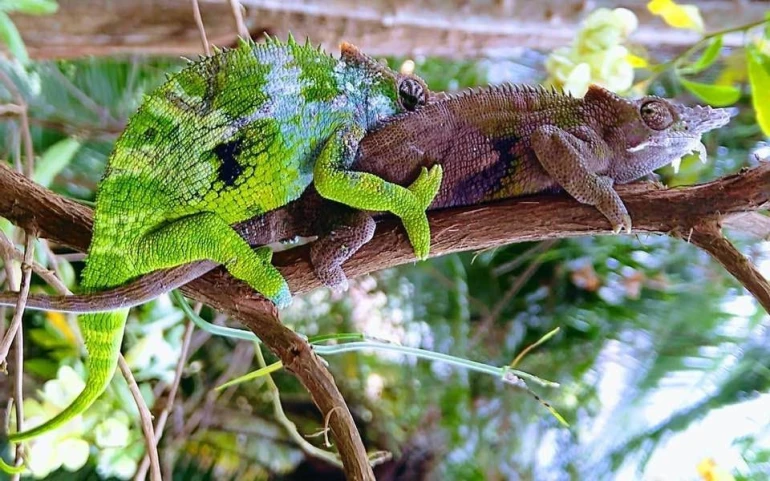
Trees, the powerhouses of biodiversity, are vital in restoring and maintaining diverse ecosystems. They serve a dual role, not only reforesting landscapes that have long since disappeared, but also fostering the return of various species to their natural habitats. A compelling testament to this is the return of species like the Capybaras (Hydrochoerus hydrochaeris) in Bolivia and the Two-horned Chameleon (Kinyongia multituberculate) in Tanzania.
Species Diversity Example: Tree-Nation's Projects
Our projects at Tree-Nation are living proof of species diversity. Each project is unique, planting a distinct selection of species. Sometimes, a project may plant only five species, yet these five species can enhance more than 50 natural species already present on-site, showing the transformative power of focused reforestation in biodiversity conservation
Reforestation Projects: Restoration of Biodiversity
Restoring a forest starts with the plants, the trees. They capture the sun's energy and begin to convert it into organic matter such as carbon, which begins to be distributed throughout the ecological chain. As we restore this upper stratum, different species start to return, forming a whole food chain.
The biodiversity program then comes into play. As we learn about, value, and restore these ecosystems, we reinforce the interconnectedness of life on Earth. The health of a forest in one region can directly impact someone in another part of the world. Indeed, the whole planet is connected, and the ecology starts locally but ends up being connected even with the air currents that can reach faraway places.
Discover #Biodiversity in our projects or start planting and enhancing biodiversity one tree at a time.


