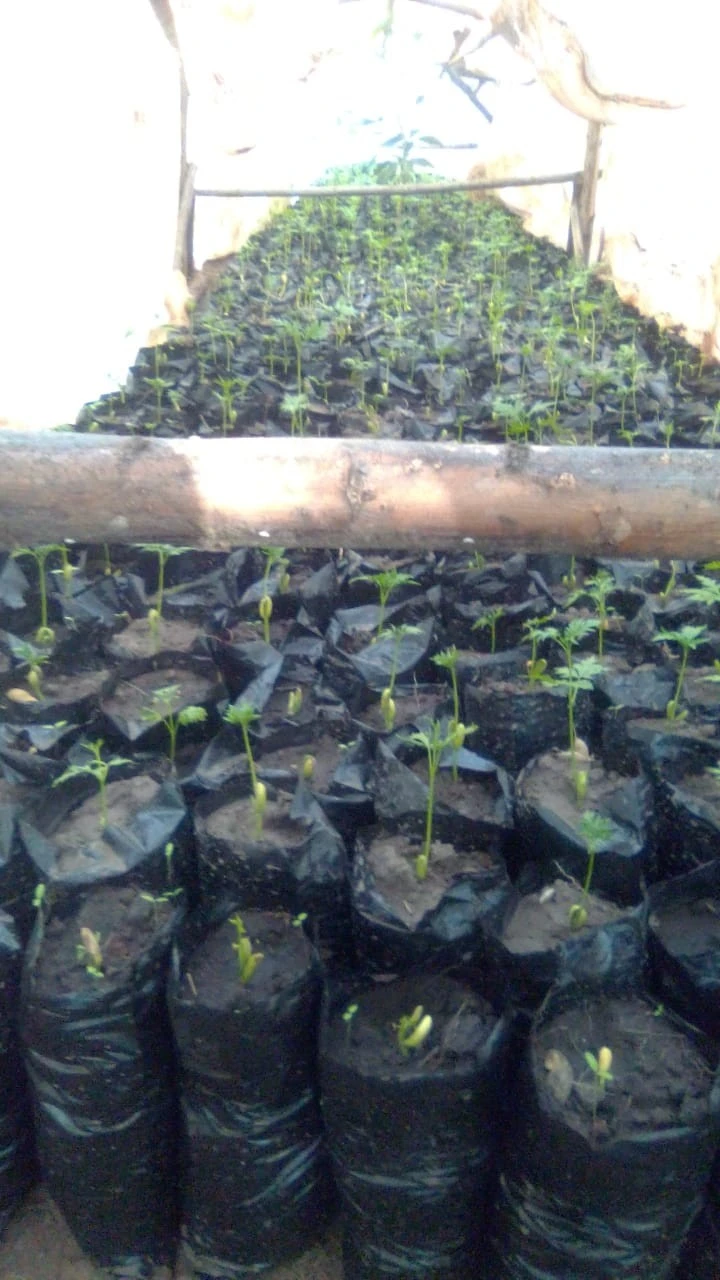

Melia volkensii (common name Mukau;-kamba) is found naturally in semi arid zones of kenya. It can grow on most soils; sandy, clay and shallow stony soils, but preferably sandy soils with good drainage. The species is mainly planted for its timber, which is durable and comparable to camphor and also termite resistant. The timber is used for construction and furniture and is one of the principle species used to make log beehives because the wood is easy to work on and shape Its coppices well. It also fast growing with a rotation of 10 - 15 years. Twigs, leaves and fruits are fodder for goats, cattle and sheep during the dry season. The species also contains compounds that are toxic to insects and aqueous extracts of the fruit are traditionally used to control fleas and ticks. In parts of Kenya, it is the most commonly planted tree on cultivated and cleared lands. Because of its drought tolerance and high timber value this species is popular and has greater potential for farmers especially in dry land areas.
Melia has been heavily exploited because it is highly valued as a timber tree. This trend has been worsening over the last decade owing to shortage of alternative hardwood species. As a result, the tree growers are now striving to grow Melia as a plantation species. Propagation of Melia has, however, been a major bottleneck and has hindered planting of the species on large scale. Given that this is a high value tree species in the drylands, farmers lack enough information on appropriate Melia silvicultural practices for best production of the tree crop.


