
by Dexter B. Dombro
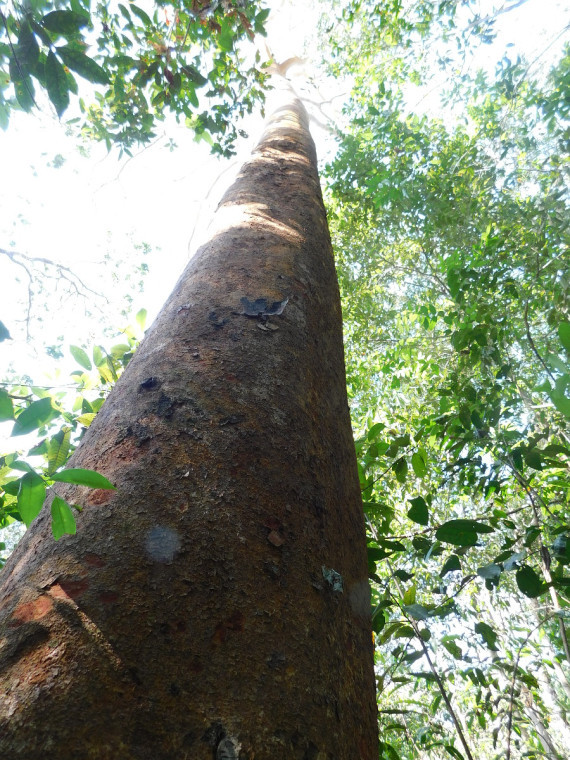
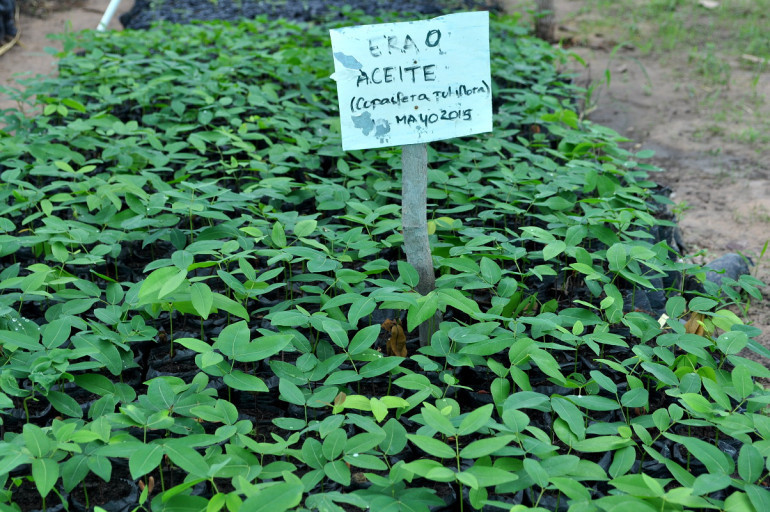
Copaiba oil is very important for the pharmaceutical industry, as well as for the cosmetics industry. In traditional medicine, Copaiba oil has been used for numerous treatments, foremost being wound healing when applied topically, but also as an anti-inflammatory for prostrate problems, when used internally. What many people may not know is that Copaiba oil is the product of the Copaifera genus of tropical trees, all of which belong to the Leguminosae family. At the Sacred Seeds Botanical Garden and in Orinoco River basin restoration projects, La Pedregoza has been planting Copaifera trees in large numbers, to promote rainforest conservation and to provide local communities with a useful non-wood forest product.
In Vichada, Colombia, there are 2 species that can be found in the gallery, inundation and rain forests. They are Copaifera pubiflora, which is easy to identify thanks to its distinct orange or yellowish bark, and Copaifera paupera, which has greyish bark, but also develops tell-tale nodules that can help with identification. The genus in general has at least 15 species, of which the best known is Copaifera langsdorffii, commonly found in the Amazon region. What makes the 2 Vichada species interesting is that they grow and can be cultivated both in low-lying flood zones and in well-drained soils. The common name for Copaifera pubiflora and Copaifera paupera in Colombia is Aceite, which means oil. As you may have guessed by now, these trees produce oil that can be very beneficial to humans.
There is a process by which these trees can be tapped for their oil, without damaging the tree. The oil is not extracted from seeds or fruits, but rather from the tree’s trunk. This article will provide a brief description of that process for general educational purposes, without revealing all of the detailed calculations involved. The idea is that small landowners who are protecting or conserving natural forest areas, in which there are Copaifera trees, can generate some additional income, thereby promoting the conservation of native trees at the same time. In addition, the objective of cultivating these trees is to create a viable future industry using a local species that has medicinal properties, biofuel properties and excellent wood.
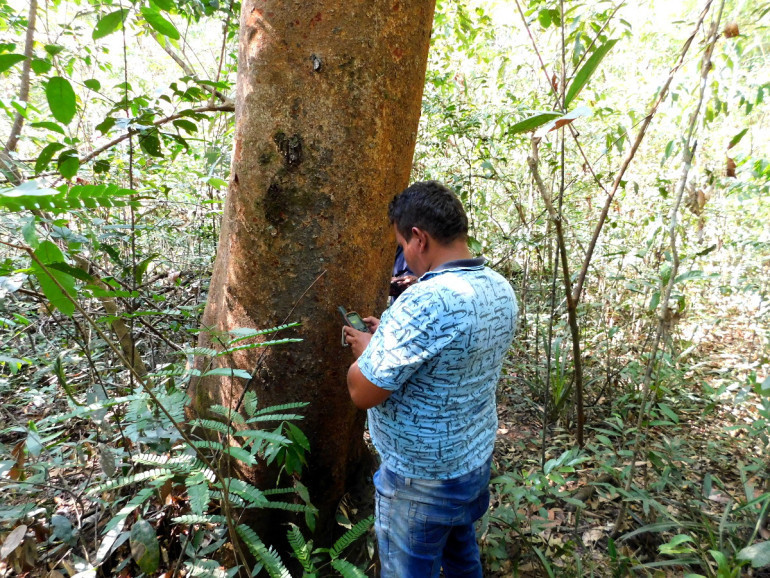
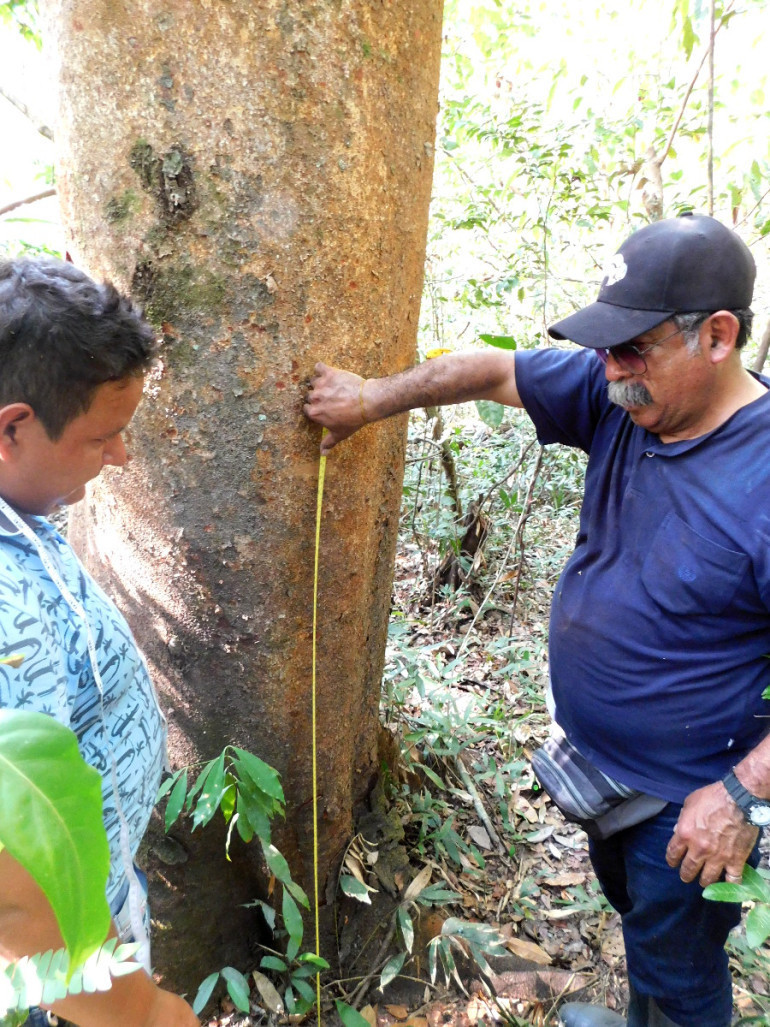
The Corporación Ambiental La Pedregoza is a non-profit NGO that also operates the Reserva Natural La Pedregoza, registered with Colombia´s national parks system, and the Sacred Seeds Botanical Garden, dedicated to the conservation of medicinal and alimentary species of the Orinoco River basin. When a La Pedregoza team works in the rainforest, we follow certain standards. They include having a collection license from the relevant environmental authority, and maintaining adequate records of any tree which is the subject of study or investigation. In the case of our Copaiba oil project we collect data such as the GPS position of the tree, its estimated overall height and the height of the tree trunk, the diameter of the tree at breast height (DBH), as well as other relevant comments or observations.
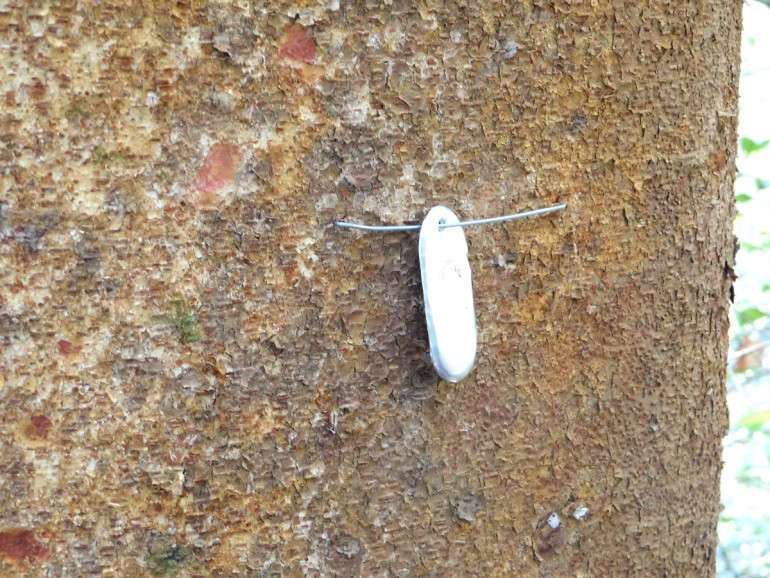
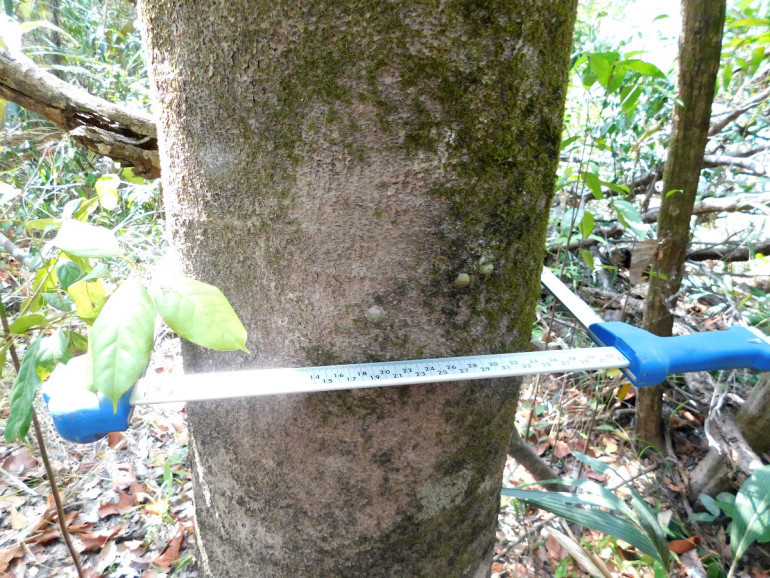
All calculations start with determining the diameter at breast height, which in Colombia is 130 cm measured from the ground up. Once the DBH is established, the tree is evaluated for other aspects that allow for a detailed calculation of the best place to drill a hole to tap the tree, as well as the maximum depth of that hole. Each tree is marked with a numbered metal plaque for easy identification, so that future tracking is easy, and a history sheet to track the tree’s oil production is started. Not all trees produce. If a tree is non-productive, the tapping hole is sealed with a clean piece of branch wood, so that the tree is always protected and doesn't get infected or bothered by insects or fungi.
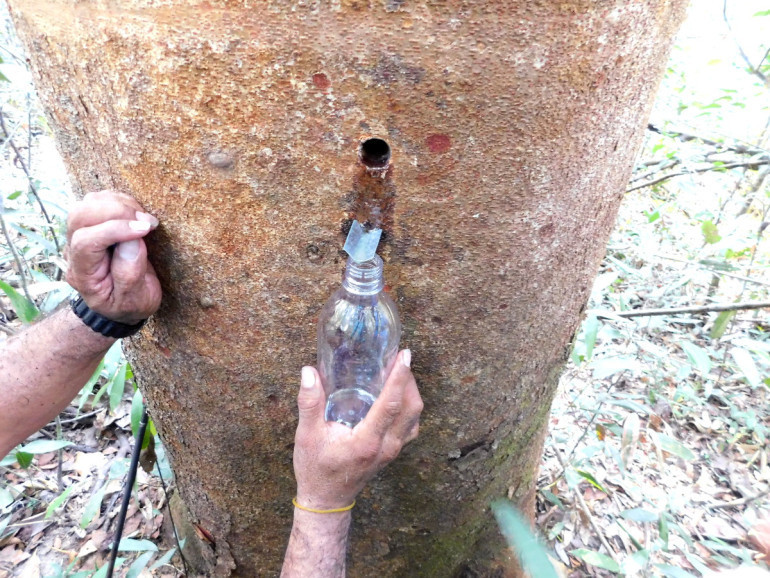
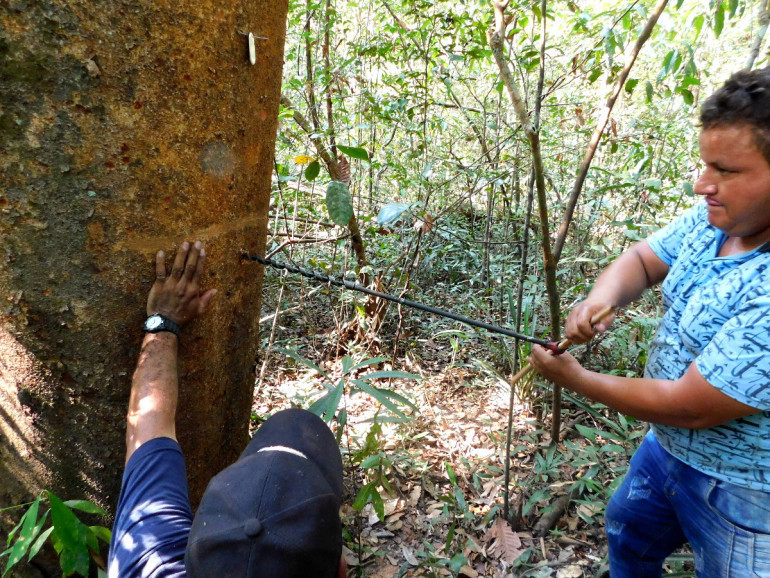
The tapping hole is done manually, so that the hole is not any deeper than needs be to produce oil. The oil generally comes from the inside wood, not from the outer layer or bark of the tree. La Pedregoza teams do not use power tools, because there is less control when making the hole, and also because the noise bothers wildlife. Once the saw dust leaving the hole shows signs of oil as well as a noticeable change in the smell of the saw dust, drilling is stopped and a PVC pipe is inserted in the hole. The PVC pipe has a simple tap or plug, which can be easily unscrewed to collect the oil. This system can last for a number of years. The tree seals around the PVC, so even if there is a flood the tree is not affected. A strict protocol is followed to ensure that the tree suffers no lasting damage.
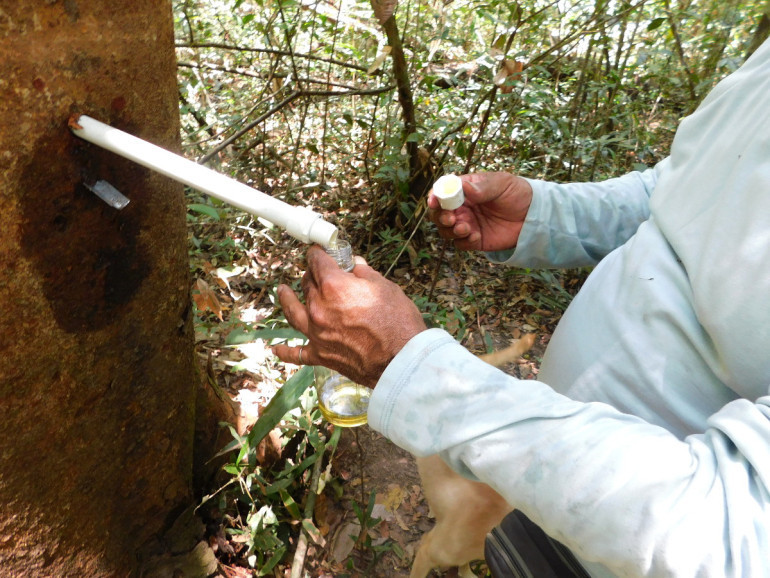
All the tools used are disinfected between trees with wood alcohol, no chemical disinfectants are used. Oil from producing trees is collected in sterile bottles and the put in 20 liter or 5 gallon food-grade pails for shipping. Production rates for the trees can be from only 250 ml to a liter of oil per month. Part of the study being conducted by La Pedregoza suggests that there is more production during the rainy season than during the dry season, but it seems that every tree varies. Trees that are less than 40 cm in diameter are not tapped, as they are considered too young. Trees that have a 60 cm or better diameter are considered the best candidates. Since La Pedregoza is currently involved in a project to create technical cultivation profiles for up to 10 native tree species, much of the data being collected is proving to be very useful.
The goal of the Copaiba oil project is to create a source of income for small land owners and their families. A European and a North American buyer have already been secured. A pre-condition to participating in the project is that the small land owner needs to sign a Conservation Agreement with La Pedregoza, which prohibits the cutting of native trees to prevent deforestation, as well as actions to protect wildlife. In exchange, La Pedregoza offers the land owner technical advice on sustainable practices, native trees for planting, participation in this project and other benefits. Purchases by Tree-Nation members of native tree species help finance these activities, so the results are way more than just planting a tree. Hopefully this article was of interest and adds to everyone’s knowledge of the amazing trees that grow in different parts of our planet.
Kommentare (6)
Schreibe einen Kommentar