
Brazil is perhaps the only country in the world named after an abundant native tree, the brazilwood (Paubrasilia echinata), and this story would be a lot cooler if brazilwood was still common in our forests, but it is not. The species was widely exploited and sent to Europe, mainly to Portugal. Brazil was a Portuguese colony for more than 300 years after the arrival of the navigator Pedro Álvares Cabral in 1500.
The extraction of brazilwood was the country's first economic activity, beginning shortly after the European arrival. It was supported by the enslavement of indigenous peoples in the coastal forest, known as the Atlantic Forest, which facilitated the loading and shipping of wood across the Atlantic Ocean.
Brazil is a huge country, with continental dimensions and is home to biomes very rich in biodiversity, with rare and often endangered species. Habitat loss due to deforestation is undoubtedly the main cause of a decrease in the quantity and variety of species.
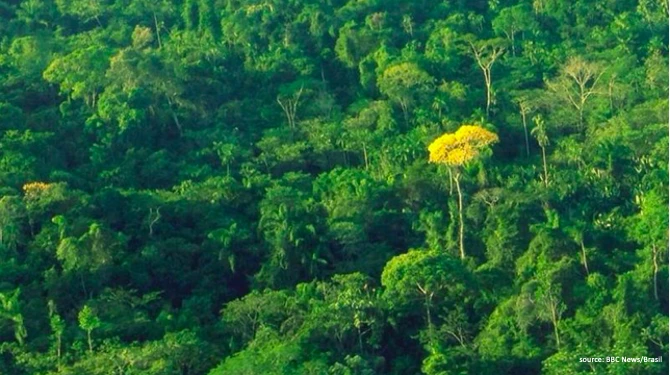
Currently, other trees are also under threat. They are broadly called ipê and the varieties most exploited for their quality wood are the yellow ipês (Handroanthus spp. and Tabebuia aurea). Ironically, the yellow ipê is today considered a symbol of Brazil, due to the yellow flowers that bloom in September and stand out against the green forests. Green and yellow are two predominant colors in our flag. Ironically, too, the majestic crown that forms at the time of flowering facilitates illegal logging, as the tree’s exuberant beauty is easily visible in the forest. Ipê wood has been exported illegally, with forged documents, for the manufacture of furniture in other countries.
As an environmental educator, I believe and work so that more people can get to know nature and conserve it. Learning about forests and the services they offer us free of charge is the first step towards developing environmental awareness. Furthermore, understanding the environmental problems that happen here in Brazil and in other parts of the world is essential to act responsibly and develop attitudes of conscious consumption. Buying furniture or other wood products must be a very responsible act. Consumers must demand the certificates of origin of the wood and avoid, however tempting they might be, the purchase of furniture made with illegal wood. In general, this is the result of clandestine and criminal economic activities. These have increased deforestation in Amazonian indigenous lands and other protected areas, causing the loss of biodiversity and contributing to climate change.
The Sowing Water Project plants trees in the Atlantic Forest, where ipês also occur. We believe that we are all responsible for the protection of forests and all forms of life on the planet, which for millions of years has provided the ideal conditions for our existence. We are one species among all others. We are IPÊ.
Andrea Pupo is an environmental educator at IPÊ - Instituto de Pesquisas Ecológicas (Institute for Ecological Research)


