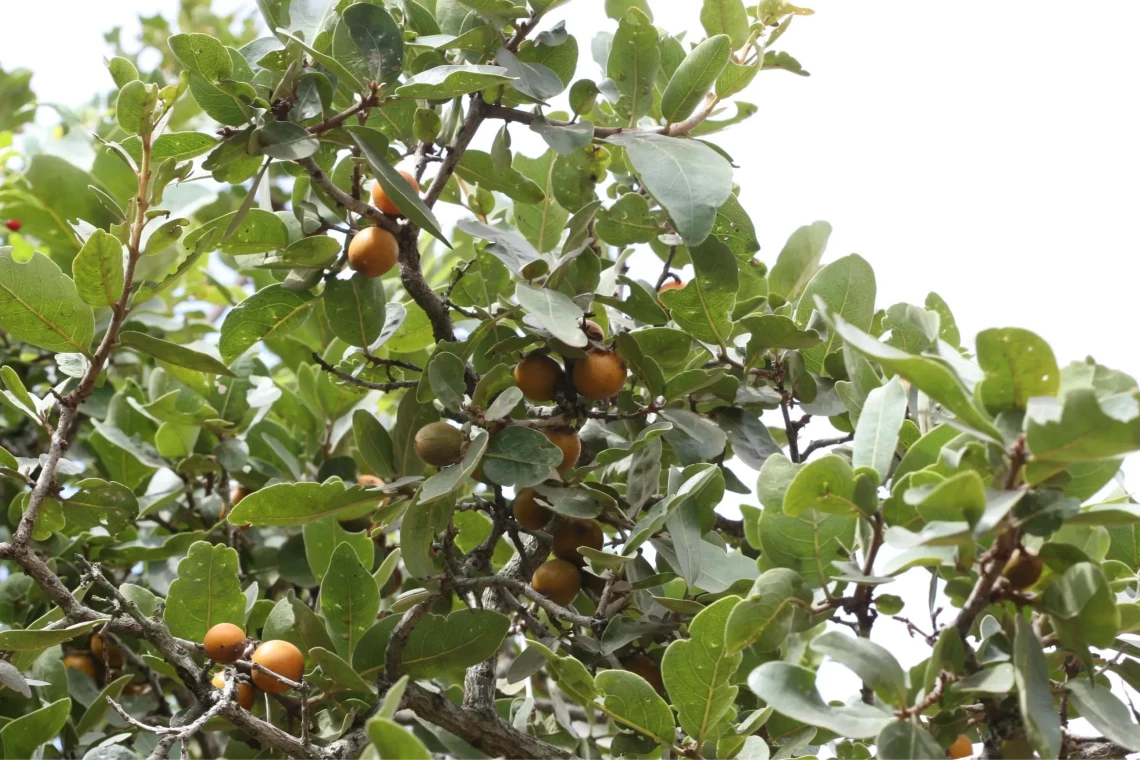

Ensuring food security for local communities and maintaining healthy ecosystems go hand-in-hand. Planting a diverse range of trees can achieve both these goals.
This article explores eight specific species - Diospyros melanoxylon (Black Sapote), Citrus limon (Lemon), Anacardium occidentale (Cashew), Psidium guajava (Guava), Syzygium cumini (Java Plum), Mangifera indica (Mango), Artocarpus heterophyllus (Jackfruit), and Madhuca longifolia (Mahua) - and how they contribute to food security and wildlife well-being.
Food Security for Local Communities: Year-round Nutrition: These trees offer a variety of fruits rich in vitamins, minerals, and antioxidants, providing essential nutrients throughout the year. Fruits like guava, java plum, and black sapote are particularly high in vitamin C, crucial for a healthy immune system.
Dietary Diversity: The diverse range of fruits caters to different tastes and preferences, promoting dietary diversity within communities. This is especially important for children who require a balanced diet for proper growth and development.
Income Generation: Excess fruits can be sold at local markets, generating income for families and fostering self-sufficiency. Species like cashew and jackfruit offer additional income potential with the sale of nuts and seeds.
Benefits for Wildlife:
Food Source: The fruits produced by these trees serve as a vital food source for various wildlife species, including birds, bats, and monkeys. This helps maintain healthy populations of these animals within the ecosystem. Habitat Creation: Planting these trees creates a more diverse and layered habitat. The foliage provides nesting sites for birds, while dense branches offer shelter for smaller mammals.
Pollination Services: Many of these species, like mango and citrus, rely on pollinators like bees for fruit production. Planting these trees promotes healthy pollinator populations, benefiting not just the trees but surrounding crops as well.
Sustainability and Resilience: These species are often well-adapted to local climates, requiring minimal water and maintenance. This makes them ideal for promoting sustainable food production and enhancing the resilience of local communities facing challenges like climate change.
Conclusion: Planting a diverse range of trees like Diospyros melanoxylon, Citrus limon, Anacardium occidentale, and others can create a win-win situation for both local communities and wildlife. By promoting food security, income generation, and a healthy ecosystem, these trees pave the way for a more sustainable future.
Kommentare (0)
Schreibe einen Kommentar