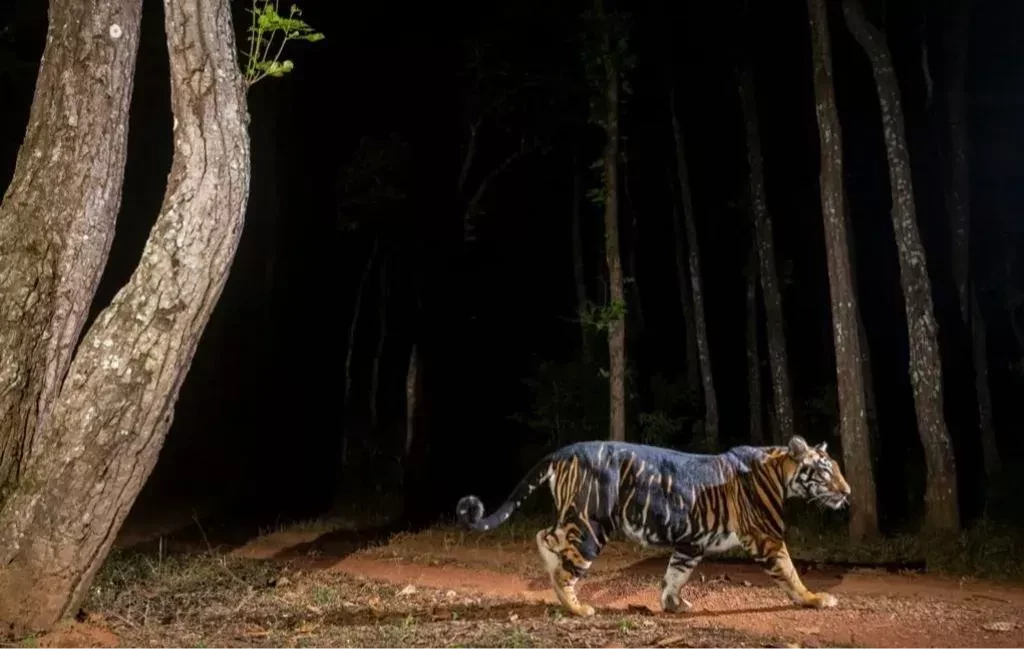

The majestic Bengal tiger (Panthera tigris tigris) is a symbol of strength and grace, occupying a special place in the natural and cultural heritage of India. Among the various natural wonders that the Indian subcontinent harbors, the phenomenon of black tigers stands out as one of the rarest and most intriguing. These elusive creatures, also known as melanistic tigers, have captured the imagination of wildlife enthusiasts and researchers alike.
What are Black Tigers?
Black tigers are not a separate subspecies but rather Bengal tigers exhibiting a rare genetic mutation called melanism. This condition causes an excessive deposition of melanin, the dark pigment responsible for coloration in animals. Unlike the typical orange and black-striped pattern of Bengal tigers, melanistic tigers have a dark, almost black coat with faint, shadowy stripes visible in certain lighting conditions. These tigers are sometimes referred to as "black tigers" due to their striking appearance.
Causes of Melanism
Melanism is a genetic mutation that results in the overproduction of melanin. In tigers, this mutation is believed to be recessive, meaning that both parents must carry the gene for melanism to appear in their offspring. The exact genetic mechanism behind melanism in tigers is not fully understood, but it is similar to the phenomenon observed in other big cats, such as black leopards (commonly known as black panthers).
Historical and Cultural Significance
The existence of black tigers has been documented sporadically throughout history, often shrouded in myth and folklore. In Indian culture, tigers have always been revered and feared, and stories of black tigers have added an element of mystery to their legendary status. Historical accounts and anecdotal evidence suggest that black tigers were more common in the past, but their sightings have become increasingly rare in modern times.
Current Status and Habitat
Black tigers are primarily found in the forests of Odisha, a state on the eastern coast of India. The Simlipal Tiger Reserve, located in Odisha, has reported sightings of these rare creatures. However, the exact number of black tigers in the wild remains uncertain due to their elusive nature and the challenges of tracking them in dense forested areas.
The population of black tigers is extremely limited, making them one of the rarest genetic variants of any wild animal. Their scarcity is attributed to the low probability of both parents carrying the melanism gene and the overall decline in tiger populations due to habitat loss, poaching, and human-wildlife conflict.
Kommentare (0)
Schreibe einen Kommentar