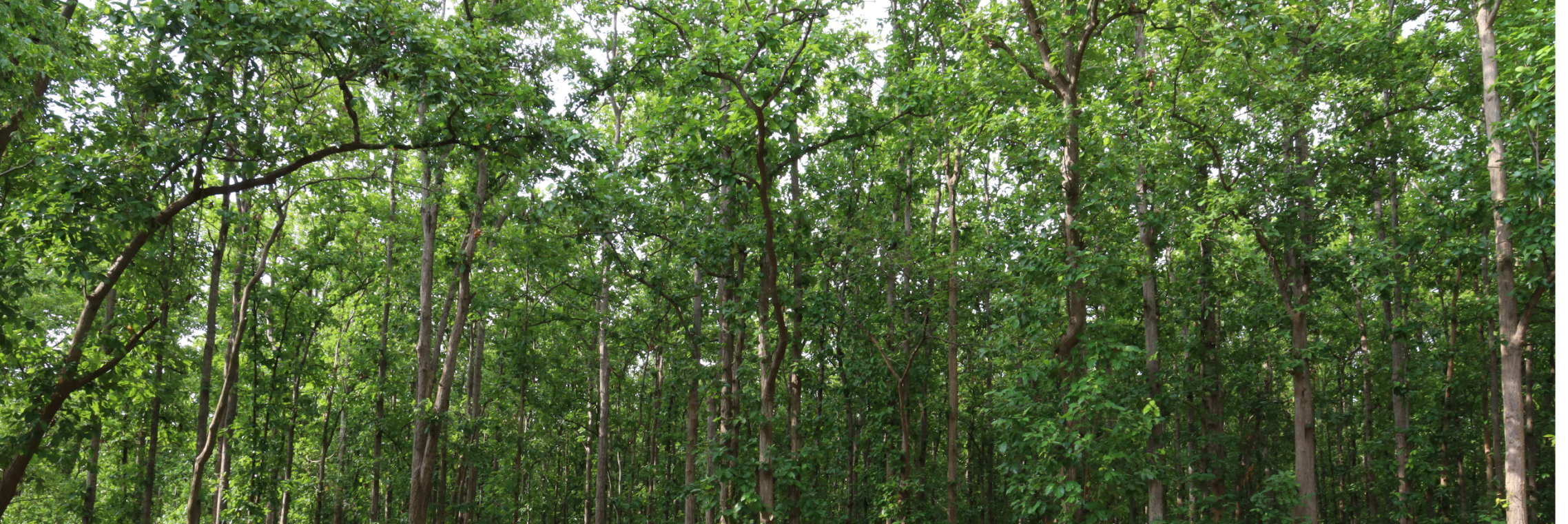

When we think about protecting tigers, it is natural to focus on the tiger itself. But a tiger cannot survive on forest cover alone. Beneath the canopy is another important story: the story of the animals that form its prey base and the vegetation that supports them.
Species such as deer and wild pigs are important prey for tigers across many of their habitats. Their availability is closely linked to the condition of the landscape around them. Forest vegetation provides food and cover for herbivores, while healthy ecosystems offer the range of resources that different species need to survive. In this way, the well-being of a tiger is connected to many smaller and often overlooked parts of its environment.
This is why tiger conservation involves much more than protecting individual animals. Maintaining suitable habitat and healthy prey populations is an important part of creating landscapes where tiger populations can persist. Where forests have been degraded, restoring vegetation can contribute to improving ecological conditions over time.
Trees have a role within this larger picture. Native trees form part of the vegetation structure of forests, provide food and shelter for numerous organisms, contribute organic matter to the soil and help create the conditions in which other plants can grow. As vegetation develops, it becomes part of a wider food web that supports insects, herbivores, birds and other wildlife.
This broader perspective is at the heart of Trees for Tigers. The project is not simply about putting trees into the ground; it is about contributing to healthier landscapes that can support a greater diversity of life. Newly planted trees will take time to mature, and their ecological contribution develops gradually. But each plantation site can become part of a longer-term effort to restore and strengthen the vegetation on which many species depend.
A tiger may be the most recognisable inhabitant of its forest, but it is only one part of the ecosystem. Beneath its paws, around its path and under the canopy, countless other species are playing their part. Protecting tigers therefore also means protecting the intricate web of life that helps sustain them.
Kommentare (0)
Schreibe einen Kommentar