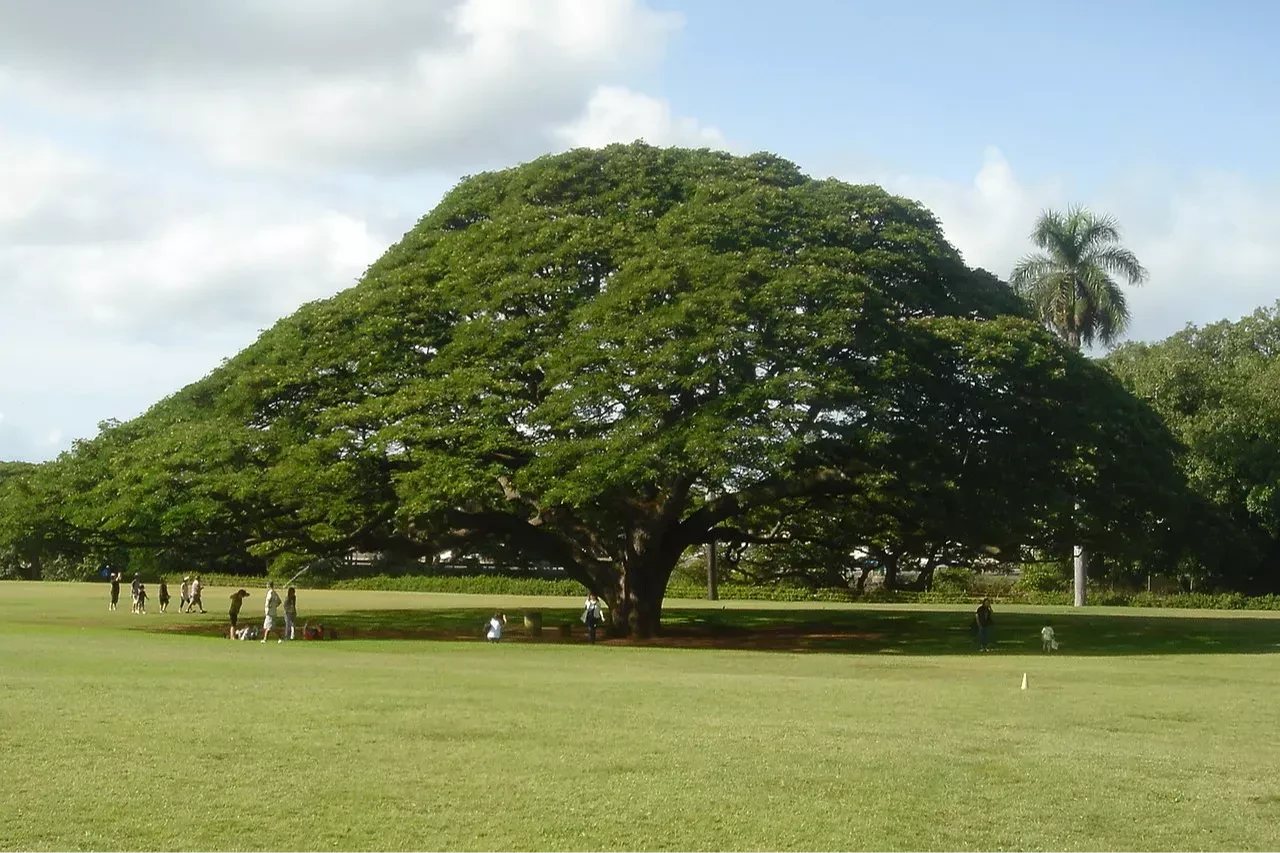

Samanea saman, commonly known as the rain tree or monkeypod tree, is a tropical tree species. This tree holds significant importance for various reasons:
Shade and Ornamental Tree: Samanea saman is known for its wide, umbrella-like canopy, which provides ample shade. It is often planted for decorative and ornamental purposes in parks, gardens, and along streets.
Environmental Benefits: The extensive canopy of the rain tree helps to reduce heat and provides a cool microclimate. This can be beneficial in urban areas, where it helps mitigate the urban heat island effect and conserves energy by reducing the need for air conditioning.
Soil Improvement: The tree is nitrogen-fixing, which means it can improve soil fertility by converting atmospheric nitrogen into a form that plants can use. This benefits nearby vegetation.
Wildlife Habitat: The tree provides habitat and food for various wildlife species, including birds and insects.
Wood and Timber: While not a primary timber tree, Samanea saman produces wood that can be used for various purposes, including furniture, construction, and woodworking.
Traditional Medicine: In some traditional medicine systems, the bark of the rain tree is used for its potential medicinal properties.
Cultural Significance: In some regions, the tree has cultural significance and may be used in traditional rituals or ceremonies.
Windbreaks: The tree's dense canopy and deep root system make it suitable for use as a windbreak, helping to protect against soil erosion and damage from strong winds.
Shelterbelt: In agriculture, Samanea saman is used as a shelterbelt to protect crops from the harsh effects of wind and sun.
Education and Research: The tree is of interest to botanists, ecologists, and researchers, and studying its characteristics can contribute to our understanding of tree biology and environmental science.


