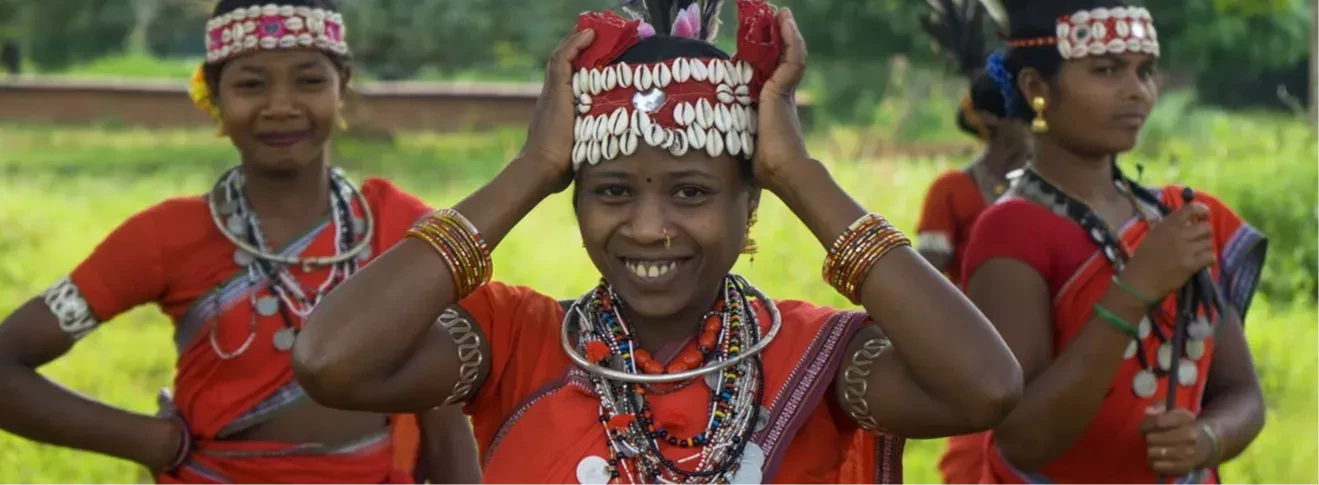

Bastar, Chhattisgarh, is home to several incredible tribes that have their own unique cultures and traditions. Among them are the Gond, Muria, Maria, and Dhurwa tribes. These tribes have a rich heritage that spans generations, and their way of life is truly captivating. Their traditions, art forms, and way of life contribute to the vibrant tapestry of Bastar’s cultural landscapes.
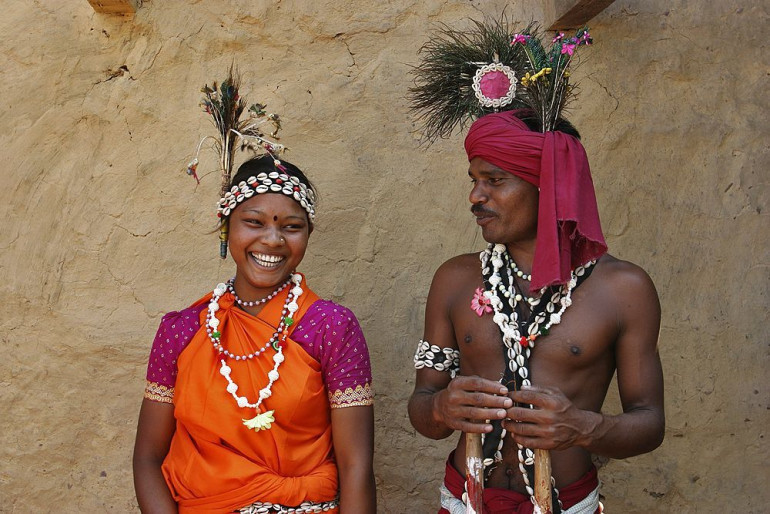 Gond tribal man and woman of Bastar posing for a photograph (image credits: Tribal toursim India)
The Gond tribe, for instance, is one of the largest tribes in central India. They’re known for their vibrant art and craftwork, which showcases their creativity and talent. They are known for their intricate and colourful paintings, which often depict nature, animals, and mythological stories. These paintings, called “Gond art,” have gained recognition worldwide for their unique style and symbolism. They have a strong connection to the land and the forests, and their ancestors were skilled hunters and gatherers.
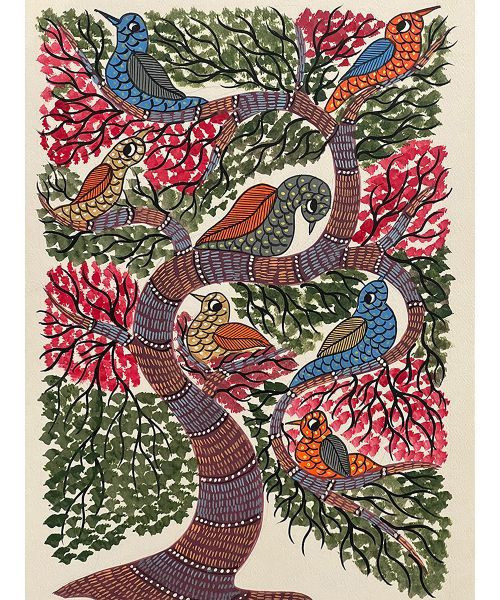 Gond Art is a very famous form of artwork
The Muria tribe follows a fascinating tradition called the Ghotul system, where unmarried youth live together in a communal setting. It’s a way for them to learn about their customs and traditions while fostering a strong sense of community. It serves as a space for education, socialization, and the preservation of their cultural values.
The Maria tribe, on the other hand, is renowned for their agricultural practices and mesmerizing traditional dance forms. Their connection with the land and their rhythmic movements during their dances are truly awe-inspiring. Their agricultural practices are closely tied to their cultural beliefs and rituals, making them an integral part of their history. They celebrate festivals related to agriculture, such as the Beej Pandum, where they worship seeds and seek blessings for a bountiful harvest.
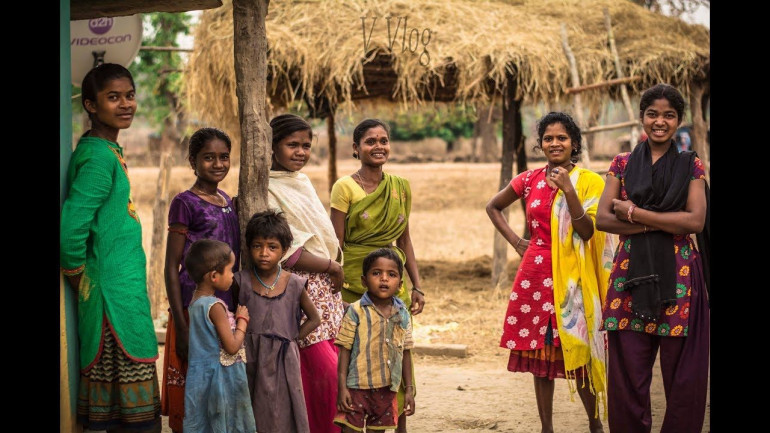 Dhurwa tribe of Bastar posing casually for a group photograph (image credits: Youtube)
Dhurwa tribe, who are skilled in the art of terracotta pottery and have mastered traditional farming techniques that have been passed down through generations. These tribes have managed to preserve their cultural identity and way of life, even in the face of modernization. Their languages, festivals, and social customs are all part of what makes them unique and special. Their pottery often reflects their connection to nature, with designs inspired by plants, animals, and tribal symbols.
These tribes have a deep dependence on forests for their livelihoods and cultural practices. Forests provide them with essential resources like food, medicine, and materials for crafting. Tribals not only use the forest to meet their fundamental requirements, but they also use it for a source of income. As a source of revenue, they collect natural products such as dry and fallen wood for fuel, tiny timber, bamboos, nuts, berries, bones, hide, skins, and herbs, among others.
Forests hold immense cultural and spiritual significance for these tribes. They view the forest as a sacred space, where they contact with their ancestors, perform rituals, and celebrate festivals. It’s remarkable to see how these tribes have developed a sustainable and harmonious relationship with the forest, recognizing its importance for their survival and cultural heritage. Through their sustainable practices and reverence for nature, they serve as an inspiration for preserving and protecting our precious forests. The tribes’ connection with the forest reminds us of the intricate bond we all share with the natural world. It is a testament to the harmony that can be achieved when humans and nature coexist. May their stories and traditions continue to be celebrated and their forests flourish for generations to come.
Kommentare (0)
Schreibe einen Kommentar