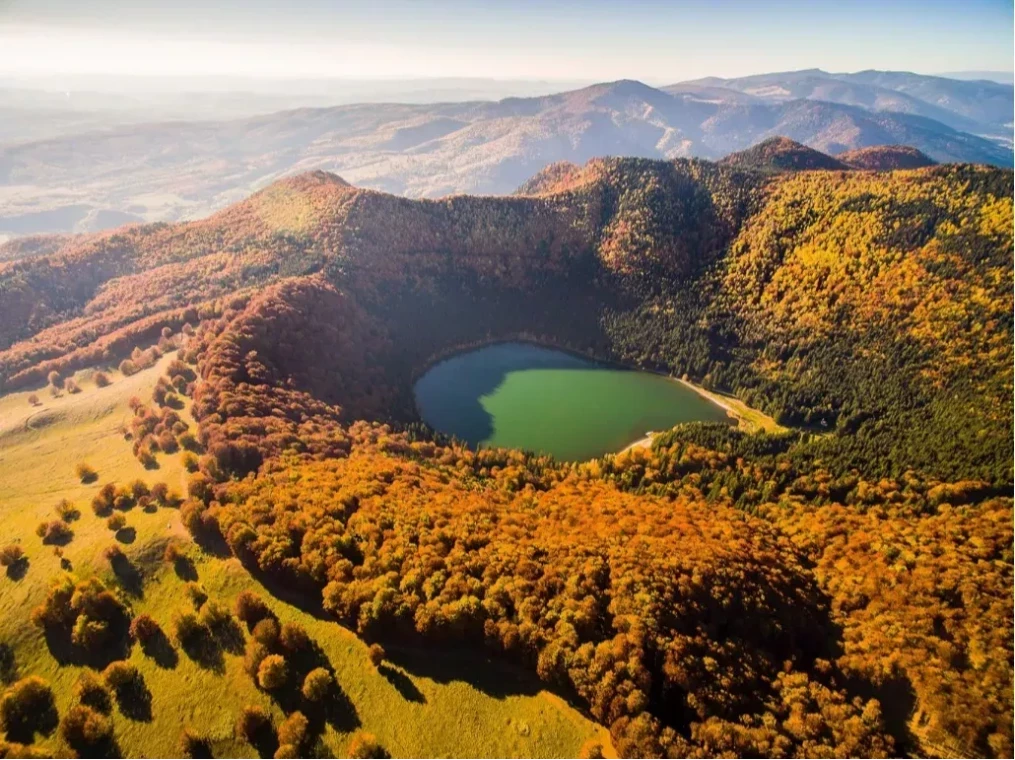

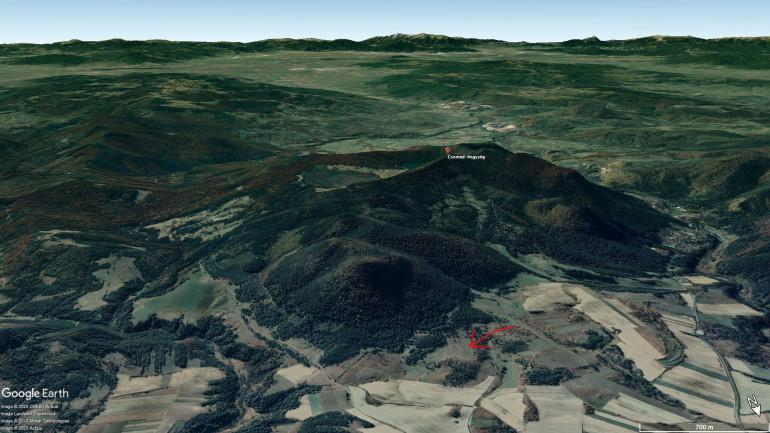
We are planting oak (Quercus sp.) trees in the Ciuc Basin of the Eastern Carpathians. In the spring, we will be planting oak trees near the Ciomad Mountain, an extinct volcano. In this still cool and relatively humid intramontane basin, the conditions brought about by climate change will be perfect for the oak trees.
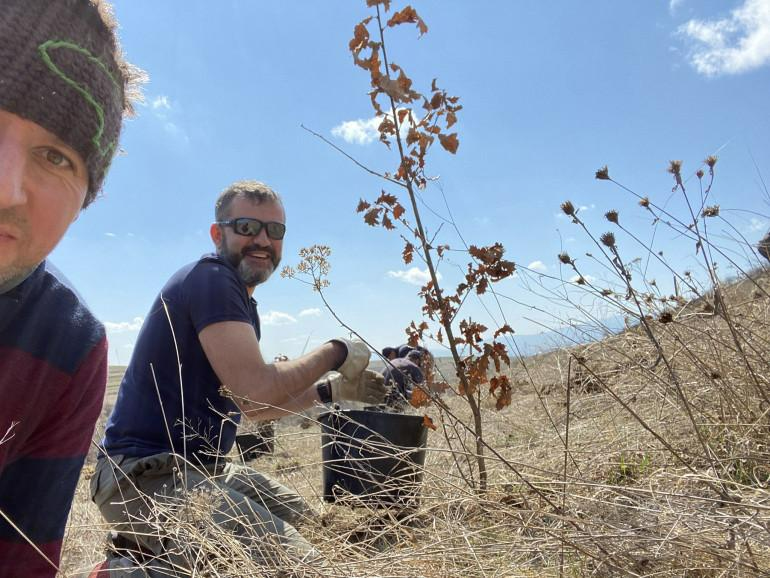
In addition to this, our activity has a historical aspect: by planting oak groves, we are reintroducing some of the deciduous forests (with oak trees as a significant component) that were cleared by humans before the 17th century. Besides archaeological evidence (oak trees used as building material in churches and manor houses built in the Middle Ages, names of hills, and other locations), there is a fascinating piece of evidence related to oak trees in the region: pollen found in the sediment of lakes and bogs
Pollen, a crucial element in the reproductive systems of many plant species, plays a vital role in fertilization, fruit and seed production, and the continuity of generations. Pollen serves ecologists as a historical record of past plant communities. While most pollen doesn't directly fertilize other plants, it often drifts through the lower atmosphere, settling in lakes and bogs, where it becomes part of annual sediment deposits. Extracting sediment cores from these areas and analyzing the different pollen types at various layers allows scientists to reconstruct the environmental vegetation history over time. Pollen analysis provides insights into past ecological changes.
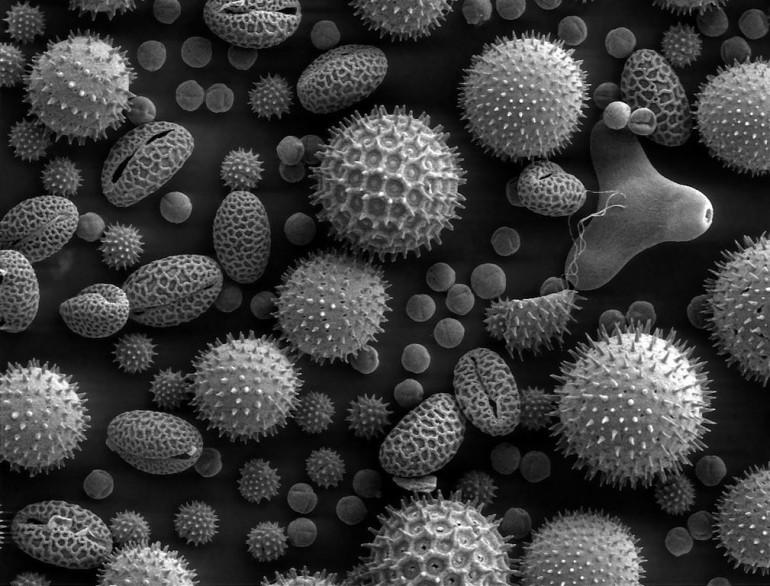 image: Dartmouth College Electron Microscope Facility -Public Domain
As the only suitable lake and bog in the area is on the top of the Ciomad Mountain, it is not entirely relevant to the former vegetation of the lower areas (where we are planting). However, studies ( like Magyari et al., 2009) show the presence of oak trees around the lakes over the past several thousand years. This pollen can mainly be transported up from the valley.
In the vicinity of the lake, the presence of oak can be identified up to the present. It is interesting to note that after 1200-1400, there is a continuous decrease in the quantity of oak pollen (indicating a decline in oak forests). This period overlaps with increased forest clearing activity in the Ciuc Basin…
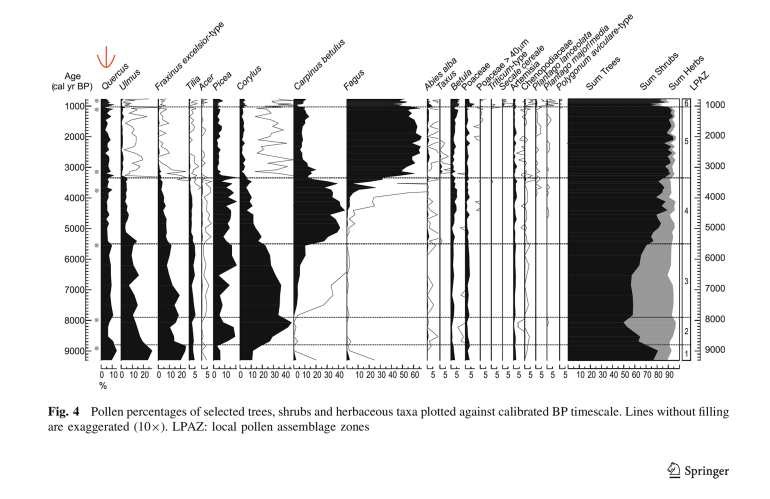 Magyari et al., 2009
Magyari, Eniko & Krisztina, Ae & Ae, Buczkó & Jakab, Gusztáv & Mihály, Ae & Ae, Braun & Pal, Zoltan & Dávid, Ae & Ae, Karátson & Pap, István & Buczkó, Krisztina & Korponai, J & Padisak, Judit. (2009). Palaeolimnology of the last crater lake in the Eastern Carpathian Mountains: a multiproxy study of Holocene hydrological changes. Hydrobiologia. 631. 29-63.
Panait, Andrei & Tanţău, Ioan. (2013). Late Holocene Vegetation History In Harghita Mountains (Romania).
Comentarios (0)
Deja un comentario