
Written by: Hugo Bitouzé, Head of Reforestation Projects
Introduction
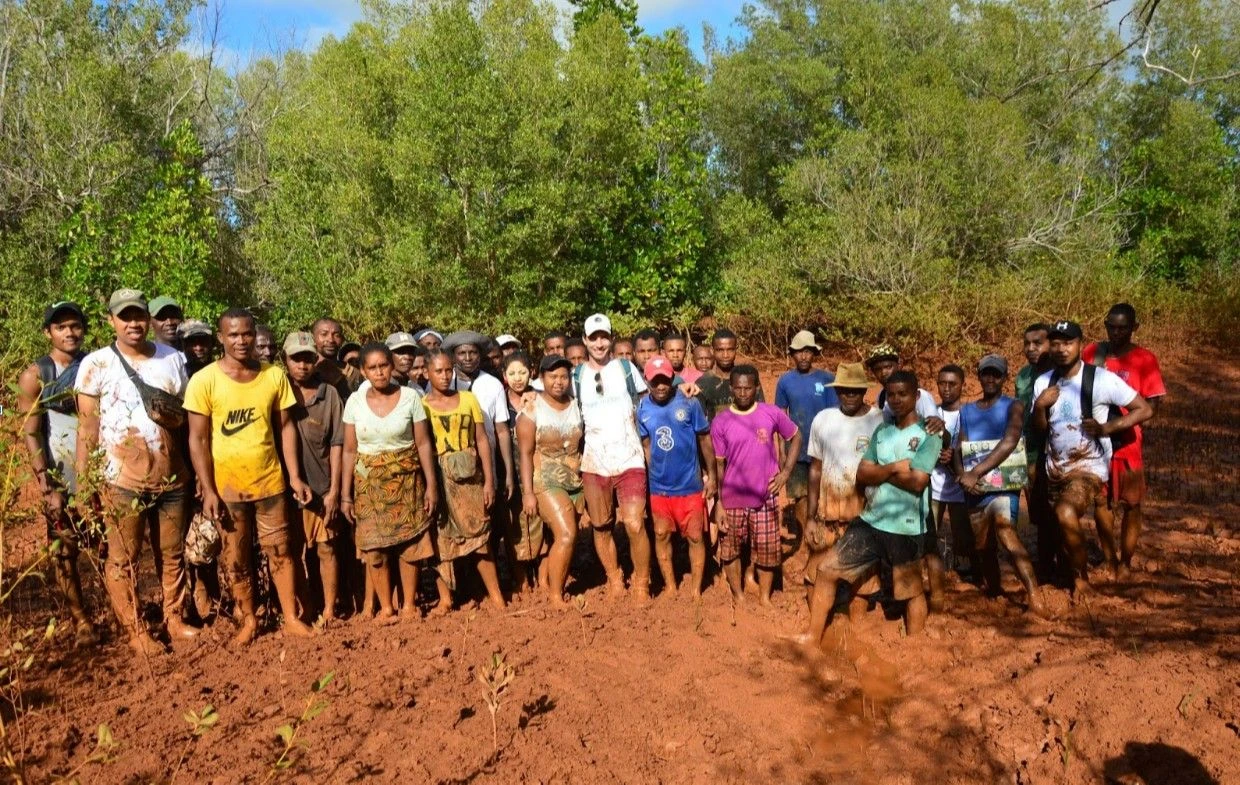
In April 2023, the Tree-Nation Reforestation Project team visited our local partner, Eden Madagascar for an annual onsite verification. Over the course of 2 days, John Bett (Tree-Nation Regional Manager for Africa) and Hugo Bitouzé (Tree-nation Head of Reforestation Projects) were on the ground, deep in the mangrove forest measuring trees, interviewing local communities alongside Eden local team.
The primary aim of our visit was to assess the ongoing progress of the project, its effect on mangrove forest restoration, and the engagement with the local communities of Madagascar. Our journey led us to their planting site in Ankinao, where we witnessed good advancements, which will be elaborated in the forthcoming report.
Background information
Eden Reforestation Projects is devoted to revitalizing severely deforested regions in Africa and Latin America, prioritizing the planting of indigenous tree species. They implement community-based initiatives that ensure the longevity of their endeavors. By doing so, they not only enhance the environmental conditions but also foster economic opportunities for locals, thereby improving their standard of living. These programs enable access to education, meet basic needs, and promote awareness of reforestation's critical role. By understanding its impact on sustainable natural resources, the community can actively contribute to elevating their own environment's quality.
In Madagascar, Tree-Nation concentrates on planting endemic mangrove species, such as Bruguiera gymnorrhiza, helping restore the coastal marsh systems and upland dry deciduous forests, areas that have undergone substantial degradation or deforestation. To date, Tree-Nation has already planted over 17.4 million trees. This initiative not only helps to regenerate aquatic ecosystems but also enhances water quality and boosts fish and crab populations. The resulting environmental transformation doesn't only improve the local habitat but also significantly enhances the local community's livelihoods.
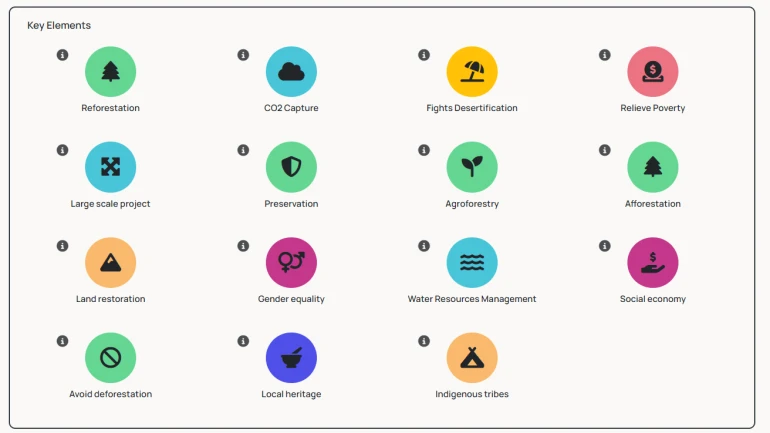
Eden Reforestation Projects also addresses several key elements through its activities, as detailed on their Project's page on TN website. The focus here remains on generating both environmental and socio-economic impacts.
Our visit
The visit focused on Tree-Nation exclusive planting site Ankinao (Planting site's page on TN website), located close to the small town of Mahajanga, in the province of Majunga. In Ankinao, TN has planted 8.3 million trees so far, divided into 4 different species of mangrove. The visit had the specific objectives of:
Monitoring our reforestation efforts
Meet and interview the local planting teams and communities to measure the socio-economic impacts of the project.
Discuss ways to strengthen the partnership with Eden.
From Tananarivo, our team landed in Mahajanga, a local village relatively close to the planting site, where they met with Eden representatives Jamie Shattenberg (International Director Eden Madagascar), and Bertrand Gerard (Marketing Coordinator Eden Madagascar). The planning of the visit was as follows:
Wednesday, April 5th: Examination of the Ankinao Planting Site
Morning: Interviews were conducted with two planters, supplemented by photographic and drone coverage of the planting site.
Afternoon: A forest Inventory plot was executed, followed by an interview with the local community chieftain.
Thursday, April 6th: Collective Discourse with the Eden Team
Morning: A group interview with the Eden team.
Afternoon: Flight back to Antananarivo.
The planned agenda was designed to cover a broad range of insights, from individual planter perspectives to an overarching discussion with the Eden team.
On the ground: Survey methods and findings
During our visit, we experienced how difficult reaching the planting site is. This experience showed us that planting mangroves is an arduous undertaking. The sites are frequently located in remote areas, accessible only by boat and enveloped by dense forests with high temperatures. Planting activities must be meticulously coordinated with high sea tides, which result in a thick, deep layer of mud that planters must navigate.
To overcome this challenge, the Eden local team manages to hire local planting teams that live in the communities deep in the mangrove forest. They take care of the planting process as well as the harvest of new seedlings to plant.
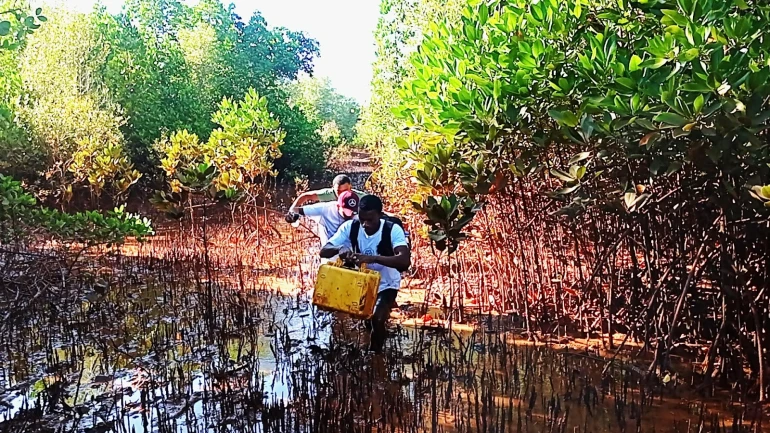 Fig 2. Access to the planting site by foot in thick mud
The dynamic and challenging environment of the mangrove forest adds layers of complexity to monitoring the planting sites, highlighting the level of dedication and commitment required for this key task. During the visit, TN and Eden monitoring teams conducted a survey at three sample plots within the Ankinao planting site. Employing a random point sampling methodology with a circular plot of a 20-meter diameter, we were able to identify all four dominant mangrove species in this planting site (Rhizophora Mucronata, Ceriops tagal, Bruguiera gymnorrhiza, and Avicennia marina) with tree heights ranging from 15 cm to 1.5 meters. We recognized the species' particularities such as growing location and growth habits. Despite facing time constraints, tidal movements, slow progress in pinpointing Eden plots using GPS, and the difficulty of navigating the muddy terrain, our team's efforts provided valuable insights into the ongoing regeneration of the mangrove forest.
The local community's voice
Our recent visit offered a deeper comprehension of the work undertaken by Eden through firsthand interactions with the local community. Conversations with local planters Mr. Tombo Albert and Mrs. Pascaline, and a community chief Mr. Benoit offered insights into their day-to-day routines for cultivating native mangrove species, as well as the benefits it brings.
Both men and women from the village shared how their integral roles in the project have generated a consistent income, transforming their lives. This financial stability enables them to satisfy their families' fundamental needs and invest in their children's education, illustrating the project's profound positive impact on the community's everyday life.
The dialogue underscored the importance of community participation in reforestation efforts. Addressing poverty is fundamental to successful restoration, especially in a country like Madagascar, burdened by one of the world's highest poverty rates. These communities, heavily reliant on fishing crabs, fish, and shrimp, benefit immensely from the revival of mangrove forests, as these ecosystems provide critical resources for wildlife and humans alike.
With over 90% of Madagascar's original forests eradicated, this has led to the displacement of entire animal species and hindered the Malagasy people's ability to farm and live off the land. The loss of mangrove estuaries has furthered coastal environment degradation through soil erosion. By prioritizing reforestation and involving local communities, we are not only restoring these vital ecosystems but also improving the lives of those who depend on them.
Planting mangroves plays a critical role in safeguarding lives during tropical storms. The intricate network of mangrove roots possesses the remarkable ability to reduce the destructive force of a storm surge. By absorbing a significant amount of the storm's energy, mangroves offer essential protection to coastal communities, effectively shielding them from the devastating impacts of cyclones. This highlights the invaluable contribution of mangroves in mitigating the risks posed by severe weather events.
Additionally, Mr. Benoit explains that participating in this reforestation effort brings planters from other remote communities such as The Betsirebaka who came to plant from another area to plant in Ankinao.
Risk and mitigation
The visit concluded with a ground discussion between Eden and Tree-Nation, which enabled us to understand some of the main limitations faced by our partner in Madagascar.
The uncontrolled and illegal charcoal business:
On our way back from the forest to shore, we witnessed one big challenge that we are well aware of: dozens of boats were back from neighboring forests, full of mangrove trees that were cut down and now ready to be sold and turned into charcoal.
As 40% of Madagascar's rural population lives in poverty and has little to no access to electricity, they have to resort to using firewood for completing daily tasks. Consuming approximately 100 kg of firewood monthly, Madagascan households use this energy for cooking, home heating and lighting.
This is a challenge Eden and the local planters face continuously, which has led to creating measures along the years to mitigate this problem through the use of guards to protect the forest. Also, educational programs were created to raise awareness of how the non-harvesting of these mangrove species can actually lead to greater benefits, as other options to improve livelihoods that are based on natural resources.
Finally, monitoring in the early stages, as well as promoting and creating new job opportunities to a broader scale of population, helps to mitigate and progressively reduce this problem.
Climate change and frequent tropical storms:
The island of Madagascar frequently bears the brunt of formidable tropical storms. In the early part of 2023, two severe tempests assailed the region, resulting in the inundation of numerous roads and the devastating destruction of vital institutions such as schools and health centers.
Mangrove forests, however, have proven to be effective natural bulwarks against such cataclysmic weather events as explained earlier in this article. This is why the regeneration of these natural barriers, upon which local communities and the survival of biodiversity depend, is one of the main focuses for TN and Eden.
Despite the challenges that we can encounter, we remain committed to continue our reforestation efforts in Madagascar. By working together with our local partners and persistently supporting the growth of mangrove forests, we enhance the living conditions of the communities involved in this project. Our actions contribute to a meaningful improvement in the lives of the local population by fostering opportunities, promoting environmental education, and building connections with remote locations—all in pursuit of a brighter future for our planet.
In the name of the local community, we thank our dedicated sponsors who consistently support our project in Madagascar. For more details about this project, please visit the following page: Tree-Nation Reforestation Project Madagascar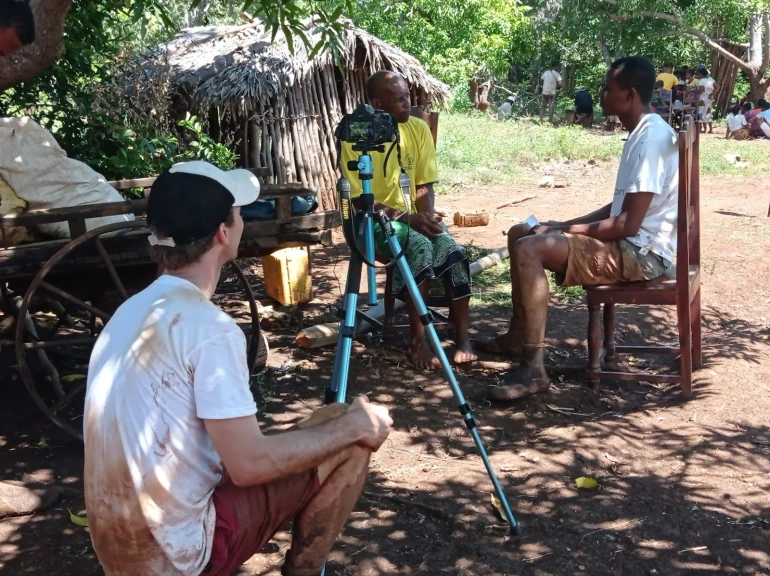 Fig 3. Tree-Nation team interviewing the local community


