
#CarbonCatchers #EcoEducation
It has long been known that smoking and consuming tobacco products is bad for your health. It has been proven to lead to lung and respiratory issues, decrease overall health and fitness and is the cause of many forms of cancer. Every year, tobacco use leads to the deaths of 7 million people globally and is the greatest cause of preventable death worldwide. Despite this knowledge, an estimated quarter of the world’s population as of 2015 were still using tobacco in some form or another, smoking an estimated 6 trillion cigarettes annually (World Health Organisation, 2019). While this is projected to decrease to one fifth of the world population by the year 2025, it is still an astounding number of people. The negative effects of tobacco are also not all related to health. Tobacco, in fact, has quite a nasty environmental burden. This article will detail how the tobacco industry has contributed to #deforestation, the #pollution associated with its production and the waste that comes after a cigarette has been smoked.
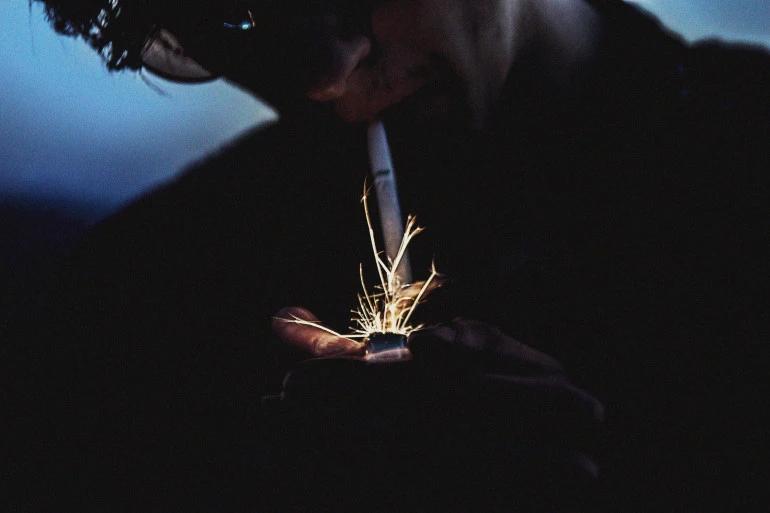
Figure 1: lighting up a cigarette. Image by Katarzyna Urbanek.
Deforestation and tobacco
The farming of tobacco leaf is an enormous industry, with an annual 7.5 million tonnes produced (Cairney et al., 2011). As with many major agricultural industries, the tobacco industry is a serious proponent of #deforestation. While not the leading cause as many anti-tobacco lobbyists claim, it has resulted in significant clearing of forested areas for its cultivation. The total area used for tobacco cultivation world-wide as of 2010 was 3,980,218 ha, just smaller than the size of Switzerland. The leading producers of tobacco worldwide are #China, with 1,345,680 ha of tobacco crops, and #Brazil with 446,361 ha of tobacco crops (Sacchetto, 2012). Wood is also required to cure tobacco, so this further contributes to deforestation. Tobacco leaves are cured after being harvested, whereby they are dried in a number of different ways. The tobacco used in cigarettes is typically ‘flue-cured’, where the tobacco leaves are hung in a curing barn and exposed to hot air, created through the burning of wood. An estimated 11.4 million tonnes of wood annually are used for the curing of tobacco (Geist, 1999). To put this into perspective, it is estimated that for every 300 cigarettes, one #tree is felled in order to cure the tobacco leaf (Muller, 1978). Deforestation associated with the tobacco industry equates to ~5% of global deforestation, however this figure is significantly higher in some countries (Geist, 1999). For example, tobacco farming is the main cause of deforestation in Malawi (70%) (Geist et al., 2008). The loss of these forest areas significantly contributes to #carbon emissions, as well as resulting in a loss of biodiversity by removing many species habitats. However, it is difficult to quantify what these emissions are as there is a severe lack of data as a result of the tobacco industry withholding the necessary information.
As tobacco is often grown as a #monocrop, without rotating it with other crops, the soil on which the tobacco is grown is left vulnerable to disease and decay. To overcome this, farmers use large amounts of agrochemicals including #pesticides, herbicides and fungicides (Lecours et al., 2012). This not only damages the environment but the health of the farmers from breathing-in these toxic chemicals (Arcury and Quandt, 2006). The growing of tobacco also reduces soil fertility, and thus requires many intensive #fertilisers (Moula et al., 2018). All of this leads to soil #erosion. Many countries which grow tobacco have experienced #desertification (the expanding of desert areas into non-desert areas) as a result of the soil erosion caused by tobacco growing. This has been seen in Jordan, India and Brazil (Kresat et al., 1998; Geist et al., 2009; Reddy and Gupta, 2001).
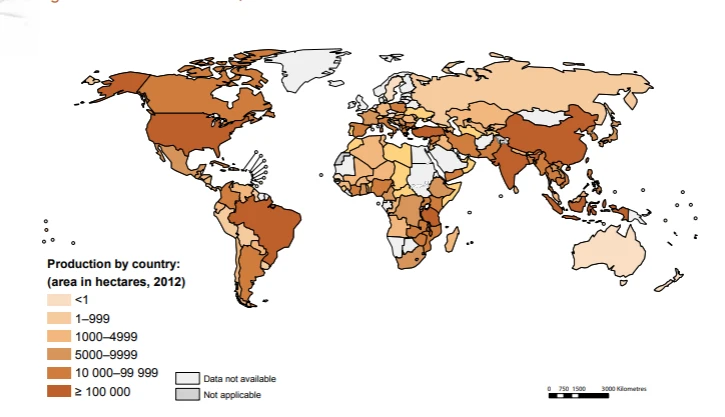
Figure 2: The cultivation of tobacco worldwide showing production area per country in hectares. Source: Tobacco Atlas.
Manufacturing and Product distribution
Few estimates exist of the pollution caused by tobacco industries. In particular, the manufacturing stage is the least well-documented despite being the most environmentally damaging stage of production. This fact has even been admitted by tobacco companies (Imperial Tobacco Group, 2006). One study conducted in 1995 estimated that the manufacturing of tobacco products produced 2 million tonnes of solid waste annually, 300,000 tonnes of nicotine-contaminated waste annually and 200,000 tonnes of chemical waste annually (Novotny and Zhao, 1999). Other toxic by-products of the manufacturing stage include ammonia, hydrochloric acid and toluene (a toxic chemical used as a solvent in paint thinner and if inhaled can cause severe brain damage). A later life cycle analysis study in 2002 estimated that the tobacco industry in the USA was responsible for emitting 16 million tonnes of CO2eq annually (Weber et al., 2009). There is a real problem with lack of data at this stage, and when data is obtained, it is usually self-reported from tobacco companies and is vague. There is no independent third-party which oversees the environmental cost of this stage in the process, thus, there is a major barrier to properly assessing the overall negative impact of tobacco on the environment.
Beyond the use of polluting chemicals in the manufacturing process, there is also a significant problem with plastic waste associated with the packaging of tobacco products. Assuming that there are 20 cigarettes in a packet, 300 billion packages are made annually for the 6 trillion cigarettes. On the assumption that each empty packet weighs 6g, the total packaging waste amounts to 1.8 million tonnes. If the waste from cartons used for distribution and packing is included, this amounts to at least 2 million tonnes of packaging waste. For reference, it is estimated that the packaging waste associated with water bottles is 1.83 million tonnes annually (The above calculations were obtained from the report by Novotny et al., 2015). Roughly 1.92 billion tonnes of waste are generated annually, meaning that the packaging waste alone from cigarettes represents 0.1% of global waste.
Consumption of tobacco
The consumption of tobacco products, such as cigarettes, directly leads to the emission of 2.6 million tonnes of CO2 and 5.2 million tonnes of methane annually. These emissions come from the smoke produced by the cigarette (Novotny et al., 2015). There is also an environmental cost in lighting the cigarettes. If it is assumed that one match can light 2 cigarettes, in order to light the six trillion cigarettes smoked globally, the production of three trillion matches would result in the felling of nine million trees to produce these matches annually (Novotny et al., 2015). Lighters are even more environmentally damaging than matches. 17 different materials are needed to make a lighter besides the butane fuel. These include harsh chemicals such as sulfuric acid and formaldehyde, as well as oil, natural gas and steel (Pierce and Cruey, 2013). 1 billion lighters are sold every year, and while not all of these can be attributable to tobacco use, it is likely a vast proportion of them are.
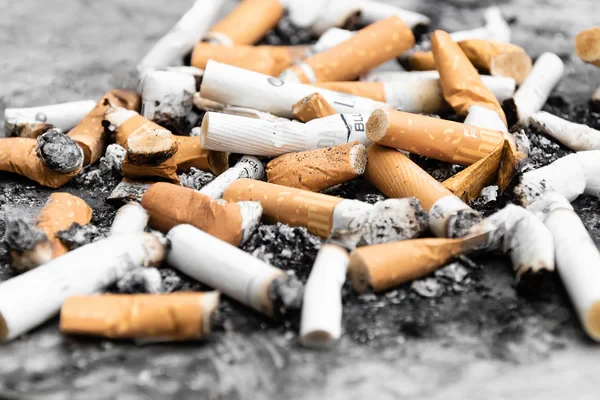
Figure 3: Discarded cigarette butts. Image by Pawel Czerwinski.
Post consumer waste
We have all seen discarded cigarette butts littering the streets. In fact, discarded cigarette butts are the single most-common piece of waste worldwide (Novotny and Slaughter, 2014). The cigarette butts are non-biodegradable, and contain a cellulose acetate filter (cellulose acetate is a synthetic fiber often used as a frame for eyeglasses), weighing approximately 170mg. From the trillions of discarded cigarettes butts annually, this adds up to roughly 175,200 tonnes of discarded cigarette butts. When this is added to the waste associated with production, manufacturing and packaging, the total waste of the tobacco industry is astronomical. Additionally, cigarette butts can also leach harmful (and often poisonous) chemicals into the environment, such as arsenic, lead and nicotine, and have the potential to affect local water quality, although this has not been assessed (Novotny et al., 2015).
Solutions
The obvious solution is to limit cigarette consumption, thereby reducing production and eventually the deforestation associated with production. Unfortunately, this is a momentous task. A major blockade to developing solutions to deal with the environmental cost of the tobacco industry is the lack of data. A first step should be to implement sanctions on tobacco companies to undergo independent third-party review processes of their environmental impact. It has been recommended by the World Health Organization (WHO) that the cost of environmental damage be incorporated into the price of tobacco, potentially as a form of tax. This would allow governments to recover some of the cost of pollution associated with the tobacco industry (World Health Organisation, 2017).
Researchers have been working on accelerating the time it takes for cigarette butt filters to degrade through modifying the composition of the filters (Roberston et al., 2012). This would greatly reduce the waste at the post-consumer stage although this stage is by far the least polluting part of the life cycle of a cigarette. Another possibility of reducing the waste from cigarette butts is to impose and enforce stricter rules on cleaning up the litter of cigarette butts.
Conclusion
It is important to consider these environmental impacts of tobacco cultivation for the benefit of our own health as well as that of the natural environment. The use of pesticides and the poor air quality when manufacturing tobacco products pose risks to human health which are excluded from current mortality estimates (World Health Organisation, 2017). The World Health Organization (WHO) insists that the environmental cost of cigarettes should be included in their price, however, the lobbying power of the tobacco industry is substantial. For example, they were one of the industries involved in initiatives to discredit the evidence for climate change, and thus it is likely they are responsible for hindering progress in tackling climate change. While this might seem like an insurmountable feat, awareness is growing of the negative impact tobacco companies have on the environment as well as of climate change and deforestation issues worldwide. Consumers have more power than they realise in tackling this issue, so next time you think of buying a packet of cigarettes, consider not only your own health you're putting at risk, but the health of our natural world.
Trends
- While tobacco consumption is predicted to decrease in the coming years, there is still a considerable proportion of the population which does smoke (25% as of 2015; predicted to decrease to 20% by 2025).
- Alongside soybean and maize plantations, tobacco plantations is one of the leading causes of deforestation in Brazil. There is an increasing trend in the amount of land used to grow tobacco leaf in Brazil in recent years, and this looks set to continue increasing.
- Tobacco companies have typically self-reported their carbon emissions and environmental footprint, leading to vague and limited information. Thankfully, more studies are investigating the environmental burden of the tobacco industry, and in efforts to appear more ‘green’, several companies have begun to comply with independent evaluations. There remains a long way to go before we reach proper transparency, however.
Calculations
- 6 trillion cigarettes are manufactured and smoked every year. In terms of packaging and waste, this adds up to 2 million tonnes of packaging waste and 172,500 tonnes of discarded cigarette butts.
- 5% of global deforestation is associated with the tobacco industry to clear land to grow tobacco leaves as well as the nine million trees cut down every year for the curing of tobacco.
- The smoking of cigarettes alone produces 2.6 million tonnes of CO2 (0.007% of global emissions) and 5.2 million tonnes of methane annually (0.065% of global emissions).
References
Arcury, T. and Quandt, S., 2006. Health and social impacts of tobacco production. Journal of Agromedicine, 11, 71-81.
Cairney, P., Studlar, D. T., Mamudu, H. M., 2011. Global tobacco control: power, policy, governance and transfers. Springer.
Geist, H., 1999. Global assessment of deforestation related to tobacco farming. Tobacco Control, 8(1), 18-28.
Geist, H., Otanez, M., Kapito, J., 2008. The tobacco industry in Malawi: a globalised driver of local land change. Dordrech: Springer.
Geist, H., Chang, K., Etges, V., Abdallah, J. M., 2009. Tobacco growers at the crossroads - towards a comparison of diversification and ecosystem impacts. Land Use Policy, 26(4), 1066-1079.
Imperial Tobacco Group, 2006. Progress in responsibility: Corporate Responsibility Review 2006. Bristol: UK.
Khresat, S. A., Rawajifih, Z., Mohammad, M., 1998. Land degradation in north-western Jordan: causes and processes. Journal of Arid Environments, 39(4), 623-629.
Lecours, N., Almeida, G. E. G., Abdallah, J. M., Novotny, T. E., 2012. Environmental health impacts of tobacco farming: a review of the literature. Tobacco Control, 21(2), 191-196.
Moula, M. S., Hossain, M. S., Farazi, M. M., Ali, M. H., Mamun, M. A. A., 2018. Effects of consecutive two years tobacco cultivation on soil fertility status at Bheramara Upazilla in Kushtia district. Journal of Rice Research, 6(1), 190.
Muller, M., 1978. Tobacco and the Third World: tomorrow’s epidemic? A War on Want investigation into the production, promotion and use of tobacco in the developing countries. London: War on Want.
Novotny, T. E. and Slaughter, E., 2014. Tobacco product waste: an environmental approach to reduce tobacco consumption. Current Environmental Health Report, 1(3), 208-216.
Novotny, T. E. and Zhao, F., 1999. Consumption and production waste: another externality of tobacco use. Tobacco Control, 8, 75-80.
Novotny, t. E., Bialous, S. A., Burt, L., Curtis, C., da Costa, V. L., Iqtidar, S. U., Liu, Y., Pujari, S., d’Espaignet, E. T., 2015. The environmental and health impacts of tobacco agriculture, cigarette manufacture and consumption. Bulletin of the World Health Organization, 93, 877-880.
Pierce, R. and Cruey, C., 2013. Life cycle assessment of bic lighters. Accessed May 2020, https://prezi.com/7y9rhq1kvfgc/life-cycle-assessme...
Reddy, K and Gupta, P., 2001. Reports on tobacco control in India. Technical Report New Delhi: Government of India, 142.
Robertson, R., Thomas, W., Suthar, J., Brown, D., 2012. Accelerated degradation of cellulose acetate cigarette filters using controlled-release acid catalysis. Green Chemistry.
Sacchetto, C., 2012. The impact of tobacco-growing on deforestation. UNITAB and FETRATAB.
Weber, C., Matthews, D., Venkatesh, A., Costello, C., Matthews, H. S., 2009. The 2002 US benchmark version of the economic input-output life cycle assessment (EIO-LCA) model. Green Design Institute, Carnegie Mellon University.
World Health Organisation, 2017. Tobacco and its environmental impact: an overview. Geneva: World Health Organisation.
World Health Organisation, 2019. Global report on trends in prevalence of tobacco use 2000-2025, third edition. Geneva: World Health Organisation.


