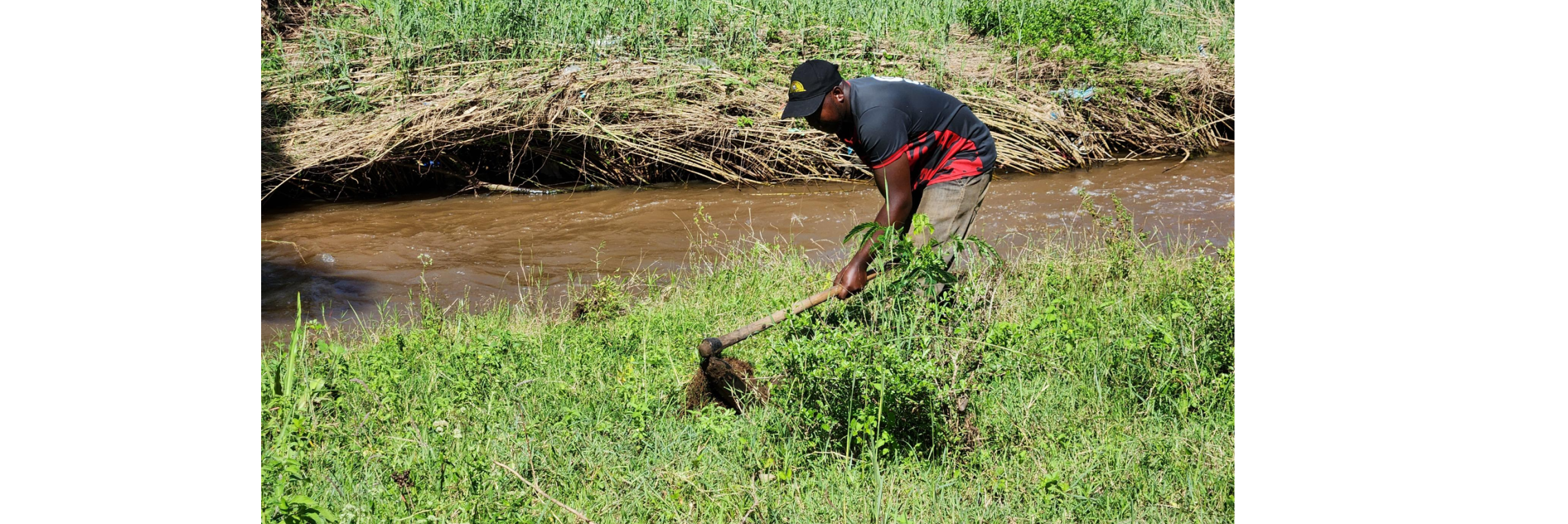

When we think about protecting water, our attention often goes straight to rivers, lakes, and springs. Yet healthy water sources do not begin in the water itself they begin on the land that surrounds them. The condition of land around rivers and streams has a direct influence on water quality and availability. When natural vegetation is cleared for farming, grazing, or other activities, the soil is left exposed. During heavy rains, topsoil is washed into rivers, carrying sediment and pollutants that reduce water quality and affect aquatic ecosystems. Over time, this leads to increased erosion and the gradual weakening of entire landscapes.
Protecting and restoring land around water sources is one of the most effective ways to safeguard these ecosystems. Trees and native vegetation stabilize riverbanks, reduce soil erosion, and slow down surface runoff. Instead of flowing rapidly over bare ground, rainwater is absorbed into the soil, helping to recharge groundwater and sustain rivers and springs throughout the year. This is why the Plant to Stop Poverty project restores land around water sources by planting indigenous trees within a 60-metre buffer along riverbanks. These restored areas act as natural protection zones, reducing erosion, improving water quality, and creating habitats where biodiversity can thrive.
The benefits extend beyond the riverbanks. Healthier water systems support farming activities, provide cleaner water for communities, strengthen biodiversity, and build resilience against changing weather patterns. Protecting these areas today helps secure vital resources for future generations. Restoration is not only about planting trees. It is about giving nature the space and conditions to recover, allowing natural systems to function as they should. Every tree planted along a riverbank strengthens the connection between healthy land and healthy water.
Water is one of our most valuable resources, and its protection begins long before it reaches our taps or irrigates our fields. It starts with how we care for the land. By restoring riverbanks and protecting water catchments, we are investing in cleaner water, healthier ecosystems, and stronger communities. Protecting water truly begins on land.
Comentarios (0)
Deja un comentario