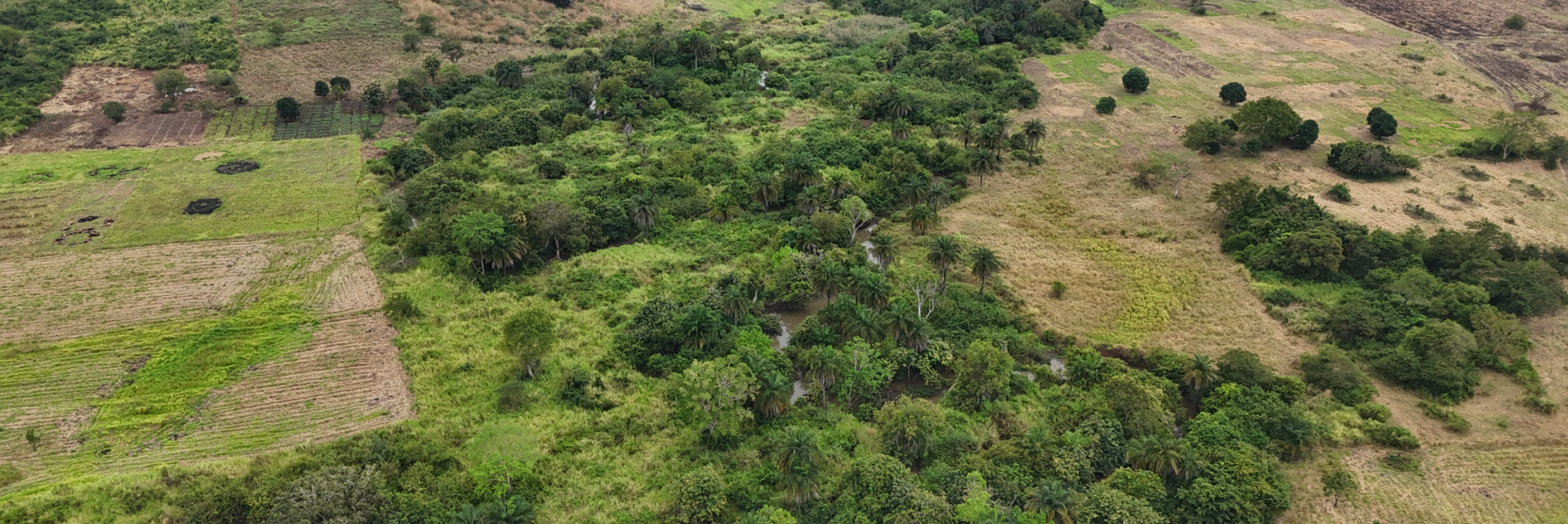

In tree planting, numbers are easy to celebrate. Ten thousand trees planted. One hundred thousand. One million. Big numbers give us a simple way to show progress, and they have their place. But what if the number of trees planted is not the best way to tell the story of restoration? A tree being planted does not automatically mean a forest is being restored. A seedling can be counted today and still be gone a few months later. It can struggle because of drought, grazing, fire, poor site conditions or lack of care. This is why planting is only one part of the work. What happens after planting is just as important as putting the seedling in the ground.
This is particularly important in the Plant to Stop Poverty project, where tree planting is connected to both environmental restoration and the lives of farming communities. The aim is not simply to increase the number of trees in the ground, but to help create landscapes where trees can survive and where communities can benefit from them. That means looking beyond planting day and paying attention to what happens over time. Are the trees surviving? Are they growing well? Are farmers able to care for them? Are degraded areas beginning to recover? Are trees helping protect soils and water sources? Are farmers gaining benefits from fruit trees or other useful species? These questions may not produce numbers as quickly as a planting event does, but they tell us much more about whether our work is actually making a difference.
This also changes the way we think about success. A project that plants 100,000 trees but loses most of them cannot tell the same story as a project that plants fewer trees and sees those trees survive and become established. The first number may look bigger, but the second may represent greater long-term impact. That does not mean we should stop counting trees altogether. Numbers help us plan, monitor progress and understand the scale of our work. The problem comes when the number becomes the whole story. If we only celebrate how many trees went into the ground, we risk overlooking the questions that matter after the planting is finished.
Perhaps, then, we need to count more than trees. We need to count the trees that survive. The areas that recover. The farms that become more productive and resilient. The communities that become more involved in protecting their natural resources. And the changes that continue long after the planting season is over. Because restoration is not really about how many trees, we can say we planted. It is about what those trees become and what changes because they are still there.
So, the next time we hear that thousands or millions of trees have been planted, perhaps we should ask another question: What happened to those trees afterwards? That is where the real story begins