
We will make a stop during Christmas and we will evaluate if we continue in January or if the weather, seeds, etc... indicate that it is better to finish the sowing season.
In addition to the planting days we are also holding free talks and workshops every Friday in the town of Orgiva. On different aspects of earth care, people care and community care. We will talk more about this in future posts and articles. In this one we will be focusing on the sowing.
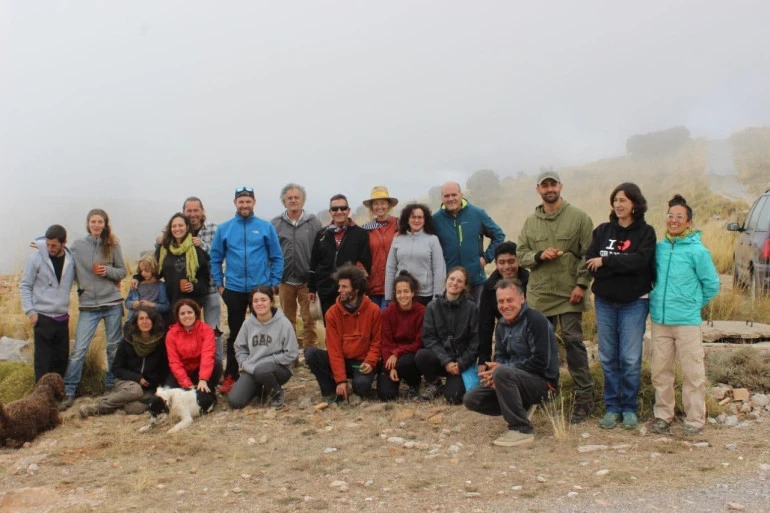
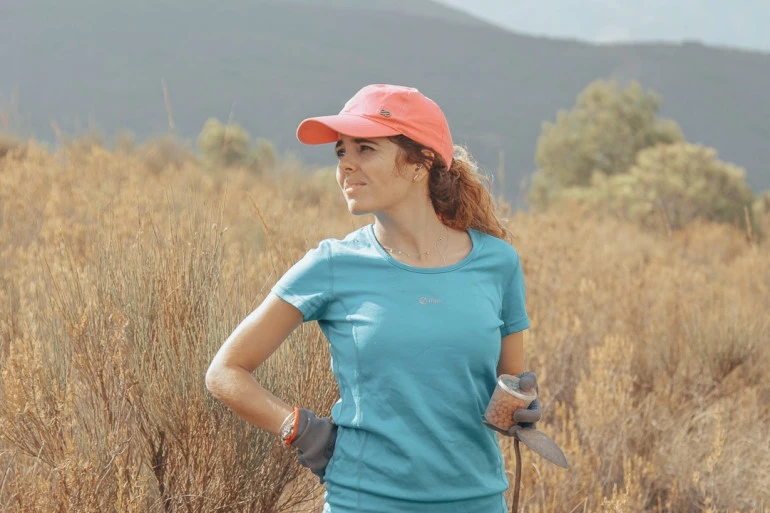
We have already carried out 2 sowing days. Both days were very beautiful, with volunteers coming from Granada University, families with children, climate justice activists, nature lovers, professional park rangers helping out... a beautiful human kaleidoscope in symbiosis with Sierra Lujar.
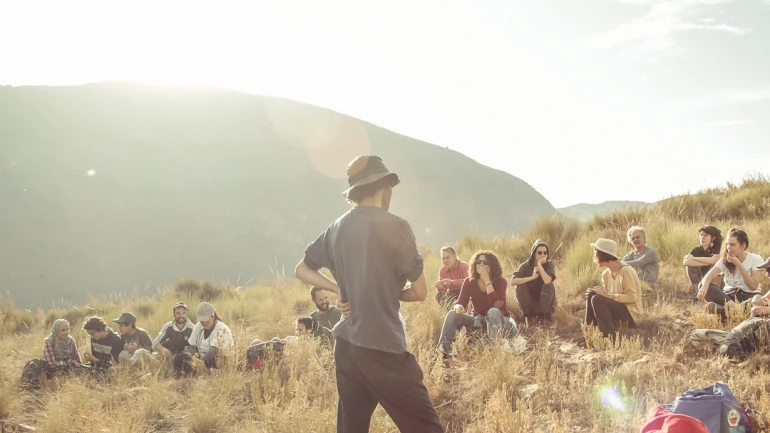
THE FIRST SOWING DAY - SUNDAY 17TH OCTOBER
It was in an area of Sierra Lujar called Cruce del Empalme. It is a very dense area of rosemary, rockroses, blackthorn, gorse, scarce pine trees from previous reforestation, 3 holm oaks and 1 wild olive tree.
We were 20 volunteers for about 5 hours of effective planting (although we start the activity at 9.30 am until 5.30 pm there are times for presentations, body care exercises, sowing instructions, rest and lunch breaks, and very nourishing conversations,...).
We split into two groups, 13 people doing normal sowing for reforestation and 7 people doing experimental sowing for research.
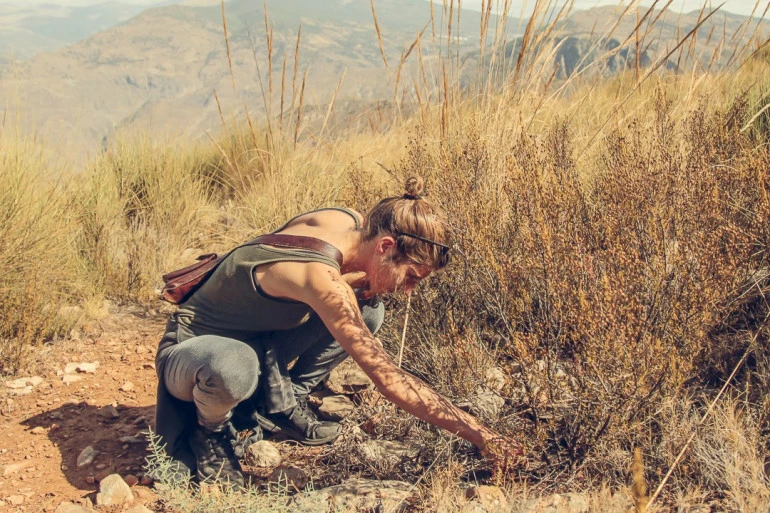
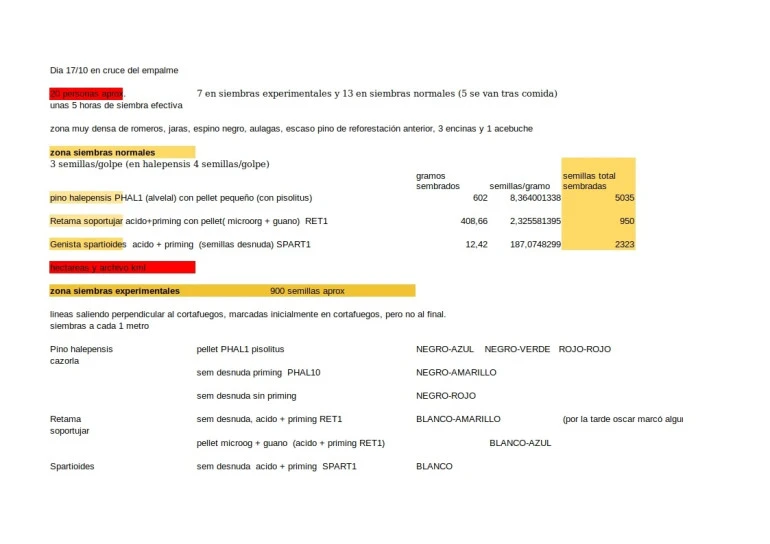
- In regular reforestation sowings we worked by sowing 3 seeds/strike (in halepensis 4 seeds/strike) with a spacing distance of 2 metres. We sew:
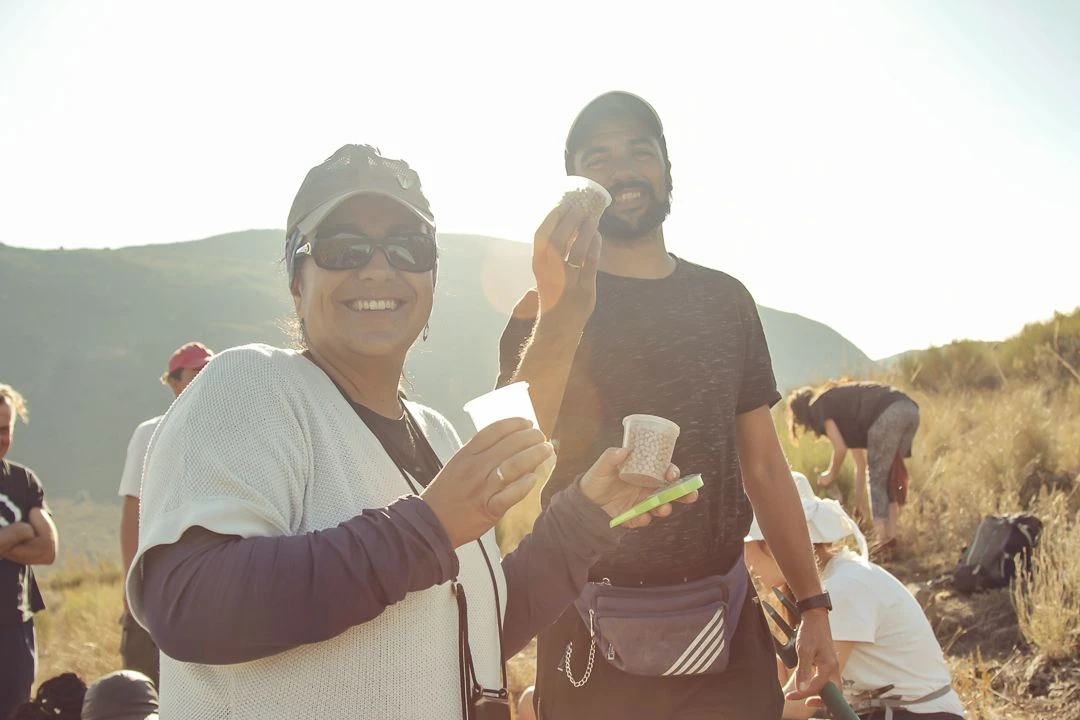
- halepensis pine with small pellet with pisolitus (ectomycorrhizal fungus) - 5035 units
- Soportujar broom treated with acid and priming with pellets (microorganisms + guano) - 950 units.
- Genista spartioides treated with acid and priming ( bare seeds) - 2323 units
These sowings were marked by a supervisor with GPS points in order to be able to monitor the evolution of the sowings over the next months and years.
- In the experimental sowings we sowed approx. 900 seeds of:
- halepensis pine with small pellets (with pisolitus),
- Retama de Soportujar treated with acid and priming with pellets (micro-organisms + guano).
- Genista spartioides treated with acid and priming ( bare seeds).
With a distance of 1 meter between each sowing.
These were marked with different colour ribbons, in order to identify them and to monitor their evolution in order to provide data for our research.
(see chart 1 for data on this sowing - in Spanish).
THE SECOND SOWING - SATURDAY 23RD OCTOBER
It was at the summit “La Cumbre” of Sierra Lujar at the beginning of the Castillejos ravine. It is an area of broom - piornos, sage, lavender and high perennial graminea, scattered holm oaks, and in the ravine there are gall oaks (quejigo), maple, barberry (agracejo)....We were 22 volunteers for about 4 hours of effective planting (from the road it took us almost 1 hour to get by car to La Cumbre, there we started the activity at 10.30 until 17.30, as we have already said there are times for introductions, body care exercises, sowing instructions, rest and lunch breaks, etc ...).
We were 22 volunteers for about 4 hours of effective planting (from the road it took us almost 1 hour to get by car to La Cumbre, there we started the activity at 10.30 until 17.30, as we have already said there are times for introductions, body care exercises, sowing instructions, rest and lunch breaks, etc ...).
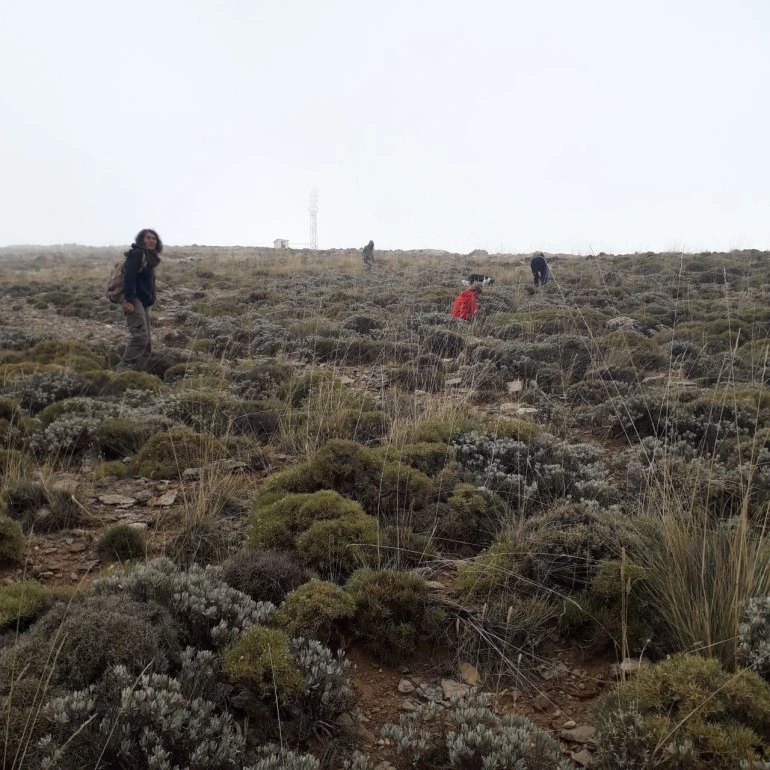
We split into two groups, 19 people doing normal sowing for reforestation and 3 people doing experimental sowing for research.
- In the regular sowing for reforestation, we separated into 2 groups again, each group led by an instructor. We worked by sowing 2 seeds/strike with a spacing distance of 3 meters apart. We sowed:
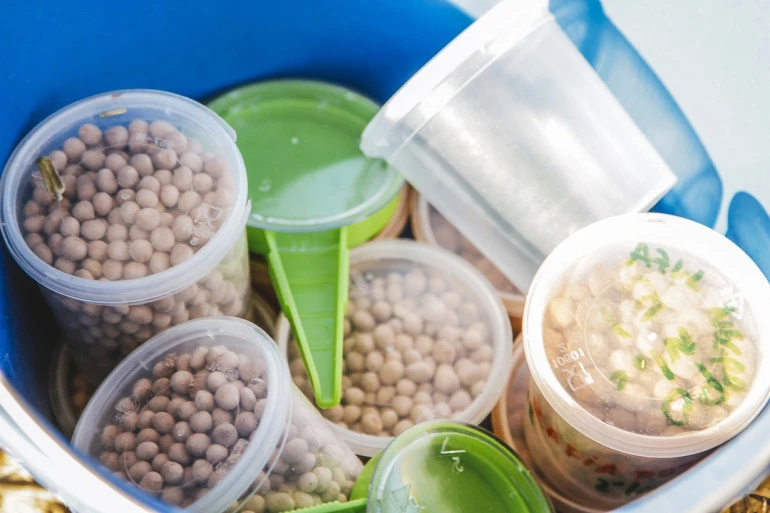
- one group laricio pine pellet with pisolitus, guano and Super Absorbent Polymers (SAP) - 2050 units.
- another group, laricio pine pellet with pisolithus and SAP - 2050 units
- both groups pelleted laricio pine with thinner coating and pisolith - 2924 units.
These plantings were marked by the instructors with GPS points in order to be able to monitor the evolution of the sowings over the next months and years.
- In the experimental sowings we sowed approx. 700 seeds of:
- halepensis pine with pellet pisolitus,
- halepensis pine bare seed with priming,
- laricio pine with priming, pellet pisolitus, guano and SAP
- laricio pine bare seeded with priming
- lary pine pellet without burying
With a distance of 1 meter between each sowing.
These were marked with different colour ribbons, in order to identify them and to monitor their evolution in order to provide data for our research.
(see chart 2 of data for this sowing)

This day was so blessed that in the last hour of sowing it started to rain, so that our seeds were already receiving their first sown water.
During the next months and years we will be monitoring both normal and experimental sowing areas, and we will share the results of these studies and works openly and for free.
And we carry on sowing!!! we still have many sowing days ahead of us in the coming months!!!!
We will keep you updated!!!