
#CarbonCatchers series
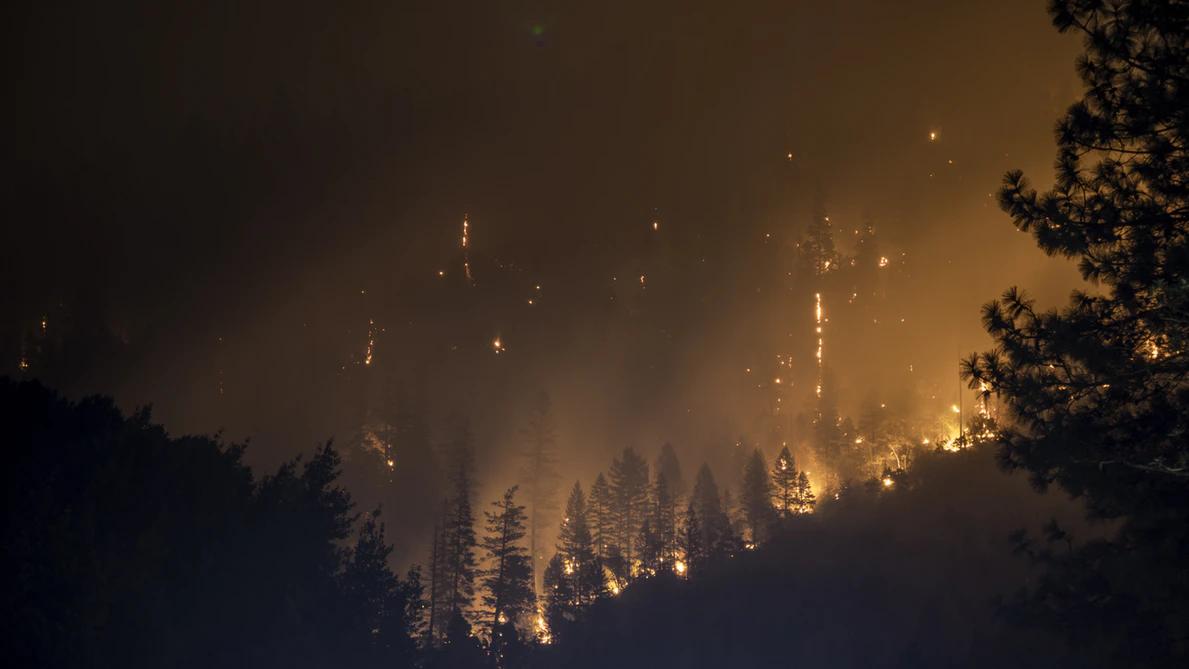
Forest fires have been a hot topic in the final few months of 2019. From the destructive forest fires in the #Amazon to the devastating bushfires in Australia, it seems the prevalence and intensity of these fires have been increasing. This is one of the side effects of climate change. However, forest fires are certainly not a modern phenomenon. They have been occurring for hundreds of millions of years and are a key #ecosystem process. They have even shaped the course of #evolution in some cases (Bond et al., 2005). This article is the first in a series of three focusing on #forest fires and will look into the changing trends in forest fires coupled with changing climates in order to make sense of the situation we find ourselves in today.
But first, how do forest fires occur? In order for a fire to start, it needs oxygen, fuel and heat. The fuel typically is dried out forest brush, grass, trees or other forms of vegetation. The heat from the sun can start a fire in the case where the ‘fuel’ is dry enough to burn. Prolonged dry periods during drought conditions do just that. Lightning is also responsible for the ignition of many forest fires. From 1992 to 2012 in the United States, 16% of forest fires were started by lightning (Balch et al., 2017). However, many fires nowadays are human induced, with an estimated additional 40,000 #wildfires per year being attributed to human causes. This topic however will be covered in a future article in more detail. In many instances, these natural forest fires need to occur. They clear the forest of dead wood and vegetation that would have otherwise taken a very long time to break down. This returns important nutrients to the soil, promoting the growth of new plants and trees, maintaining the health and #sustainability of the forest. Unfortunately, the scale and prevalence of forest fires we see today are interfering with these natural processes, leaving the landscapes scorched and desolated.
Prehistoric Forest Fires
As mentioned, forest fires have been occurring for hundreds of millions of years as an important ecosystem regulatory process. An ecosystem regulatory process is something that takes place to maintain the health and proper functioning of an ecosystem, such as predators regulating a prey population (Sugihara et al., 2006). Since the emergence of terrestrial plants 420 million years ago, fire has acted in this way to regulate #vegetation. The proof for the occurrence of forest fires in prehistory come from the fossil record in the form of fossilized charcoal, known as #fusain (Scott and Glasspool, 2006). This is a black, fibrous material which is crumbly and often preserves plants and burnt vegetation in great detail. It is formed when organic matter (e.g. plant leaves) is exposed to high temperatures such as in fire. Fusain also shows evidence of #pyrolysis, a form of decomposition caused by fire (Scott, 2000; Jones and Chaloner, 1991). There is further evidence for forest fires occurring as long ago as the Late Triassic period (~225 million years ago) from petrified wood scars which closely resemble scars left by wildfires in modern times (Byers et al., 2014). It is during the Triassic period that dinosaurs and turtles first evolved.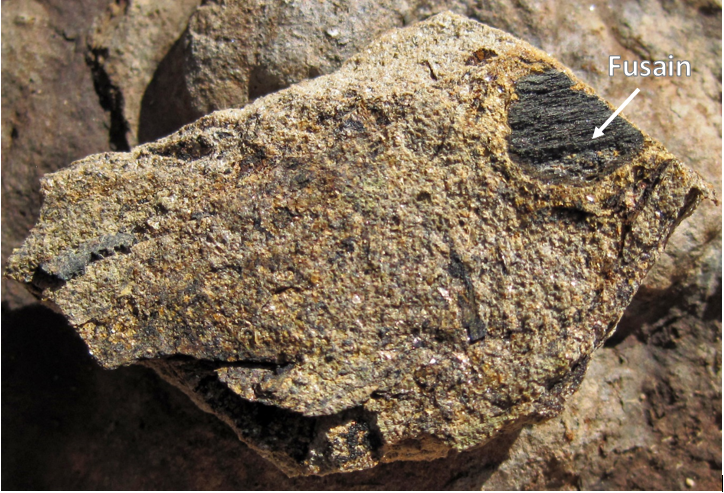
Figure 1: Fossilized charcoal (fusain) embedded in sandstone. Image by James St. John.
Before the emergence of terrestrial plants, the earth’s #atmosphere was too oxygen deprived to support fire, consisting mainly of Nitrogen with small amounts of oxygen and trace amounts of other gases such as CO2, methane and water vapour (Pausas and Keeley, 2009). Oxygen was produced entirely by marine plants and did not reach higher than 13% of the atmospheric composition in terms of concentration. Atmospheric oxygen concentrations of 13% or below are the lower threshold below which fires cannot occur (Jones and Chaloner, 1991). An increase in atmospheric oxygen from 13% in the Devonian period (420 million years ago) to 30% in the Carboniferous period (350 million years ago), associated with the spread of terrestrial plants, resulted in increased and more widespread wildfires. The increase in atmospheric oxygen resulted from an increased population of plants #photosynthesising and producing more oxygen, which gave fuel for the wildfires clearing land allowing terrestrial plants to spread further and thus produce more oxygen in a positive feedback loop. This trend was reversed during the Triassic period when oxygen levels fell again after a major mass extinction event, which reduced the numbers of plants. This mass extinction event, known as the Permian extinction event, is thought to have been triggered by meteor impacts, #volcanic eruptions and extreme climate change, also affecting oxygen concentrations in the atmosphere. It is theorised that the occurrence of fire was tied to the atmospheric oxygen levels throughout all of history (Scott and Glasspool, 2006; Pausas and Keeley, 2009).
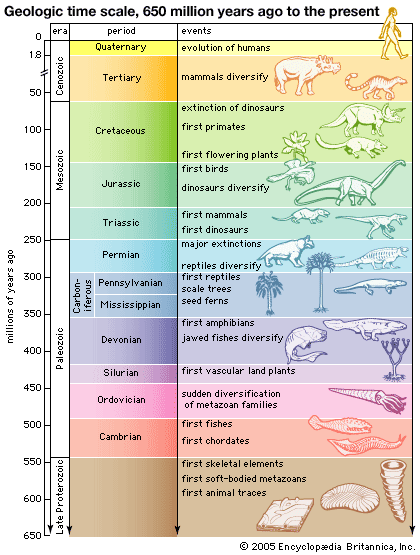
Figure 2: Geological time scale detailing differing periods from 650 million years ago until present. Image from Encyclopedia Britannica.
An interesting period to investigate is the #Jurassic period, 195 million years ago. During the Jurassic period, CO2 levels were approximately 7 times above modern pre-industrial levels, atmospheric oxygen was roughly 26% and mean surface temperatures were 3°C higher than present caused by large amounts of volcanic activity (Belcher et al., 2010). In fact, these CO2 levels and mean surface temperatures are similar to those projected in an intermediate climate change scenario that humanity currently is heading towards. Therefore, we can look to the Jurassic period for warning signs of what may be to come. In terms of forest fires, there is fossil evidence for high-frequency, light surface fires which burn shrubs and lower tree branches but do not seriously damage the tree throughout the period (Francis, 1984). Furthermore, at the dawn of the Jurassic period as widespread forest fires became more common, a mass extinction event occurred with an estimated 42% of all terrestrial vertebrates going extinct during this period, likely as a result of climate change, rising sea levels and volcanic activity (Olsen et al., 1987).
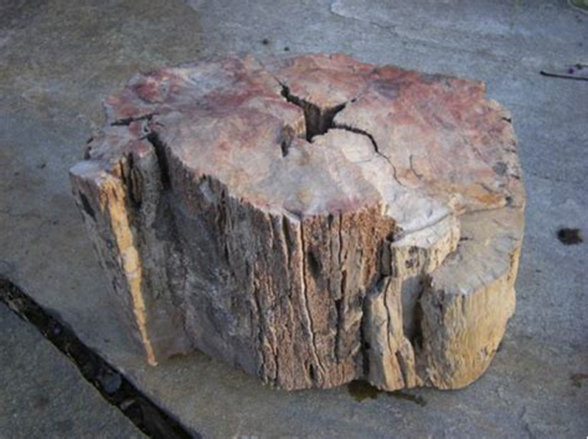
Figure 3: Fire-scorched petrified wood found by Byers et al., 2014.
Forest fires and evolution
The occurrence and frequency of fire during these periods acted as an evolutionary force on terrestrial plants and vegetation. An evolutionary force is one which drives the adaptation of a species, giving the species a particular trait which enhances their overall fitness. A species fitness describes their chances of survival in a particular environment. For example, it is known that the development of tree bark occurred as a response to a number of environmental factors including fire. The #genus Pinus (pine trees) usually dominates in fire-prone ecosystems as they have a thick bark, whereas those species of the genus in less fire-prone areas such as deserts and timberline have an exceptionally thin bark (Keeley and Zedler, 1998). Another example where fire acted as an adaptive force is in Northern Hemisphere gymnosperms (seed-producing plants) which developed the ability to resprout, something most gymnosperms cannot do (Keeley and Zedler, 1998). The evolution and spread of C4 grasses (such as maize and sugarcane; sometimes referred to as warm grasses) is also attributed to an increase in fire activity as widespread fires cleared the landscape of thick forests, allowing these grasses to colonise the area and spread (Keeley and Rundel, 2005).
Many plants are triggered to germinate by fire or fire-related effects. Often, fire breaks the seed coat, ending seed #dormancy, allowing water to enter the seed and inducing #germination (Pieterse, 1986). This is known as #pyriscence, sometimes referred to by the broader term #serotiny where an environmental trigger results in #seed release. Pyriscence is common in #angiosperms (flowering plants) of Australia and South Africa such as #Eucalyptus. In the northern hemisphere, pyriscence is common in a range of #coniferous plants such as #Sequoia, #pine, #cypress and #spruce trees. Germination can also be triggered by smoke and is a widespread occurrence in angiosperms in South Africa, Australia, California and the Mediterranean basin (Keeley and Bond, 1997). This highlights the importance of fire as an ecosystem process and in shaping the environment we live in.
Conclusion
It is clear that while the forest fires of 2019 were devastating to the natural environment, in some ecosystems their occurrence is necessary in order to maintain the health and proper functioning of that ecosystem. Furthermore, there is much evidence for the occurrence of large-scale forest fires, similar to those we see today, from the fossil record indicating they are natural occurrences. However, there is concern that with human-induced climate change, these forest fires will increase in intensity, and completely ravage our natural landscape as we know it. The relationship between humans, climate change and forest fires will be explored in part 2 of this series and solutions to our forest fire crisis will be discussed in part 3.
Trends
· Forest fire occurrence changes with atmospheric oxygen concentrations. Atmospheric oxygen levels have remained stable over the past 800,000 years, with small declines noticed. It would be expected that projected atmospheric oxygen declines would decrease fire prevalence. However, as is evident from the last year, fire prevalence is increasing. Other factors of stronger influence are at play such as human induced fires and desertification (also a consequence of human induced deforestation).
· Forest fires are essential natural processes needed to regenerate a decaying landscape and have resulted in the evolution of many important plant species we know today such as Eucalyptus, maize grasses and sugarcane.
· If we take the Jurassic era as a model of what future climate change scenarios will look like, forest fire occurrence will most certainly increase.
Calculations
·The first forest fires were seen to occur roughly 420 million years ago, concurrent with the arrival of the first terrestrial plants.
· It is estimated that 84% of wildfires are caused by humans.
·13% atmospheric oxygen is the minimum level of oxygen required for fire to occur. Above 35% atmospheric oxygen, plant biomass would burn too readily to support any positive forest growth. This is known as the ‘fire window’.
Keywords: #Fire #ForestFires #wildfires #deforestation #fusain #oxygen #ecosystem #prehistoric #EcoEducation
References:
Balch, J. K., Bradley, B. A., Abatzoglou, J. T., Nagy, R. C., Fusco, E. J., Mahood, A. L., 2017. Human-started wildfires expand the fire niche across the United States. Proceedings of the National Academy of Science of the United States of America, 11, 2946-2951.
Belcher, C. M., Mander, L., Rein, G., Jervis, F. X., Haworth, M., Hesselbo, S. P., Glasspool, I., McElwain, J. C., 2010. Increased fire activity at the Triassic/Jurassic boundary in Greenland due to climate-driven floral change. Nature Geoscience, 3(6), 426-429.
Bond, W. J., Woodward, F. I., Midgley, G. F., 2005. The global distribution of ecosystems in a world without fire. New Phytologist, 165, 525-538.
Byers, B. A., Ash, S. R., Chaney, D., DeSoto, L., 2014. First known fire scar on a fossil tree trunk provides evidence of Late Triassic wildfire. Palaeogeography, Palaeoclimatology, Palaeoecology, 411, 180-187.
Francis, J. E., 1984. The seasonal environment of Purbeck (Upper Jurassic) fossil forests. Palaeogeography, Palaeoclimatology, Palaeoecology, 48, 285-307.
Jones, T. and Chaloner, W., 1991. Fossil charcoal, its recognition and palaeoatmospheric significance. Palaeogeography, Palaeoclimatology, Palaeoecology,97, 39-50.
Keeley, J. E. and Bond, W. J., 1997. Convergent seed germination in South African fynbos and Californian chaparral. Plant Ecology, 133, 153-384.
Keeley, J. E. and Rundel, P. H., 2005. Fire and the Miocene expansion of C4 grasslands. Ecology letters, 8, 683-690.
Keeley, J. E. and Zedler, P. H., 1998. Evolution of life histories in Pinus. Pages 219-250 in Richardson, D. M., ed. Ecology and Biogeography of Pinus. Cambridge University Press.
Olsen, P E., Shubin, N. H., Anders, M. H., 1987. New early tetrapod assemblages constrain Triassic-Jurassic tetrapod extinction event. Science, 237, 1025-1029.
Pausas, J. G. and Keeley, J. E., 2009. A burning story: The role of fire in the history of life. BioScience, 59(7), 593-601.
Pieterse P. J., 1986. The effect of fire on an Acacia longifolia seed bank in the south-western Cape. South African Journal of Botany, 52, 233-236.
Scott, A. C., 2000. The Pre-Quaternary history of fire. Palaeogeography, Palaeoclimatology, Palaeoecology, 164(1-4), 281-329.
Scott, A. C., Glasspool, I. J., 2006. The diversification of Palaeozoic fire systems and fluctuations in atmospheric oxygen concentration. Proceedings of the National Academy of Sciences, 103(29), 10861-10865.
Sugihara, N., van Wagtendonk, J. W., Fites-Kaufman, J., 2006. Chapter 4: Fire as an Ecological Process. In: Fire in California’s Ecosystems. University of California Press, 58-74.
Commentaires (0)
Laissez un commentaire