
by Dexter B. Dombro
A recent article in the British “The Telegraph” newspaper, entitled "We need to plant 3 billion trees to save the planet – but not just any trees", caught my eye. Not so much for the staggering number of trees the article suggests, but rather for how that tree planting should be done. On careful reading of the article, I am happy to say that the compensation planting efforts we have been practicing at La Pedregoza, and which we have been promoting to our clients and tree planting partners, completely coincide with the strategy envisioned by “The Telegraph” article.
The article’s author, Alexandre Antonelli, lays out 5 key points. I will address each point, mentioning what we are doing at La Pedregoza in that context. The foremost risk he identifies, with which I am completely in agreement, is that global-scale reforestation is not without risks if biodiversity is not a primary consideration. We need to be planting the right trees, for the right reasons, in the right place and in the correct manner. So what are the 5 points?
1. Any tree-planting strategy should have more than 1 goal in mind.
At La Pedregoza clients almost always talk about compensating for their carbon footprint by generating carbon credits, using the trees planted to capture carbon in the fight against global warming. Our response is always to state that carbon capture is an important goal, but only one of many.
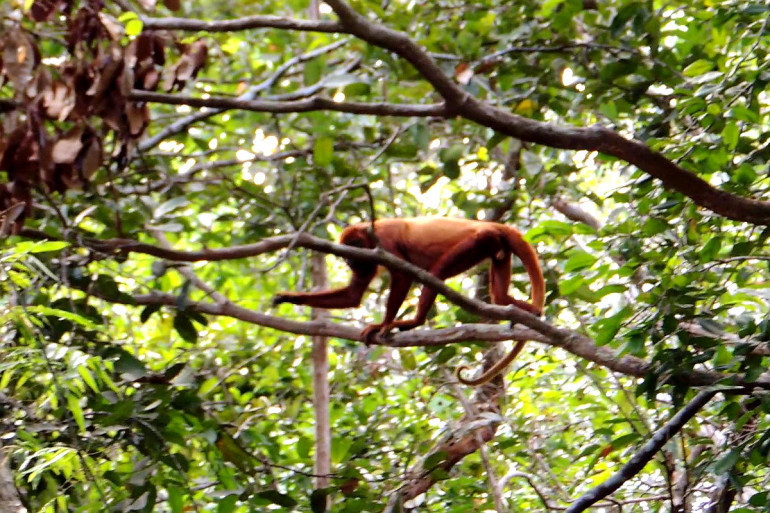
Tree planting should also use native tree species as a way to conserve and protect biodiversity. This isn’t just biodiversity in terms of tree or plant species, but biodiversity in terms of animals and insects that depend on those tree species for habitat, food, nesting sites or other services.
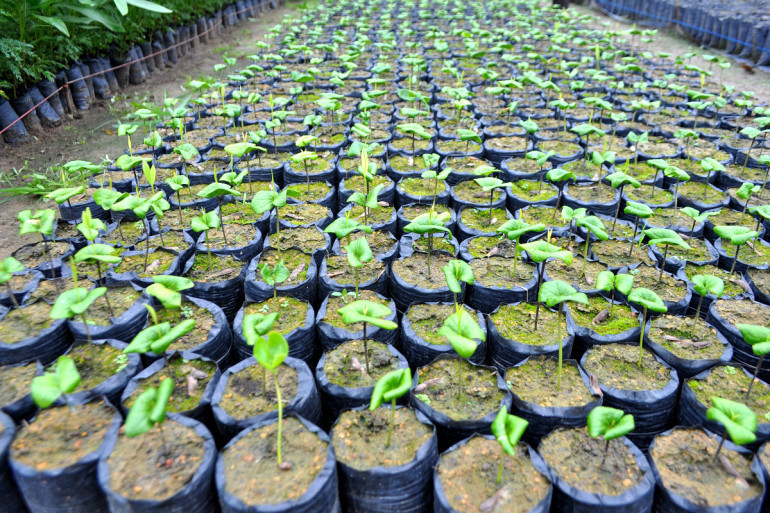
Employing analog forestry as a planting methodology means we automatically plant several different species of native trees in a mix, to copy the climax vegetation of the region in which we are working. This mix encourages birds and animals to deposit other seeds in the newly planted areas, which in turn leads to natural regeneration of a more complex forest in different stages of development.
When La Pedregoza employs the practice of analog forestry, as opposed to the planting of a single species mono-culture, we not only guarantee biodiversity, but we also ensure more inclusive and pleasing landscapes, resistant to plagues and diseases, and more beneficial to human health and sustenance. Diverse forests are key to the Japanese concept of Shinrin-yoku or forest bathing, considered to have a positive impact on our spiritual well-being, our education and our culture. Humans need forests, forests do not need humans.
2. Any tree planting strategy should ask which trees, where and when.
The beauty of the analog forestry approach is that it permits the inclusion of introduced tree species when it makes sense. While native species should be the priority, there is absolutely nothing wrong with using an introduced species if a restoration project needs to absorb heavy metals from the soil (Acacia mangium is good for this), or rapid growth can ensure that a deep root system holds ground water and prevents soil erosion (Eucalyptus pellita is good for this). At La Pedregoza we look at the social behavior of tree species when determining the correct mix of trees, the location where we want to plant, the soil and climate conditions and the best season in which to plant, such as right before or after annual inundations.
In his article, Alexandre Antonelli mentions that urban planting at times requires a different selection of species to deal with elevated heat, pollution, higher levels of CO2, noise and vibration. Some trees do not handle urban stress well, and the planter may have to consider shrubs or grasses as an alternative in city settings.
3. Any tree planting strategy should look at how to plant and cultivate the species being considered.
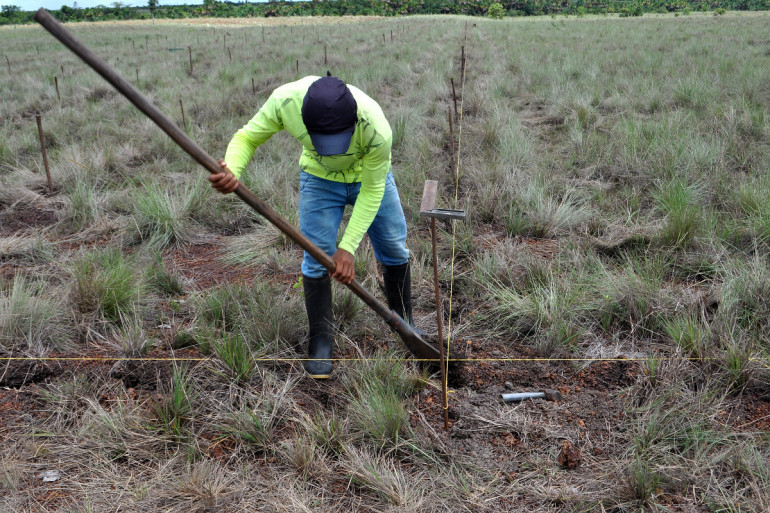
Difficult to access areas may require different strategies. Seeding from airplanes works well in some locations, but may not work at all in others. For example, the grasslands of eastern Colombia are prone to savanna fires, killing seedlings and burning seeds, unless extensive fire breaks are employed. Birds can be an enemy, if they eat the seeds. This is why tree nurseries are often required to give the trees a head start, and to make them more robust once planted.
Planting in stages is required in some areas, whereas an analog forestry approach invites birds and wildlife that will start to seed additional species in a reforestation or afforestation zone. Cultivation has to consider wind breaks (some trees are not very elastic in high winds), the type of soil (clay soil with rainfall often doesn´t support trees with superficial or shallow root systems), and what if any nutritional needs the trees might have in poor soils (a typical problem in the tropics).
Trees that produce a lot of dead-fall (leaves and twigs) are important components in new cultivations to support mycorrhizzal fungi, wood decaying fungi, dung and other beetles and bird life. The tree mix should consider the needs of pollinators (bees, butterflies, bats, humming birds and others), as another requirement for the long term success of a new or newly restored forest. At La Pedregoza we try different things with the above in mind. We don’t always get it right the first time, but we learn from our mistakes and steadily improve our tree planting methodology.
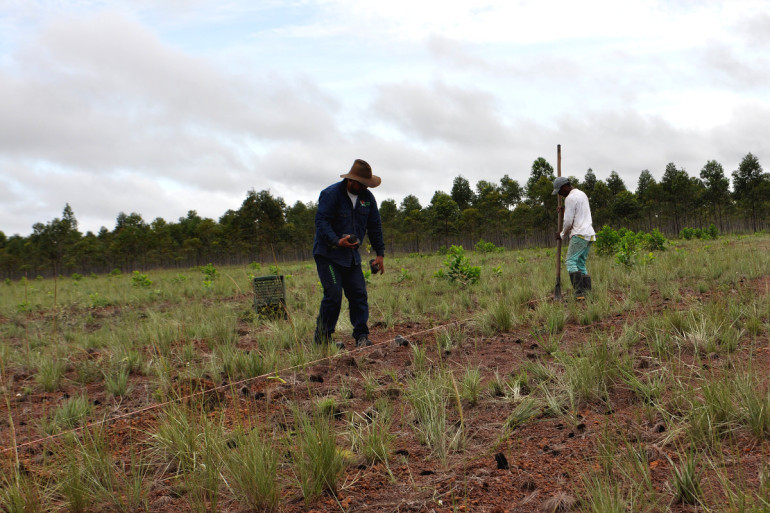
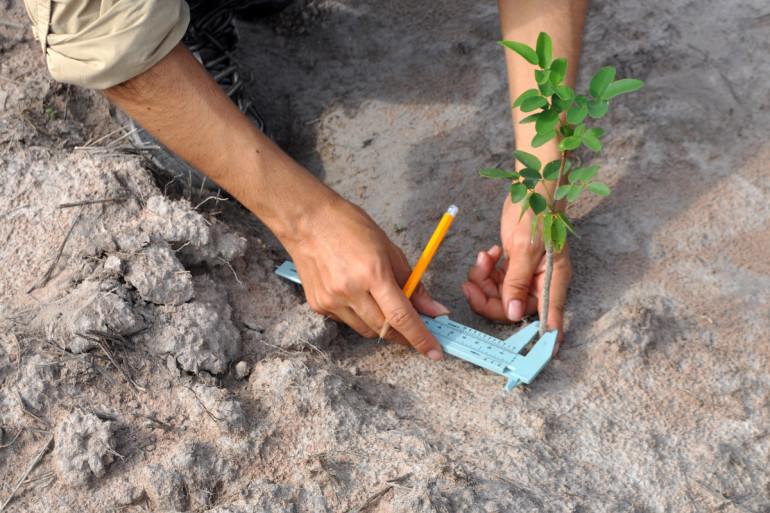
Foresters in general think differently to other people. Any forest establishment plan is based on the desired results in 10, 20 or even 50 years. Planting trees and forests is not a short term activity. Establishing monitoring parcels in the newly planted areas is useful for more than just measuring carbon capture or biomass growth, it tells us how the forest is developing, what problems it is facing, and more often than not what surprises it has in store for the planter, such as new species appearing, soil changes, micro climates and more.
4. Any tree planting strategy needs to be clear on where to plant.
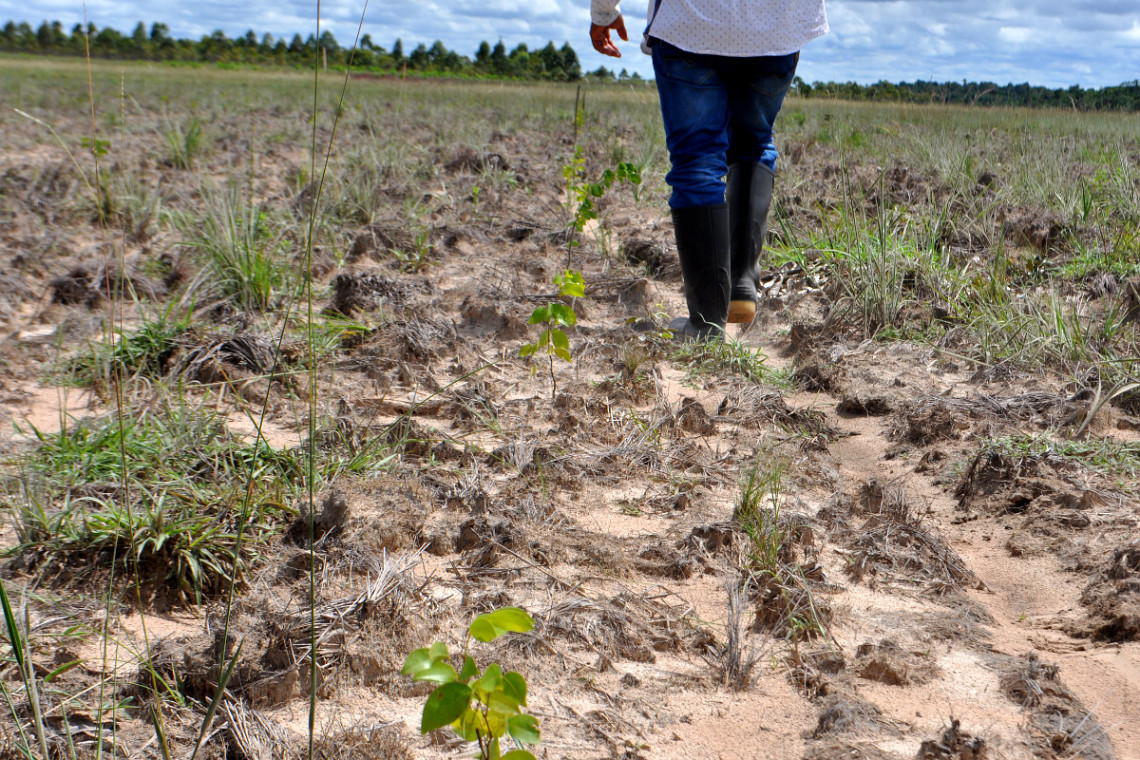
Given the terrible deforestation our planet has suffered, La Pedregoza looks first to locations that were previously forested (reforestation), thereby restoring degraded land, recuperating biodiversity and rehabilitating eco-system services. Under no circumstances should any planting require the removal of existing forest in order to plant a commercial tree species. La Pedregoza is a fervent advocate of zero deforestation, which means we will not participate in anything that involves cutting some trees in order to plant other trees.
The relationship between trees also affects where to plant. Some species may, in fact, create a barrier for other species. Acacia mangium, for example, is not social and will kill other tree species, by robbing their access to nutrients. Some trees can be invasive, if planted in the wrong type of location. New forests need to provide corridors for as many species as possible, of flora and of fauna.
5. Last, but definitely not least, back to the concept of zero deforestation.
Avoiding any kind of deforestation or cutting of natural forests is preferable to having to plant a new forest or to reforest. La Pedregoza has a history of fighting deforestation, especially fighting selective logging that targets only some species in a forest. The money otherwise spent planting can be used to conserve and protect existing forests. Conservation and planting are both important strategies. In that sense, educating the public over the importance of a forest’s eco-system services and the large number of other organisms that depend on existing forests is perhaps the most important aspect.
People in Europe are understandably proud of their forest management practices, but often ignore that they are importing lumber from third world countries and thus contributing to global deforestation. The impact of climate change is local, but the cause is global. Preserving existing forests is the first step in planting the three billion trees we need, in order to save the planet.
La Pedregoza is working hard to get it right. Tree-Nation is working hard to get it right. Others are trying, but maybe haven’t given enough thought to the how and why. Every country needs to bring tree planters, policy makers, scientists, NGO’s and the private sector seeking to compensate for their carbon footprint together, to maximize the results and to ensure that our global tree planting efforts do indeed save the day.
#tnphoto
Commentaires (4)
Laissez un commentaire