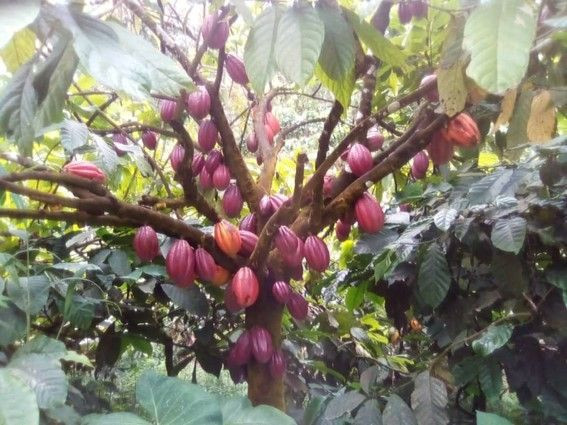

by Lindsay Cobb
Africa produces more than 70% of the world’s cocoa, but the farmers at the core of the $100 billion+ industry are barely making enough money to survive. At the same time, cocoa farming is responsible for millions of hectares of deforestation, eliminating as much as three million hectares of forest between 1988 and 2008 alone.
“The idea is to make the value chain more sustainable,” says Ashleigh Burgess, Deputy Director of Programs at agroforestry non-profit Trees for the Future, “because decades and decades of monocropping and a bottom-line approach have left the planet in bad shape and have left farmers really vulnerable".
Burgess and her colleagues are part of a growing movement to embrace cocoa agroforestry: intercropping beneficial tree species and other crops alongside cocoa trees to improve soil fertility, sequester carbon, increase yields, improve nutrition, diversify farmers’ income opportunities, and improve their quality of life.
Tree-Nation is sponsoring the training of the next generation of cocoa farmers in Cameroon with a goal to plant more than 1,000,000 agroforestry trees on 500 Cameroonian cocoa farms during 2022 and 2023. These cocoa farmers are improving their land and cocoa crops through agroforestry.
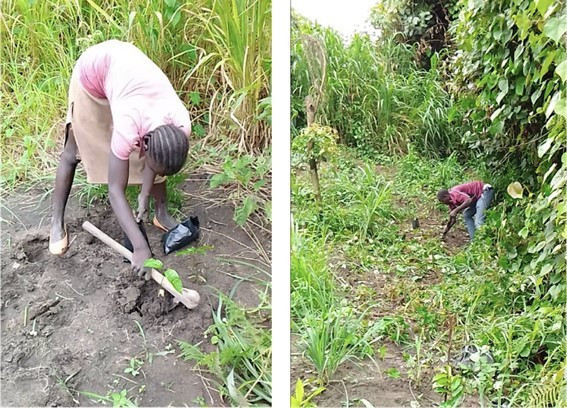
The problem with cocoa as it is now (and other cash crops like coffee, timber, and livestock) is the way it is grown. As Burgess points out, cocoa trees are grown with a monocrop intensification model in mind. Farmers clear the land to make room for row upon row of cocoa trees, and as plant and animal diversity disappear, so do the natural processes that keep the land healthy. Monocropped land loses fertility and the crops are susceptible to disease and insect plagues.
“There are concerns about cocoa production continuing to drive deforestation,” says Ethan Budiansky, Director of Environment for the World Cocoa Foundation, “which is directly linked to issues pertaining to low productivity and the need to expand farms – old farms, diseased farms – just in order to maintain or increase overall cocoa production.”
With their livelihoods dependent on their crop, farmers spray chemical pesticides and fertilizers to improve the productivity of the dying land. But, ultimately, the solution is to clear a new section of land and start the cycle over again, a move that is counterintuitive to what cocoa needs to thrive.
“Cocoa is made to be a forest plant – it loves forests!” says Etelle Higonnet, Senior Campaign Director at Mighty Earthand lead on their cocoa campaign. “It thrives in and around forests and when there are no forests, you quickly see cocoa can’t last for long.”
As the climate changes, in large part due to these destructive farming practices, farmers themselves are some of the hardest hit by the effects of warming weather patterns.
“There’s been a lot of research that shows that climate change is impacting the way that crops grow. Cocoa can’t grow if it’s too hot,” explains Burgess, adding that business as usual in the cocoa industry isn’t sustainable. “If industry players want to continue farming cocoa in 20 years, the approach to cocoa farming needs to change.”
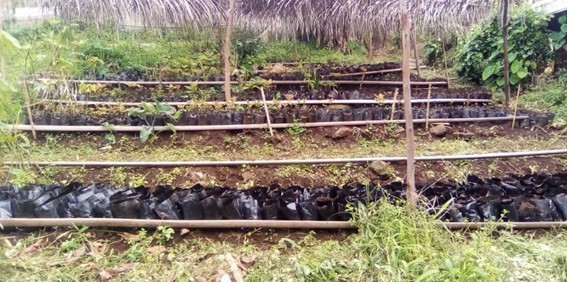
In Cameroon, with Tree-Nation's funding, Trees for the Future and their implementing partner Futures Agribusiness (FAGRIB) are showing 500 cocoa farmers how to incorporate agroforestry with 1,000,000 trees like mangoes, avocado, lemon, orange, soursop, Sesbania marontha, Leucaena leucocephala, Calliandra marantha, and Cajanus cajan. The farmers are also learning invaluable techniques like pruning to improve the productivity of their cocoa trees. The farmers grow a this broad variety of agroforestry tree seedlings in a protected nursery before planting them in the ground.
“As these farmers embrace agroforestry, the health and diversity of their land will increase,” says Burgess, “there won’t be a need to clear more land, because their existing cocoa trees will be getting the protection and nutrients they need, and those trees will live longer and produce more.
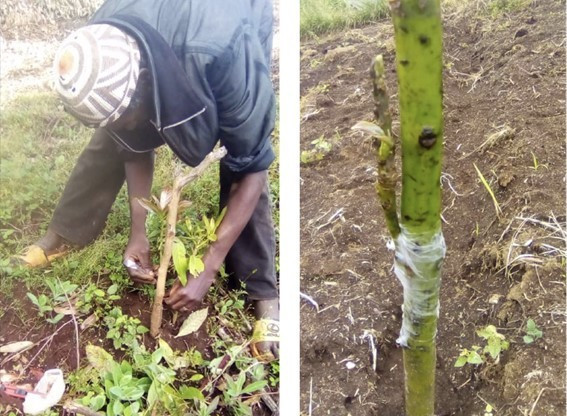
Farmers use agroforestry techniques to improve their harvests as well as the health of their land without using harmful chemicals. As they reduce their negative impact on the environment, they also improve their resilience to the effects of climate change.
“As soon as you walk into a forest you feel like it’s five degrees cooler, right? That’s because it is! You’ve just stepped into a microclimate where the temperature and moisture are regulated by the forest,” Burgess says. “And we see farmers accomplish that same effect through agroforestry, they’re achieving a microclimate that’s suited to the crops they’re growing.”
The social woes of the cocoa industry are just as daunting and concerning as the environmental challenges. Because cocoa farmers are only growing cocoa (and they aren’t paid very much for it) their income, nutrition, and quality of life suffer. What little money farmers do make goes to buying food for their families.
“With cash crops like coffee and cocoa, those farmers aren’t eating or drinking the crops they’re producing. It’s all for the export market,” explains Burgess.
Trees for the Future staff trained FAGRIB technicians in the Forest Garden Approach and now they are extending this training and application to Cameroonian cocoa farmers. FAGRIB staff work with farmers to add dietary diversity to the land through fruit tree crops and horticulture permagardens. Crops like sweet potatoes can flourish alongside a strategically pruned cocoa tree so that the farmer has food to take home and a chance to save some of their income.
#FightsDesertification #LandRestoration
Commenti (2)
Lascia un commento