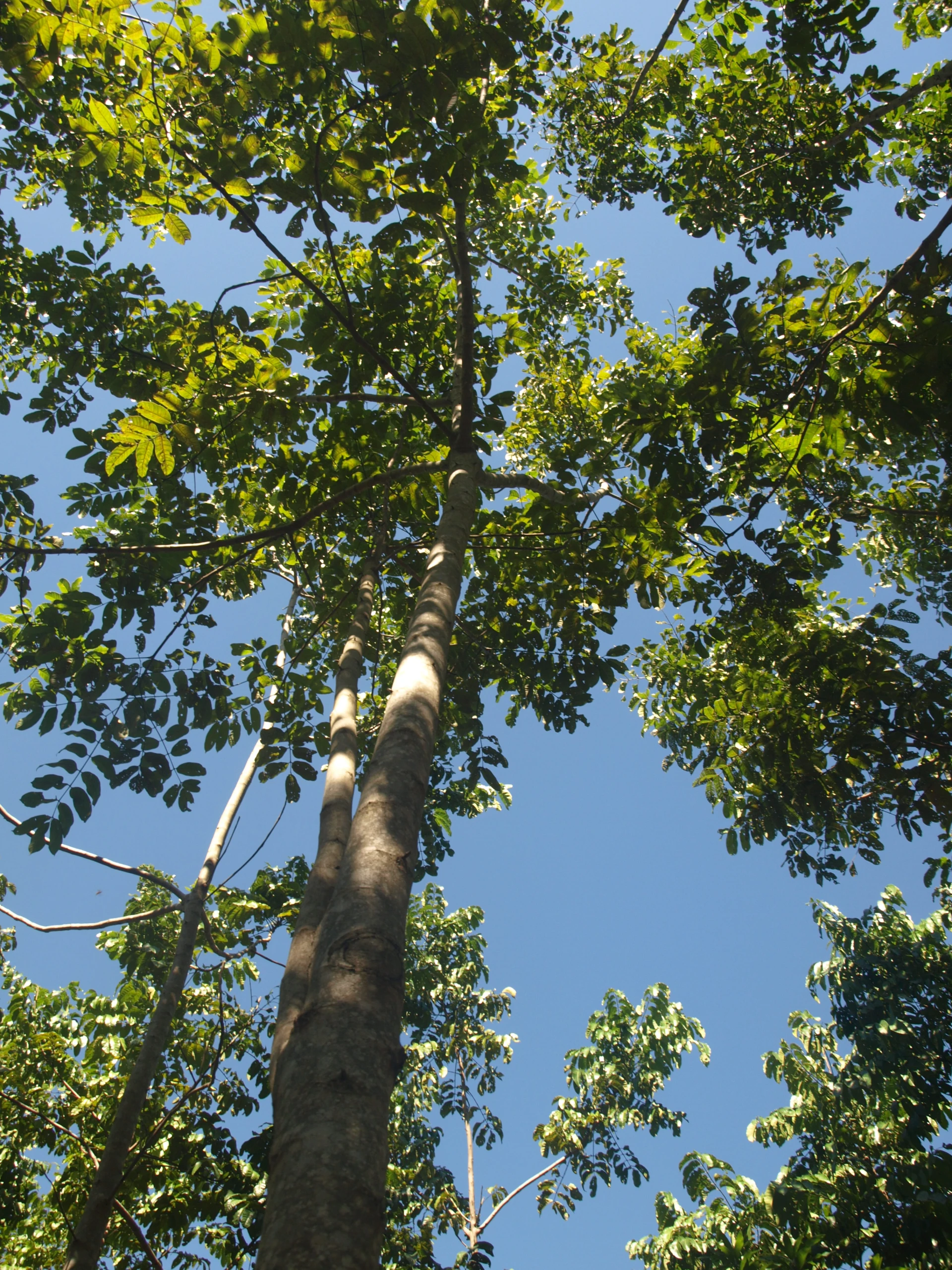

The most common species we plant with our families is centrolobium tomentosum, known locally as tejeyeque (pronounced teh-he-ye-keh). It is virtually unknown outside of South America although it does have the commercial name "arabina". However it has never been grown in plantations before.
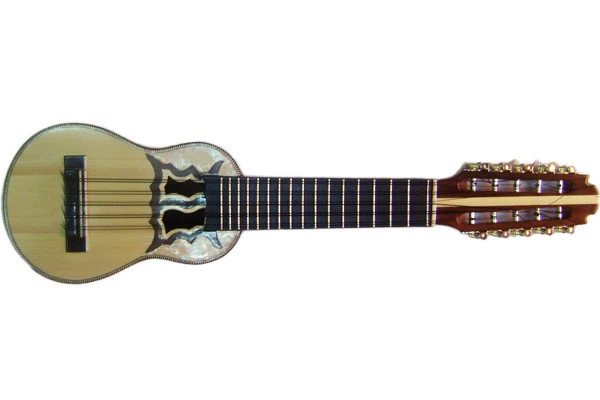
It is probably best known in South America for its traditional use in making guitars and Bolivia's national instrument, the "charango" but for our families it is much, much more than a source of high quality timber.
It is both deciduous and leguminous species, which means that its leaves drop in the autumn, providing valuable leaf litter and its roots also fix nitrogen, a combination which is invaluable for the poor and degraded rainforest soils.
This means that it helps families to maintain and improve yields from the other crops that they also grow within the tree lot.
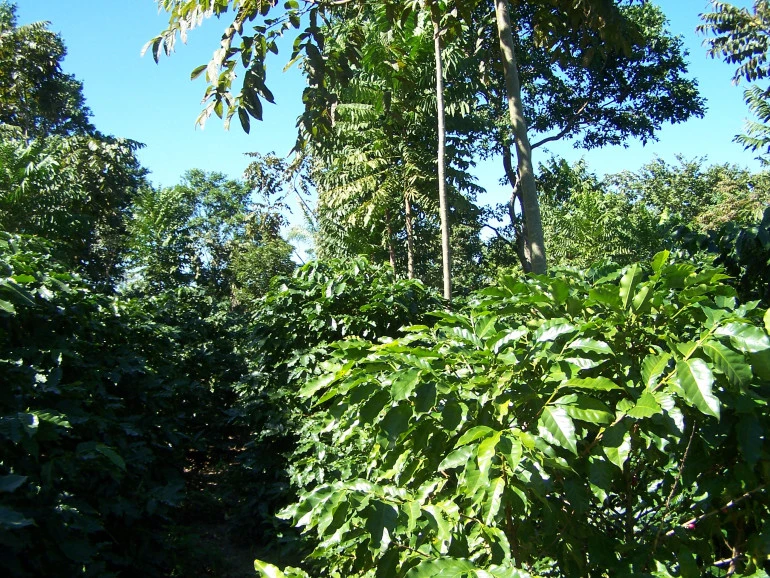
It is particularly valuable as a shade tree for high value crops such as coffee and cocoa because it's leaves drop at start of the season when the coffee and cocoa fruits start to grow and need maximum sunlight but the leaves then start to grow as the coffee and cocoa fruits start ripen, helping to slow down the process and achieve a more even result and a fuller flavour.
Tejeyeque is also useful for families with fruit trees such as bananas and oranges. By improving the soil, they can extend the useful life of these trees by an extra few years, giving them additional revenues they would not have had.
In addition, by growing fewer fruit trees per hectare, the size of the fruits increases, so that fewer fruits are wasted and a much better price for each fruit can be achieved.
When we plant a tree, it is not just a case of putting it in the ground. Our aim is to create a permanent area of new ( or rather "renewed") forest cover, which has as many of the characteristics of a natural forest as we can.
Soil health is the basis for all life on land, and so tejeyeque's ability to improve soil health is the catalyst for improving biodiversity in general.
In addition, although our farmers will eventually want to cut down the trees we plant and use or sell them as timber, this is done in a managed, sustainable way over decades, ensuring that both the canopy and the plants and animals that rely on it are protected.
This is made easier because tejeyeque is also a species that coppices easily. In other words, it does not die when its stem is cut but it grows strong new shoots to take its place, providing a simple mechanism to ensure permanence of our new forested area.
Together all these ways of improving soils mean that our families do not have to abandon degraded land and clear new areas of forest to grow their crops.


