
It is a pleasure to work in a forest seed laboratory immersed in the nature of the Alpujarra. With so much attention being paid to forest seeds and their possibilities for reforestation, the Alpujarra offers us a setting where we can observe when and where seeds are born, how plant communities are established, diverse forms of natural regeneration, etc.
It is a paradise for the work of developing a methodology of direct forest planting, which breaks with the established canons, and which needs to be built more from direct experience with nature than from a set of theories about what nature is.
This is not to say that we do not use science. But science is most useful when it has its place and does not occupy everything, when the scientist acknowledges that he or she is humbled by the mystery of nature, and science goes from being a generator of truths to being a tool to go deeper into the truth.
This May the laboratory is back in action (after the relocation) with different tests with the seeds. The main objective of these trials is to learn more about the germination processes of the species we will be sowing this autumn, to find priming treatments for these species and to refine the formula for the ingredients of the seed balls that the drone will eventually throw. Before looking for a priming treatment for a plant / tree species, we need to know its dormancy and standard germination process very well. Standard germination is the process that seeds are commonly believed to germinate: seeds are moistened and this moisture is maintained for days or months (with or without temperature changes depending on the species), until the root emerges. This definition of germination does not take into account that seeds can dry out in the middle of this process, maintaining and even improving their viability (priming). When we subject seeds to hydration/drying cycles, we are germinating seeds in a very different way to how a farmer has always done it, but very similar to how seeds actually germinate in nature.
We have initiated research into different standard germination methods in: mastic, aladierno, blackthorn, laburnum, barberry, barberry, Mediterranean palmetto, cornicabra, hawthorn, saint lucia cherry and various bush legumes without priming.
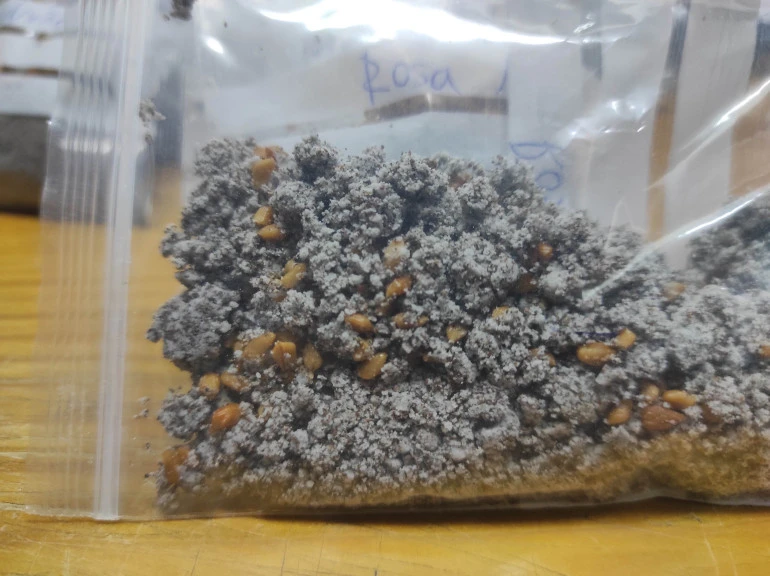
We know a little more about rose hip and strawberry tree seeds, and they are undergoing a series of priming treatments to obtain the optimum result.
Pic: Rose hip seeds ready to start several months of treatment
In pines (halepensis, nigra), we are adjusting the methods of the priming treatments we already know, to be able to carry them out with larger quantities of seed (we are going from grams to 10 kg). The Pinus nigra is given a 45-hour aerated soaking and subsequent drying. And this primed seed starts to germinate in less than a day!!!!
With halepensis we made mistakes in Autumn when adapting the priming treatment from low to high seed quantity. We are learning from those mistakes and trying to find out to what extent to be accurate in each factor involved so that the optimal treatment we find can be replicated.
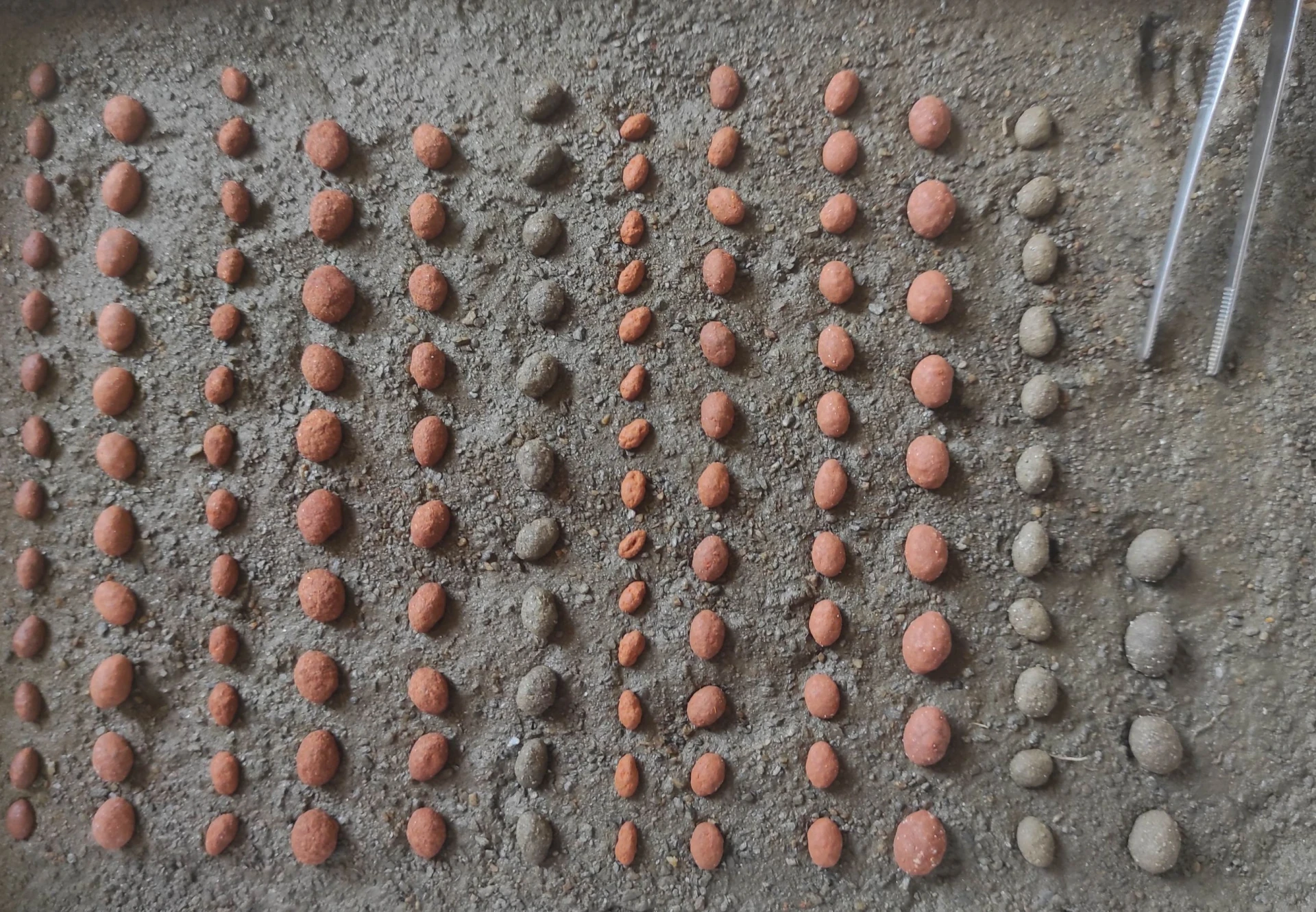
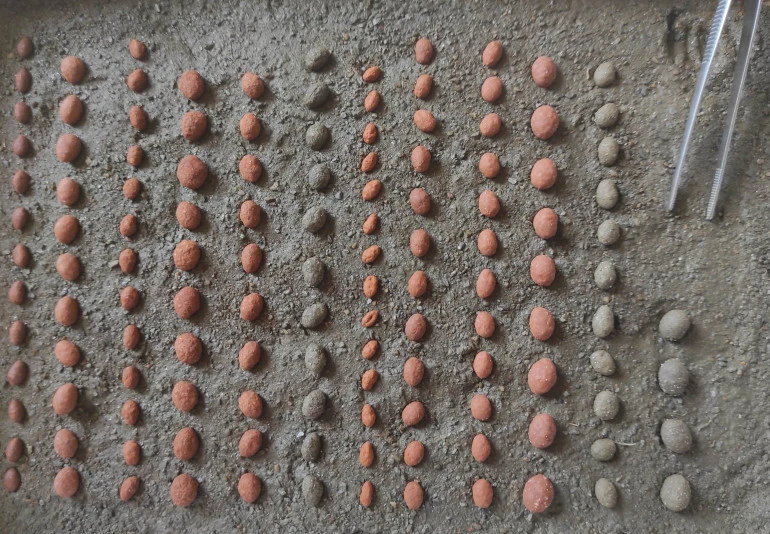
Regarding the seed balls, we have started to introduce repellents in the ball. Some balls are made with cayenne powder to make mice averse to them. Others contain "albarrana" onion powder for the same purpose. To these ingredients we have also added a visual camouflage system, the last layer of the ball is soil from the same place where they will be sown. We are carrying out tests to see if these materials inhibit germination and preparing the field test to see how the mice react.
Pic: preparing germination trial of the different seed balls
This month we have also finished counting plants from the seeds we sowed last Autumn in Sierra Lújar. Of the three species that we wanted to monitor the results, in two of them (halepensis pine and juniperus phoenicea) we had errors in the preparation of the priming treatment in the laboratory. The sowings we made with these "non-optimal priming" treatments were not satisfactory. For bolina (genista umbellata) we were able to obtain interesting results (sowing at the end of November of seeds with/without priming and sown with/without nurse):
- Seeds with priming treatment germinated immediately after the first rain and by May they were well developed. On the other hand, seeds without priming germinated during the spring and were very small in May.
- In May, the percentage of hits with 1 or 2 plants was 70% in seeds with priming and 23% in seeds without priming.
- Given the poor development of the non-primed plants, it is expected that they will succumb during the long Summer.
- The boar kill was significant in the seedlings without nurse. When the plant is growing next to the trunk of another shrub it is much more protected and wild boars do not like to lift soil that is heavily taken up by roots of woody shrubs.
- The seeds germinated well without a nurse (and then were by wild boars). Several factors influenced this: the sowing areas are on the north side of Lújar, so there is little sunshine; the first rain after sowing was abundant; the low temperatures in December favoured slow desiccation. Although the nurse did not influence germination, it did influence protection against wild boar.
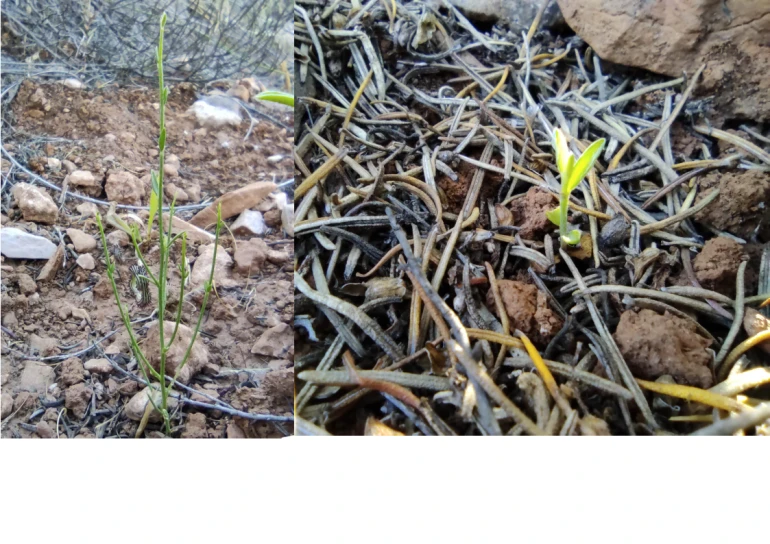
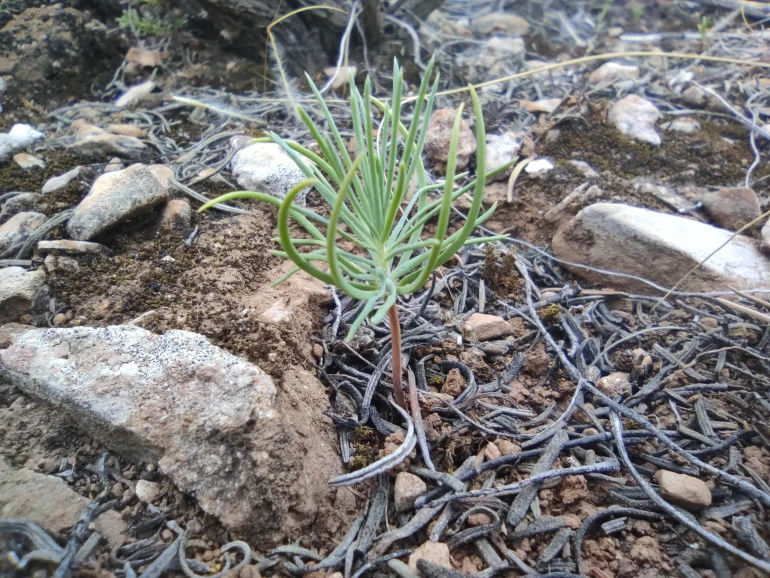
Pic 1. bolina with primin, facing the Summer ahead - Pic 2.bolina woithout priming, just appearing; will not survive the Summer
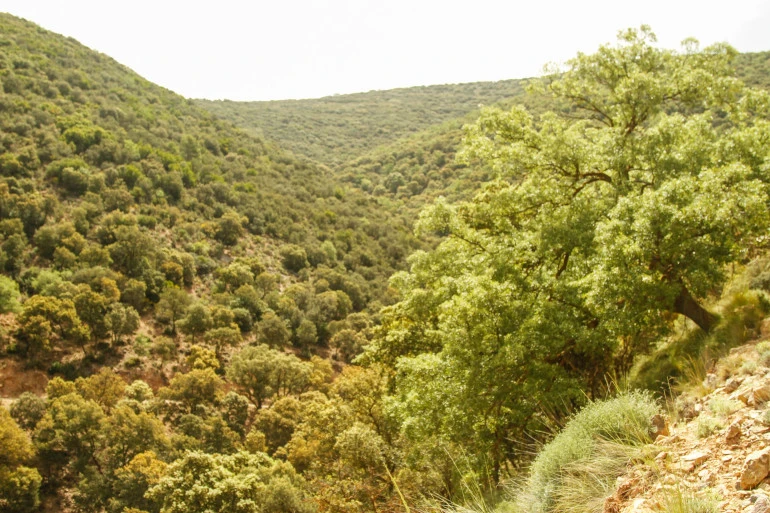
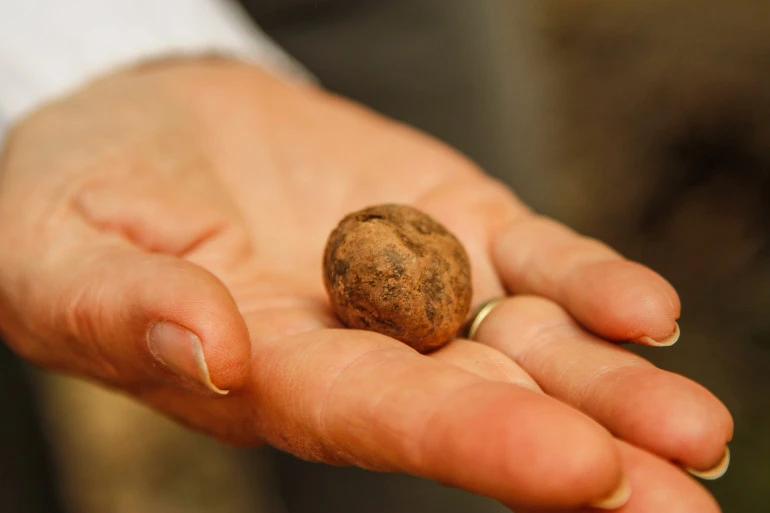
To finish the May news, we have to remember the visit of Ignacio, Ángel and Christine (and their truffle dogs). Christine has been supporting the project for a year with her knowledge of mycorrhizal fungi. This time she came with two friends of hers to search with their dogs for truffle species that still exist in the well-formed forests of Sierra Lújar. Each truffle is actually billions of spores in a fruiting body. We use these spores to inoculate quercus. We wanted to see if it would be worthwhile to collect native truffles for use in reforestations with acorn sowing. The answer was negative. The truffles in Lújar are very small, due to the low rainfall, so we will continue looking for truffles in other places to support the reforestation of Sierra Lújar.
Pic. Pinus halepensis
It was a couple of days of walks in the high forests of Lújar where a rich exchange of knowledge took place.
It


