
In the last few months, we have had a lot of internal activity in preparation for the autumn sowings.
The preparations are at various levels:
At the decision-making level:
- The 13 species to be sown have been chosen, as well as the sowing places and the quantities.
These 13 species are: R. lycioides, R. alaternus, T. articulata, P. nigra, P. alepensis, C. silicua, G. spartioides, G. umbellata, R. sphaerocarpa, P. lentiscus, Q. ilex, Q. faginea, Q. coccifera.
we are supplying ourselves with the seeds needed for the sowings:
genista and broom we have harvested in Sierra Lujar ,
mastic, aladierno we have from previous harvests
tetraclinis articulata will be given to us by the ARBA of Cartagena.
carob - ceratonia silicua, which is being given to us by small farmers in the area.
and others such as pines, especially pinus nigra, we are going to buy from El Serranillo, a government forestry centre, which has seeds of pinus nigra from Sierra de Cazorla.
- The sowing method, the technique we are going to use, has been decided. There are several changes and modifications compared to the previous year.
- Sowing will be done only when it rains. Pre-treated seeds will be sown the days before the rain. The seeds will have been primed, pre-germinated and pelleted. Pre-germination is to be able to sow the seeds already in the germination process. Pelleting is to favour moisture retention during the germination process, and to include nutrients and different types of microorganisms in the seed.
Another new development is the sowing of different species together in the same planting hole. This technique of mixing species comes from synergistic agriculture and the observation of natural regeneration processes in the Mediterranean. Here it can be observed that there are always small islands of 4 or 5 different species in the same place. For example, we can observe a pine tree growing, with a bolina, an aladern, a hawthorn and a rose hip growing next to it, all in the same stand.
To do all this, we continue to study a lot in the laboratory, about the hydration process of each of the seeds, the time it takes for them to dry, the formulas of the pelleting materials so that the ball retains as much moisture as possible.
We are also in contact with several academics from the world of ecological restoration who work with communities of microorganisms, in order to decide which is the best option for the introduction of microorganisms in an operation such as the one we are going to carry out, which is to sow seeds in a terrain that is not very advanced in terms of plant succession and microorganisms.
We have begun to put together a pool of local staff to carry out some of the sowing.
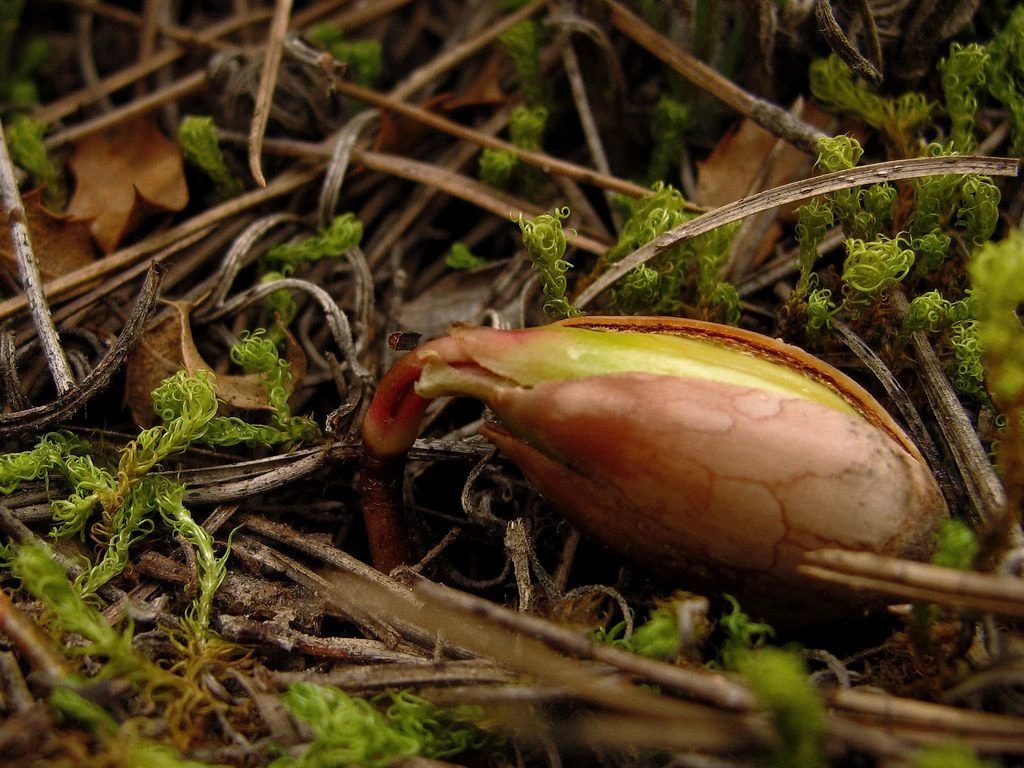
And we have completed and published a study on the germination of Quercus Ilex acorns. This has given us a better understanding of the acorn germination process as a function of factors such as ambient temperature, percentage of acorn humidity and acorn scarification. With this knowledge we are ready to sow acorns so that they can germinate just the day after sowing, with the intention that the seed will germinate as soon as possible, one, to reduce the time of exposure of the seed to being preyed upon by mice and wild boars, two, it will reach its first summer with the maximum depth of root growth, you can read here. https://tree-nation.com/es/proyectos-de-siembra-de-arboles/sierra-lujar-andalucia/articulo/19301-quercus-germination-research


