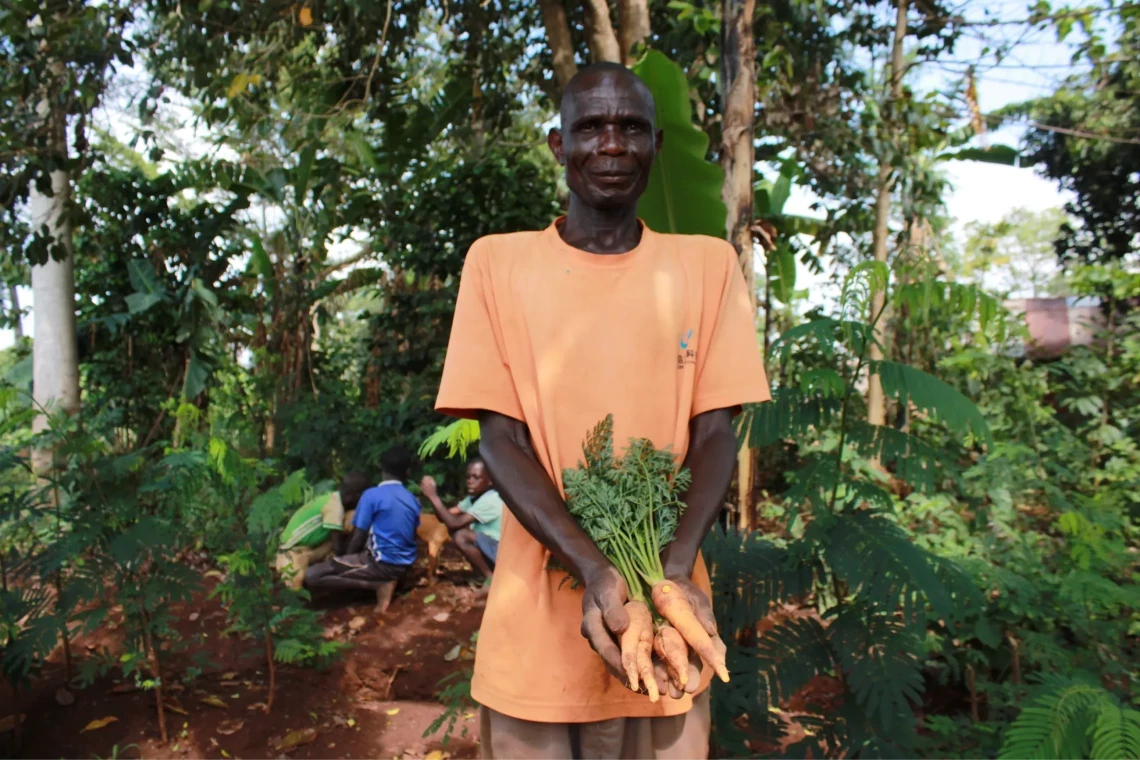

By: John Bett, Africa Regional Project Manager
Thrilled to spotlight our latest endeavor: the Forest Gardens project in Uganda, initiated in October 2023. Nestled in the Mount Elgon region, this initiative is crafted to weave a tapestry of sustainable solutions for local farmers, intertwining environmental restoration with enhanced opportunities for the community.
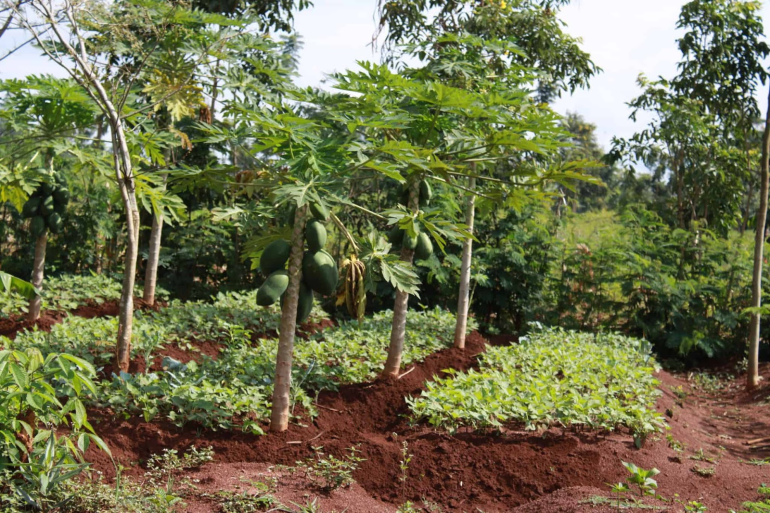 Fig. 1 Forest Garden in Uganda.
Uganda, suffering with the repercussions of significant deforestation, has witnessed over a million hectares of tree cover vanish in the past two decades, equating to nearly a third of the country’s total. This loss, coupled with frequent prolonged droughts and erratic rainfalls, has cascaded into substantial impacts on biodiversity and climate.
In a landscape where hundreds of hectares of forest are lost annually due to population pressures and illicit logging, and where decades of unsustainable agriculture have culminated in degraded lands and nutrient-poor food systems, community engagement becomes pivotal. The Forest Garden approach, centered around agroforestry, emerges as a sustainable pathway to rejuvenate degraded land, sequester carbon, enhance biodiversity, and deter future unsustainable land-use practices, all while furnishing local farmers with a stable source of food and income, thereby elevating their quality of life.
Envision a Forest Garden: a lush, vibrant space comprising thousands of trees and a myriad of food and resource crops. These gardens not only act as carbon sinks but also bolster biodiversity, fortify food access, and ensure a steady income. This project aids commodity producers in amalgamating the Forest Garden Approach with their commodity crop, diversifying their food and income sources and alleviating pressures on native forest landscapes.
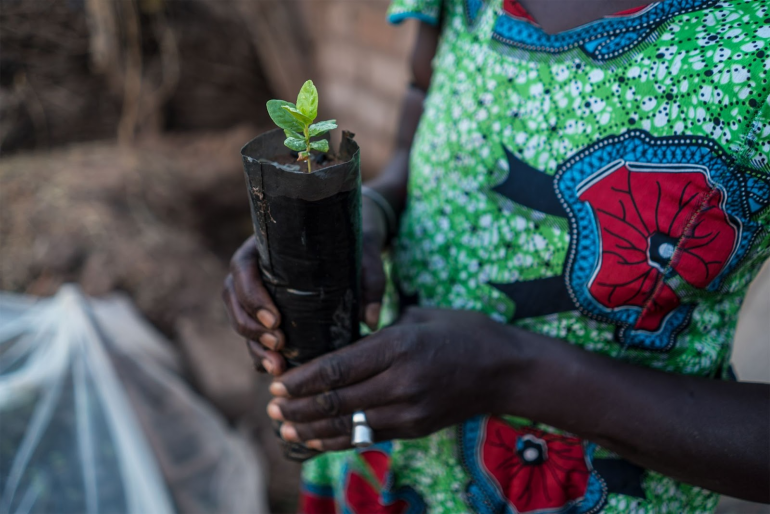 Fig. 2 Seedling in the hands of a local farmer.
The implementation of the Forest Garden Approach brings forth a cascade of impacts and benefits, including:
Ecosystem synergies enhancing intercropping system yields.
Abundant biomass for mulching and moisture retention.
Elevated farmer incomes and fortified food security.
Climate change adaptation and resilience to rainfall variability.
Revitalized soil fertility through various organic practices.
Gender empowerment by involving a minimum of 30% women in farmer groups.
Increased employment for women and youth.
Enhanced educational access and retention for children due to increased farmer incomes.
Embarking on this journey, we anticipate collaborating with 700 farmers and planting a staggering 2 million trees! The anticipation of witnessing the progress and outcomes of this ambitious venture fills us with excitement and hope for a greener, more prosperous future in Uganda.
Commenti (0)
Lascia un commento