Bosques Yungas

Bosques Yungas

AR Argentinien

98  Qualitätsbewertung 

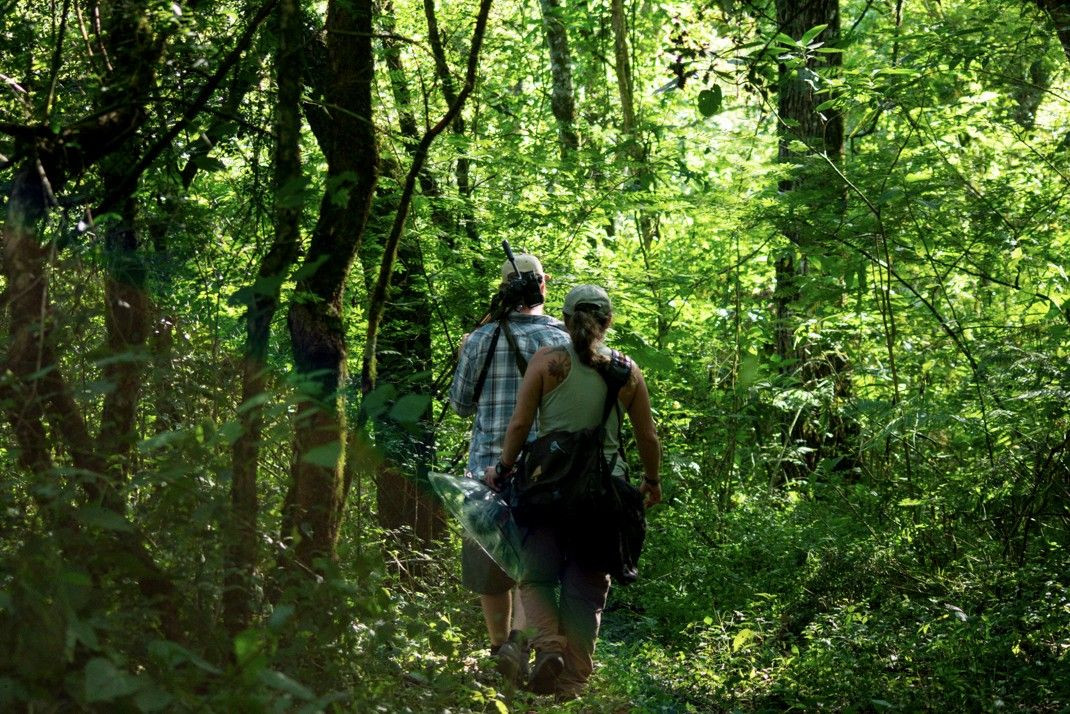
Our project aims to restore the Yungas ecosystem, heavily degraded by human activity, by planting native trees to attract biodiversity and rebuild the natural environment. As part of the "Community Program", we are also planting native fruit trees in the understory. This initiative not only supports forest recovery but also provides resources for nearby communities, fostering a sustainable relationship between people and the ecosystem.

1,989von 2,700 Bäumen finanziert
565 TGebundenes CO2
402Follower
Pflanzen ab 8 €
ScientificResearch
12 Updates
Mai 2026

We recently carried out a harvest of chilto fruits (Solanum betaceum) in the Yungas 🌿
Part of these fruits will be used for research, while another part will support the local community, creating opportunities and strengthening the connection with the forest.

28 Mai 2026
Oktober 2025

A restoration project isn’t just about planting trees.
It’s also about getting to know the local biodiversity, understanding the habitat, and studying the species that live there.
The presence —or absence— of certain animals tells us a lot about the ecosystem’s health. In them, we

 Mehr anzeigen
14 Okt. 2025
Juni 2025

As part of World Environment Day, a local science fair was held where students and teachers from Álvarez Condarco School presented their research on a native plant of the Yungas forest: the chilto (Solanum betaceum).

In the weeks leading up to the event, they explored their surroundings,

 Mehr anzeigen
25 Juni 2025
September 2024

Exciting news for our Biodiversity program!
We’ve identified the first ocelot individual within the project! How? Ocelots have unique fur patterns, like a fingerprint. With the help of camera trap footage and artificial intelligence, we can efficiently recognize each individual.
This

 Mehr anzeigen
09 Sep. 2024
September 2023

We continue with our anual activity of monitoring the trees in our different planting sites.

As we've shared before, it's very important to follow up on our trees. Making sure the planting site is healthy, understand the growth rate, and offer the proper maintenance each lot needs.

 Mehr anzeigen
07 Sep. 2023
August 2023

Last week we invited local students and scientists to enjoy an entire day dedicated to birdwatching.

This is one of the many activities that the biodiversity program offers to our passionate followers who wish to learn more about the biodiversity of the forest.

The activity began

 Mehr anzeigen
08 Aug. 2023
Juli 2023

Winter has started. Due to the low temperatures and the low frequency of rain, the forests biological activity has slowed down.

Due to these conditions, we are able to enter each of our planting sites and monitor the trees we've planted along the years.

This is a very important

 Mehr anzeigen
12 Juli 2023
Juni 2023

First register of Dendrocolaptes picumnus in the Yungas of Tucuman

The biodiversity program is currently working on a few projects where they focus on different key groups in the forest. One of the projects in this...

Weiterlesen
Dezember 2022

We continue monitoring our terrestrial vertebrates of the forest. Each site is monitored throughout 40 days straight with our trap cameras. After that, we watch all the videos and registered and analyze the data.

Here is one of our favorite videos of the Yaguarundí (Herpailurus

 Mehr anzeigen
20 Dez. 2022
November 2022

The biodiversity program spotted an Alilicucú Yungueño (Megascops hoyi) a few months ago while conducting a night survey for their bird project. The video was uploaded to Youtube and it's in 4K, we strongly recommend you watch.

There is not much information on this species which

 Mehr anzeigen
22 Nov. 2022
Agustina Puente · 24 November 2022

😯

September 2022

Looking for native pollenizers in the forest to locate their hives and monitor their activities throughout the entire year.
It is fundamental to understand what trees they are inhabiting and their year round behavior.

02 Sep. 2022
August 2022

Spotting our daily Urraca criolla (Cyanocorax chrysops).

The biodiversity team loves this species because of their different noises. They have up to 12 different sounds!

When one goes birdwatching, it is very common to recognize the presence of a species first by their sound and

 Mehr anzeigen
19 Aug. 2022
Catherine Marche · 26 August 2022

A beautiful bird