
#CarbonCatchers series
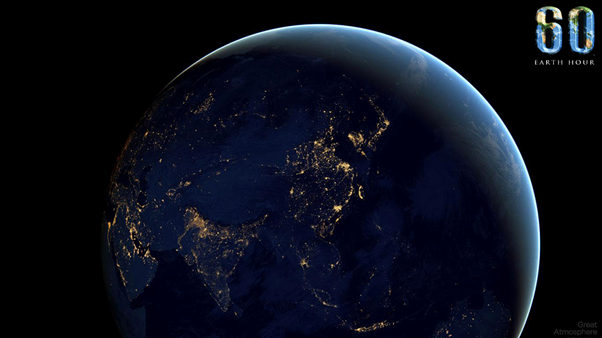
On Saturday, March 28th, citizens across the world turned their lights off for an hour between 8:30pm and 9:30pm. Why did they do this? It’s for a worldwide movement known as “Earth Hour”. This grassroots movement which began in 2007 is still one of the largest climate change movements in the world and has been increasing in popularity year on year. While it is hoped that during #Earth Hour enough people will have turned off non-essential electricity, the real aim of Earth Hour is to raise awareness for the natural world and the jeopardy in which we are placing it with our current lifestyles. Climate change is the single greatest problem we will face in our lifetimes and Earth Hour wants to do something about it.
Where it began
The idea for Earth hour began in Sydney, Australia. The WWF (World Wildlife Fund) contingent in Australia met in 2004 to strategize how to get people engaging in the topic of climate change. By 2006, they had developed the idea of a large scale switch off which was termed “The Big Flick”. Backed by the Sydney Lord Mayor, WWF Australia held the first Earth Hour on March 31st, 2007 (Earth Hour, 2020). With 2.2 million homes and businesses switching off their lights for one hour, this event was a huge success and has been growing every year since. Inspired by Sydney, organisers in San Francisco held a similar event called “Lights out” in October of 2007 (Glionna, 2007). By the following March, Earth Hour had become a global movement and Earth Hour 2008 was held internationally with 35 countries and over 50 million people participating in the event (Associated Press, 2008). Many landmarks also went dark in solidarity with the movement including the Eiffel Tower in Paris, The Colosseum in Rome and the CN Tower in Toronto. Some websites also acknowledged the event such as Google turning its homepage dark for the day.
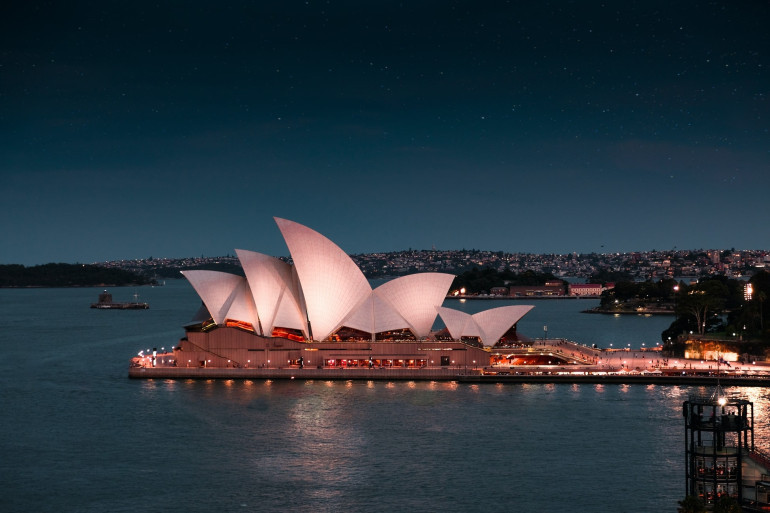
Figure 1: Sydney Opera House turned off its lights for Earth Hour.
A survey conducted by Zogby International showed that 36 million Americans participated in Earth Hour 2008, comprising 16% of the adult population of the United States. The same survey also showed how following the event, there was a 4% increase in interest in environmental topics concerning climate change and #pollution (73% of those who took the survey were interested in these issues before the event and 77% were interested following the event) (Reuters, 2008). By 2009, Earth hour was observed by hundreds of millions of people all across the globe. In 2012, the headquarters for Earth Hour moved from Sydney to Singapore and it was the first year it was celebrated in Space by Dutch Astronaut André Kuipers (European Space Agency, 2012).
While the aim of Earth Hour is not about #electricity reduction, many countries have reported declines in energy usage as directly associated with Earth hour. In 2009, Toronto reported a decrease in electricity usage of 15.1% for the hour, while the Philippines reported saving 611 MWh (Megawatt hours) of electricity, an amount said to be similar to shutting down twelve coal-fired plants for an hour (The Canadian Press, 2009; Adraneda, 2009).
The mission of Earth Hour in 2007 was and still is to raise awareness of climate change through a symbolic ‘switching off’. However, 13 years later, the climate crisis is not only still upon us but getting increasingly worse. #Greenhouse gas #emissions are continuing to increase annually and the effects are already being seen in some parts of the world, for example, the devastating Australian bushfires at the end of 2019 and the increasing frequency and intensity of storms. While the mission of Earth Hour is still to highlight the issue of climate change, in recent years the campaign has also acknowledged the devastating impacts of the concurrent #biodiversity crisis. This is where thousands of species are rapidly going extinct in what is being referred to as the earth’s 6th mass #extinction event through processes such as habitat destruction, disruptions to food chains, pollution and environmental changes. Both of these crises are interlinked – the loss of biodiversity exacerbates climate change and vice versa. The aim of Earth hour now is to start a conversation not only about climate change but also about #biodiversity loss (Earth Hour, 2019).
Impacts
A study conducted in 2014 compiled measurements of changes in electricity use during Earth hour over six years from 10 different countries. The authors found that on average, there was a drop of 4% in electricity demand during the hour (Olexsak and Meier, 2014). Beyond a simple reduction in energy usage during the hour, the campaign has seen many other positive outcomes. For example, in 2013 Uganda started an Earth Hour #forest which is an ongoing project aiming to restore 2700 hectares of #degraded #land with 250,000 #trees (Earth Hour, 2013). In 2014, Earth Hour Blue was launched as a crowdfunding platform to raise funds for environmental projects run by the WWF. In 2014 alone, $60,000 was raised via Earth Hour Blue supporting projects such as solar panel distribution in the Philippines and India as well as #wildlife protection #projects in Columbia, Uganda and Indonesia (Earth Hour, 2014).
Criticism
While many people and organisations support Earth Hour, such as UNESCO and the UN Environment Programme, the campaign has come under some scrutiny. Notably, the environmentalist Bjørn Lomborg has criticised the event, calling it an “ineffective feel good event” whereby individuals feel they are making a difference while in reality the reduction in #carbon #emissions for the hour is negligible (Gollom, 2014). Many other environmentalists have criticised the movement as having too much of a focus on individual behaviour, thereby relieving the real perpetrators of climate change, the #fossil fuel companies, of responsibility (McGibbon, 2017). Furthermore, Ross Hayman of the UK National Grid said that the rapid lowering and subsequent raising of electricity could actually result in increased #emissions as it takes a large amount of energy to switch electricity on, in the same way that rapidly accelerating and braking while driving uses more fuel (The Daily Telegraph, 2010).
However, these criticisms have missed the main goal of Earth Hour, which is to get people talking about climate change rather than actually reducing carbon emissions for the hour. The impact of Earth hour is not seen in the reduction of emissions but in the increased awareness and consciousness of society for the issue of climate change. This can be seen by the increasing number of participants year on year now in over 8,000 cities in 188 countries around the world and in the projects it now supports as mentioned above. If you want to do more than just raise awareness, you can be more conscious of your energy usage and turn off lights and appliances when not in use, switch to renewable energy sources or even offset your carbon footprint by planting trees.
Earth hour 2020
This year is a crucial year for the environment: leaders across the world will meet to decide how to move forward with actions to tackle the climate crisis at conferences such as The United Nations High-level Political Forum on Sustainable Development in July, The Convention on Biological Diversity in October and the International Climate Change Agreement (Paris Agreement) COP26 in November. The time to act is now. On the Earth Hour website, it states that it hoped Earth Hour 2020 would be a ‘spotlight moment’ and further impress on our politicians and policy makers both the need and the desire of people around the world to protect our natural environment. This was done through a petition known as “Voice for Nature” and signatures will be presented at the previously mentioned conferences to try and negotiate a New Deal for Nature.
This year, as a result of the COVID-19 pandemic, Earth Hour urged people to do a digital Earth Hour by taking part at home. The Earth Hour team compiled a list of recommendations on how to do this in a safe and conscious way. This included having dinner in the dark, having a board games night by candlelight or tuning into the livestream on the night.
Conclusions
Earth hour has been a tremendous success in raising awareness for climate change and now biodiversity issues. While there has been a number of criticisms over the years concerning the actual impact on emissions Earth Hour has, Earth Hour continues to grow year on year. As part of WWF, Earth Hour promotes sustainability and there is a lot of information on how to live more sustainably on the Earth Hour website. Ways in which you can adopt a more sustainable lifestyle include eating a largely plant-based diet and only buying meat and fish from sustainable sources (for fish ensure they have the MSC logo, for meat it depends on what country you are buying it from), buy less and instead choose more nature-friendly products, switch to renewable energy such as solar or wind energy, choose a less carbon intensive method of transport such as cycling or using public transport and get involved with restoring nature projects in your area.
Trends/Calculations
- From 1 country in 2007, to 35 in 2008, 88 in 2009 and ultimately 187 in 2019, Earth hour has been growing steadily since its first year.
- Earth hour is expected to continue growing, having reached nearly every country in the world. With 2020 being a big year for environmental discussions and conferences, the Earth Hour team are calling for 2020 to be the “year of global action”.
- The focus of Earth hour has changed from raising awareness of climate change to also raising awareness of #biodiversity loss issues. From 2 million people the first year to now hundreds of millions, the increasing numbers of people participating in Earth Hour year on year it is clear they are achieving their goal in spreading awareness.
Keywords: #EarthHour #ClimateChange #nature #GreenhouseGasEmissions #electricity #EcoEducation
References:
Adraneda, K., 2009. RP’s Earth Hour savings: 611 megawatt-hours. The Philippine Star. Accessed March 2020 <http://www.newsflash.org/2004/02/tl/tl013308.htm >
Associated Press, 2008. World cities shut lights for Earth Hour 2008. Accessed March 2020 < https://web.archive.org/web/20140302101303/http://...>
Earth Hour, 2013. Uganda unveils the world’s first earth hour forest. Accessed March 2020 <https://web.archive.org/web/20130915221131/http://...>
Earth Hour, 2014. Earth Hour 2014 report. Accessed March 2020. <https://web.archive.org/web/20150524150131/https:/...>
Earth Hour, 2019. Our Mission. Accessed March 2020. <https://www.earthhour.org/our-mission>
European Space Agency, 2012. André Kuipers takes Earth Hour into orbit. Accessed March 2020 <https://www.esa.int/Science_Exploration/Human_and_...>
Glionna, J., 2007. Hour of darkness. Los Angeles Times. Accessed March 2020 <https://latimes.com/archives/la-xpm-2007-sep-19-me...>
Gollom, M., 2014. Q&A: Why Bjorn Lomborg won’t be turning off the lights during Earth Hour. CBC News. Accessed March 2020 <https://www.cbc.ca/news/world/q-a-why-bjorn-lombor...>
McGibbon, A., 2017. If you really care about climate change, you should boycott the ridiculous Earth Hour stunt. The Independent, Accessed March 2020 <https://www.independent.co.uk/voices/earth-hour-cl...>
Oleksak, S. J. and Meier, A., 2014. The electricity impacts of Earth Hour: An international comparative analysis of energy-saving behaviour. Energy Research and Social Science, 2, 159-182.
Reuters, 2008. 36 Million Americans Take Part in World Wildlife Fund’s Global ‘Earth Hour’. Accessed March 2020
The Canadian Press, 2009. Earth Hour prompts 15 per cent T.O. power drop. Accessed March 2020 <https://toronto.ctvnews.ca/mobile/earth-hour-promp...>
The Daily Telegraph, 2010. Earth Hour will not cut carbon emissions. Accessed March 2020 <https://www.telegraph.co.uk/news/earth/environment...>
Comments (0)
Leave a comment