Sacred Seeds Garden

Sacred Seeds Garden

CO Colombia
Completado

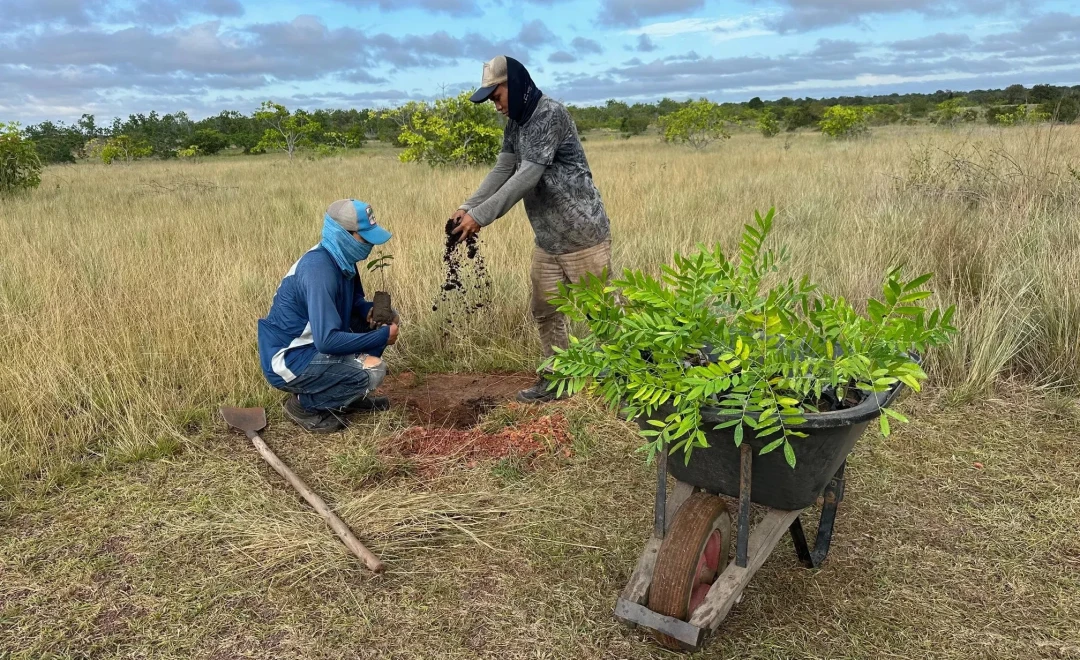
Our project is creating and planting a botanical garden in the Orinoco River basin to conserve the traditional medicinal trees and plants of this region. The project is being done with indigenous guidance as well as a knowledge sharing agreement with Missouri Botanical Gardens in the USA.

43,248Árboles financiados de 43,229
15,621 TCO2 capturado
1,648Seguidores
162 noticias
mayo 2017

The Sacred Seeds Botanical Garden has a variety of landscapes. In the photo one can see a #morichal in the background (a heavily treed savanna drainage creek), with a young morichal in formation pioneering its way into the #savanna in the middle of the picture. In the foreground

 ver más
21 may 2017

Cashew trees (#Anacardium_occidentale) are native to the Orinoco River basin. We love to plant them, because they have numerous medicinal and alimentary properties thanks to the fruits and nuts. A glass of cashew fruit juice, for example, has 10 times more vitamin C than an equivalent

 ver más
13 may 2017

On May 13 the Reserva Natural La Pedregoza, which includes the Sacred Seeds Botanical Garden, is participating in the #GlobalBigDay bird watching event with other local NGO's and natural reserves. Planting native trees, especially the alimentary ones, insures that there is habitat

 ver más
04 may 2017
abril 2017

The Malagüeto tree (Xylopia aromatica) is very medicinal and a great cure for intestinal parasites. The bark also yields an excellent fiber for ropes and other uses. Besides adding this tree to the Sacred Seeds Botanical Garden, we are actively promoting its cultivation for the socioeconomic

 ver más
30 abr 2017

We prepare our own natural fertilizers for use in the Sacred Seeds Botanical Garden. The compost tea in this photograph is made with cow manure, cow urine, lentil flour, molasses and handfuls of local soil, to create efficient microorganisms. The tea has a useful life of no more

 ver más
25 abr 2017
Amparo Estrada · 26 abril 2017

Me encanta Dexter ojala todos las plantaciones usaran fertilizantes Naturales...

In the Sacred Seeds Botanical Garden we don't use agrochemicals. Instead, we employ the three-hole #fertilization system. Basically, three holes are dug in a triangular pattern, with a fourth hole in the middle for the plant. The plant hole has #biochar, compost and manure balls

 ver más
15 abr 2017

Did you know that the Sacred Seeds #BotanicalGarden are an international effort to preserve the ethnobotanical knowledge regarding medicinal and alimentary trees and plants? The project was started by the Missouri Botanical Gardens and now there are dozens of foundation gardens around

 ver más
09 abr 2017

Here's an example of a boa constrictor hanging out in the rain forest at the Sacred Seeds Botanical Garden at La Pedregoza. Click on the picture to enlarge and then follow the white arrows to see him. The policy in the natural reserve and the neighboring tree plantation is to protect

 ver más
04 abr 2017

The rain forest at the Sacred Seeds #BotanicalGarden has trees with amazing root systems, which can serve as jails for people who want to log them. At the end of each root leg are a myriad of smaller roots connected to the ground (left side in photo). These places make great homes

 ver más
04 abr 2017
Maxime Renaudin · 6 abril 2017

Nice ;-) It's impressive to see roots above the soil like that.

marzo 2017

The Simarrú or Simarouba amara or is a fast growing tree of the Orinoco River basin. Its wood is termite resistant, hence the Latin "amara" in the scientific name. The Sacred Seeds Botanical Garden is planting Simarrú trees as living fences, which not only helps to provide farm borders

 ver más
21 mar 2017
febrero 2017

Gliricidia sepium or Matarratón is medicinal, as well as being a high protein forage tree that can be planted in living fences. Its growth is slow in poor soils, but nevertheless it can be established in most tropical locations with some patience. The tree can grow up to 25 meters

 ver más
24 feb 2017

High up in the rain forest canopy the grapefruit-sized fruits of the Pendare or Salivón tree (Parahancornia oblonga) are starting to ripen. The fruits are edibles and the seeds mature in April. The tree prefers wet soils and the shade of other trees. It does not grow in open settings.

 ver más
24 feb 2017
enero 2017

The fruits of the Moriche palm (Mauritia flexuosa) are each the size of chicken eggs and come in huge clusters that can weigh up to 50 or more kilos. In Vichada they ripen in June, to a delicious and sweet yellow color inside the shell. Wildlife and farm animals go crazy for them,

 ver más
30 ene 2017
Dexter Dombro · 24 febrero 2017

We cultivate Neem. At present we have 6 hectares planted, which are starting ...

Dhananjayan Venkataraghavan · 3 febrero 2017


Please understand the importance of Neem.

West Africa and East ...

Cashew trees (#Anacardium_occidentale) are native to the Orinoco River basin. A glass of cashew fruit juice has 10 times the vitamin content of the same amount of orange juice, while the nuts are some of the most yummy and valuable on the planet. Our Sacred Seeds Botanical Garden

 ver más
27 ene 2017

Little Açai (#Euterpe_precatoria) palms waiting in the shade of a nursery tree to be planted later on in 2017. The #Açai has one of the world's most anti-oxidant fruits and is highly medicinal, but needs 2 years of care in a tree nursery before being planted. It can take up to 15

 ver más
21 ene 2017