
UNIVERSIDAD CATÓLICA BOLIVIANA “SAN PABLO”
Santa Cruz Academic Headquarters • Department of Agricultural Sciences • Agribusiness Engineering Program
MULTIDIMENSIONAL EVALUATION OF THE IMPACT OF WINDBREAKS ON EDAPHIC AND MICROCLIMATIC PROPERTIES,AND VEGETATIVE DEVELOPMENT IN
SUGARCANE (Saccharum officinarum) CULTIVATION
Course: Extensive Crops
Director of the Department of Agricultural Sciences: Mgr. Felipe Mendieta
Reviewing Professor: Eng. Selva María Ribera
Researchers (Students): André Maldonado, Claudia Salazar, Miguel Gonzales, Vito Tovias, Celeste Drew, Benjamin Padilla, Irene Valentina Villa, Jose Ignacio Fiori, Matias Salaberry, Abbely Higueras, Mariana Castillo, Luciana Rossi, Wenzel Andrade, Fabrizio Cáceres, Jesus Bruno,Aaron Roca, Keen Sebastián Coca, Luis Orozco, Juan Viveros, Nicolás Vargas, Fredy Claros, Santiago Caicedo Rivera, Tomás Suárez, SteevenAñez, Carlos Dorado Pilon, Taiyo Tsukayama,
Carlos Serrate, Joel Joaquin Ruiz, Mario Valentin Rojas Vargas, Camila Gareca, Melissa Ibañez, Roberto Ardaya, Carolina Arteaga, Hanoly Roca.
Academic Publication Date: July 13, 2026 • Santa Cruz de la Sierra, Bolivia
1. 
INTRODUCTION
Eastern Bolivia, and specifically the department of Santa Cruz de la Sierra, represents the most representative sugarcane agro-industrial core of the Plurinational State of Bolivia, supplying the domestic demand for sugar and liquefiable alcohol, andfirmly inserting itself into the national bio-energy matrix.
However, the climatic dynamics of the lowlands expose agricultural extensions to highly limiting biophysical factors. Among these, the seasonal incidence of high-speed, cold, and dry air masses coming from the south (locally known as "surazos") stands out, occurring regularly between the months of May and August.
The direct action of the wind on extensive monoculture systems causes serious agronomic and economic damage. From a physiological point of view, it induces severe mechanical stress on the leaf blades and causes superficial drying of the edaphic profile. From a productive perspective, wind impact causes leaf tearing and complete lodging (falling over) of the stems. Lodging not only deteriorates the sucrose accumulation rate but also makes harvesting operations—both manual and mechanized—impossible and exponentially more expensive.
Faced with this scenario, the design and installation of linear agroforestry systems (windbreaks) emerge as a strategy for ecological intensification and adaptive management of high technological value. These multi-strata tree barriers not only safeguard the physical integrity of the crop on the leeward side but also directly intervene in the hygrometric balance, endogenous nutrient recycling, and operational efficiency of agricultural machinery, drastically reducing production costs throughout the entire cycle.
It is especially noteworthy that this field research work was developed within the framework of the inter-institutional cooperation agreement signed between the Universidad Católica Boliviana "San Pablo" and the Ketrawe Foundation, with the fundamental purpose of linking the academic research of students with real initiatives for ecological restoration, agroforestry systems, and sustainable agro-industrial development in the region.
2.
LITERATURE REVIEW
2.1 Aerodynamics and Microclimatic Dynamics of Live Barriers
According to models validated by the FAO, the phyto-protective efficiency of a tree windbreak directly depends on its total height (H) and volumetric opacity. An aerodynamically optimal design requires a porosity of between 40% and 50%, which allows airflow to be filtered and prevents severe turbulence on the leeward side. This structure reduces horizontal wind speed between 50% and 70% in an area extending up to 15H. The attenuation of the kinetic flow exponentially reduces the evaporative demand of the atmosphere, stabilizing thermal gradients and allowing grasses to maintain optimal stomatal opening without suffering water stress due to heat shock.
2.2 Soil Conservation and Nutrient Cycling
Degradation by wind erosion is a critical problem in the sandy-loam soils of Warnes and Los Tajibos. By decreasing wind speed, windbreaks prevent the detachment and dragging of the finest fractions (silts and clays), which are vital for cation exchange capacity (CEC) and moisture retention. Simultaneously, linear agroforestry contributes organic matter to the system through deciduous species (such as Ceiba speciosa) and fixes atmospheric nitrogen through leguminous species (such as Prosopis sp.). These biological processes raise natural fertility and significantly reduce dependence on synthetic nitrogen fertilizers.
3.
MATERIALS AND METHODS
3.1 Location and Monitoring Entities
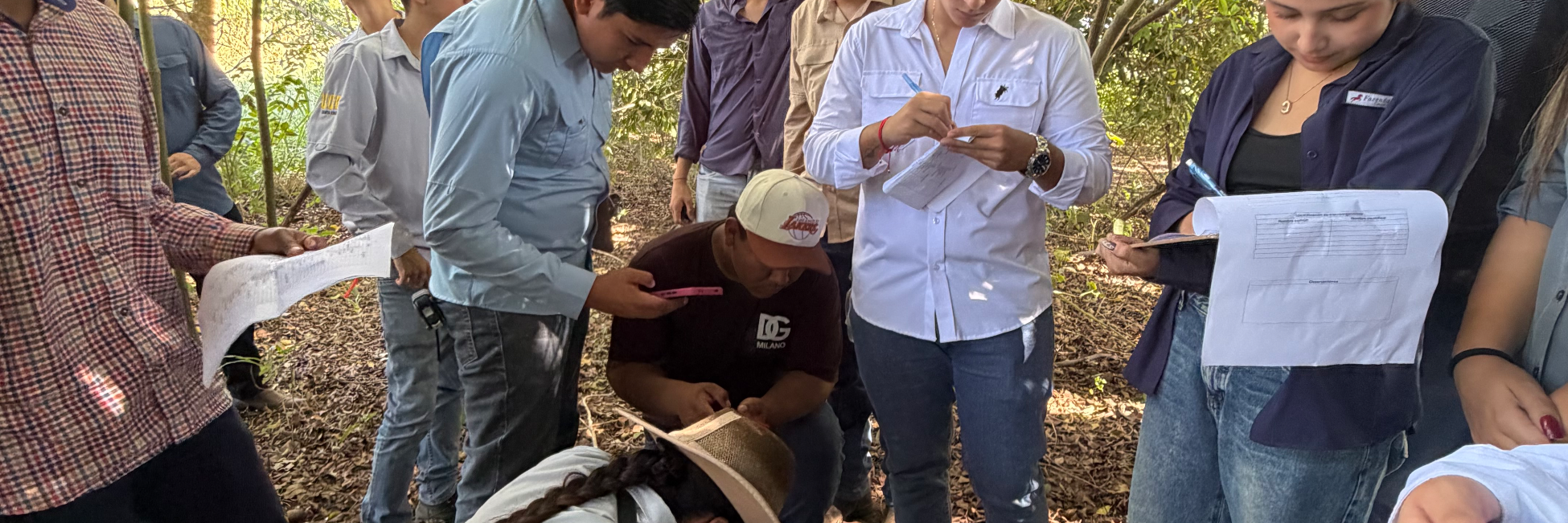
The study concentrated on commercial sugarcane farms with more than 15 years of intensive exploitation, located in the municipality of Warnes and Los Tajibos (800 ha under evaluation). Agricultural management is based on sowing at 1.50 m between furrows, a green cane system, and rotation with soybeans. The monitored barriers included mature strips of 10 to 40 years of age and 6-month-old renovation lines.
3.2 Measurement and Research Methodology
A systematic transect design was established with four microenvironments: (1) Bare soil adjacent to the windbreak, (2) Protected crop on the leeward side, (3) Internal axis of the windbreak, and (4) Unprotected control sugarcane field. Edaphictemperature and humidity, pH, electrical conductivity (EC), fertility index, and dendrometric parameters (height, DBH, crown diameter) were measured.
Additionally, an empirical-economic research methodology was integrated through interviews and operational cost analysis with 12 sugarcane producers in the region, focused on determining the financial impact of lodging and the comparative costs of the harvest (manual and mechanized) in lots with and without the influence of severe winds.
4.
RESULTS AND DISCUSSION
4.1 Integrated Biophysical Data Matrix
The records captured systematically across the different analytical phases have been consolidated into the following experimental matrix:
Table 1. Analytical consolidation of micrometeorological, physical-chemical soil variables, and productive parameters.
EVALUATEDVARIABLE
ENVIRONMENT 1
(BARE SOIL)
ENVIRONMENT 2 (PROTECTED CANE)
ENVIRONMENT 3 (WINDBREAK AXIS)
ENVIRONMENT 4 (EXPOSED CONTROL)
pH (1:2.5 Ratio)
7.5
7.0 - 7.5
7.0
7.0
Electrical Conductivity (dS/m)
0.00
0.00 - 0.04
0.01
0.00 - 0.04
Edaphic Temperature (°C)
27.7
23.0 - 24.5
21.5
28.8 - 32.0
Soil Moisture (%)
46%
56% - 76%
58% - 88%
40%
Edaphic Fertility Index
33
84
105
6
Vegetative Height of Biomass (m)
N/A
3.40 - 3.60
6.50 - 7.60
2.20 - 2.50
4.2 Microclimatic Dynamics and Productive Development
The results revealed a drastic structural and climatic disparity. The control sugarcane field (Environment 4) reached the mostharmful thermal peaks (up to 32.0 °C) and the lowest humidity (40%), which translated into a restricted vegetative size of between 2.20 and 2.50 meters. In contrast, the areas protected by the windbreaks (Environment 2) recorded optimal edaphic temperatures (23.0 - 24.5 °C) and humidities of 56% to 76%. This physiological relief allowed the crop to develop exceptional vigor, reachingheights of 3.40 to
3.60 meters, representing a **net structural increase of 44%** in above-ground biomass.
4.3 Exponential Leap in Edaphic Fertility
The exposed lots showed critical degradation (fertility index of only 6), while the soils under agroforestry influence recorded values between 84 and 105. This exponential increase is driven by the massive mineralization of leaf litter from the Toborochi (Ceiba speciosa) and the biological injection of assimilable nitrogen by legumes such as the Cupesí (Prosopis sp.) and Curupaú (Anadenanthera colubrina). This natural subsidy enables the reduction of synthetic fertilizers, drastically lowering operational costs.
4.4 Economic Impact and Operational Efficiency in Harvesting
Complementary research conducted with over 12 sugarcane producers in the region allowed quantifying the direct economic impact of severe winds and the consequent crop lodging. When sugarcane loses its verticality due to the absence of protective barriers, harvesting tasks become drastically more complex.
In the case of manual harvesting, sugarcane cutters must exert greater physical effort and require more time to untangle and cut the fallen stems. According to the data obtained, this difficulty leads to an **average increase of 17% in labor costs**. On the other hand, mechanized harvesting under lodging conditions subjects the harvesters to greater traction effort and the absorption of impurities, generating premature wear of the cutting components and considerably increasing diesel consumption. The survey reflected that this mechanical inefficiency causes an **operational cost overrun of up to 8%**. The presence of windbreaks entirely eliminates these cost overruns by ensuring the structural straightness of the sugarcane field until the exact moment of cutting.
4.5 Functional Biodiversity and Biological Control
The phyto-protective barrier harbors a rich food web that includes pollinators (bees, bumblebees), decomposing macrofauna (leaf-cutter ants, termites, earthworms), and active biological controllers (arachnids, insectivorous birds such as Pitangus sulphuratus, and bats). This fauna establishes natural **Integrated Pest Management (IPM)**, regulating populations of borers (Diatraea saccharalis) and weevils (Metamasius hemipterus), thereby reducing the need for chemical applications.
4.6 Inventory and Characterization of Dynamic Biodiversity
Table 2. Systematic inventory of floristic diversity introduced in phyto-protective barriers.
COMMON NAME
SCIENTIFIC NAME / GENUS
STRATIFICATION AND FUNCTIONAL AGRONOMIC ATTRIBUTE
Aceituna Morada (Purple Olive)
Olea europaea var. morada
Dominant. Evergreen, maintains dense foliage annually, high tolerance to management agrochemicals.
Aceituno Falso (False Olive)
Syzygium cumini
High stratum (15-25 m adult). Fast growth, resilience to adverse conditions. Presents passive physical tolerance to glyphosate and agrochemical drift.
Aceituno Negro / Cuminishi
Simarouba amara
High stratum (15-25 m adult). Fast growth, high resilience to wind drought, structural longevity.
Toborochi
Ceiba speciosa / Chorisia speciosa
Deciduous. Massive seasonal contribution of organic matter via leaf fall, bulging trunk for water reserve.
Cupesí
Prosopis sp.
Legume. Biological Fixation of atmospheric Nitrogen (BNF), deep sub-surface rooting.
Curupaú
Anadenanthera colubrina
Native legume. High radical N₂ fixation, elevated production of woody and foliar biomass.
Tajibo
Handroanthus sp. / Tabebuia sp.
Native intermediate stratum. Landscape value, attraction of wild entomological pollinators.
Bibosi
Ficus sp.
Dense stratum evergreen. Co-dominant, excellent lower and intermediate foliar sealing of the barrier.
Churuba
Stetsonia coryne
Native columnar cactus. Adapted to the Chaco/lowlands, rustic physical perimeter demarcation.
Achachairú
Garcinia humilis
Native fruiting shrub. Lower understory stratification, productive biological diversification.
Additionally, the strategic incorporation of the False Olive (Syzygium cumini) in the external rows fulfills a fundamental role as a buffer against agrochemical drift. It is worth noting that, from a physiological standpoint, this species does not possess genetic resistance to glyphosate, but rather a high passive physical tolerance. As it matures, it develops a thick bark that prevents thesystemic penetration of the herbicide into the trunk if the drift hits the barrier, and, due to a dilution effect, the micro-droplets that reach the lower foliage are insufficient to compromise the tree's total biomass. This structural tolerance allows the species to act as an efficient protective shield that safeguards the more susceptible native forest varieties of the inner stratum. This arrangement ensures the survival of local biodiversity and prevents mortality or genetic erosion of the windbreak, guaranteeing its long-term functionality.
5.
CONCLUSIONS
According to the systematically collected biophysical, microclimatic, agronomic, and economic evidence, the following formal conclusions are established:
1. Agronomic Yield Enhancement: The company's windbreaks act as a determining factor for crop yield increase, allowing the sugarcane to reach superior heights of between 3.40 and 3.60 m compared to the
2.20 m of the unprotected control. This 44% gain in vegetative height is a direct consequence of the elimination of mechanical wind stress and the control of lodging, which translates into a proven increase in the net productivity of sugarcane by up to 14%.
2. Operational Efficiency, Economic Savings and Rotational Crops: Wind protection generates immediate financial benefits during harvest operations by maintaining stem verticality. This directly suppresses cost overruns of up to 17% in manual harvesting and avoids an 8% cost increase in mechanized operations (due to premature machinery wear and higher diesel consumption). Coupled with less reliance on agrochemicals, the agroforestry design guarantees integral financial savings exceeding 12% throughout the entire productive cycle. Additionally, it was observed that rotation crops also benefit significantly from windbreaks, registering a harvest productivity increase of over 11% for soybean and sorghum, and over 20% in the case of wheat.
3. Microclimatic and Water Optimization: The forest mass effectively regulates the immediate physical environment, lowering soil temperatures by up to 4.3 °C under the forest canopy and mitigating superficial drying of the arable layer. This promotes the conservation of high edaphic moisture (between 58% and 76%), reducing excessive evapotranspiration and stabilizing the water status of the agroecosystem during drought periods.
4. Fertility Restoration and Chemical Dependence Reduction: The integration of evergreen, deciduous, and leguminous forest species generates an exponential increase in soil fertility indices, elevating degraded basal scores (6 - 33) to optimallevels (84 - 105). The mineralization of seasonal leaf litter from Ceiba speciosa and the biological injection of assimilable nitrogen by Prosopis sp. and Anadenanthera colubrina constitute a natural nutritional subsidy that allows for the partial reduction and substitution of synthetic nitrogen fertilizer application (urea), optimizing the farm's operational costs.
5. Soil Conservation Against Erosion: Reducing wind speed below the critical friction threshold efficiently protects the sandy-loam soils of the Warnes municipality. By halting the detachment and dragging of the finest fractions (clays and silts), cation exchange capacity, superficial edaphic structure, and long-term physical fertility are preserved.
6. Promotion of Resilient Functional Biodiversity: The linear agroforestry system works as a dynamic biological corridor that houses a rich diversity of native flora and beneficial fauna. The coexistence of decomposers, pollinators, and natural predators generates an ecosystem service of natural biological control of severe sugarcane pests (such as Diatraea and Metamasius), minimizing the use of commercial insecticides and consolidating a highly resilient and ecologically balanced sustainable agricultural model.
6.
BIBLIOGRAPHICAL REFERENCES
Altieri, M. A., & Nicholls, C. I. (2019). Agroecología: Diseños para una agricultura sustentable. Editorial Centros de Investigación Agroecológica. Mexico.
Beer, J. (1988). Litter production and nutrient cycling in coffee (Coffea arabica) or cacao (Theobroma cacao) plantations with shade trees. Agroforestry Systems, 7(2), 103–114.
Centro de Investigación Agrícola Tropical [CIAT]. (2021). Manual técnico del cultivo de caña de azúcar en el departamento de Santa Cruz. Boletín Técnico Nº 42. Santa Cruz, Bolivia.
FAO. (2015). Windbreaks and shelterbelts: Guidelines on sustainable management in agricultural landscapes. Food andAgriculture Organization of the United Nations. Rome, Italy.
Jose, S. (2022). Agroforestry for conservation and resilience in intensive agricultural landscapes.
Agriculture, Ecosystems & Environment, 323(1), 107-119.
Lorenz, G., & Thielen, H. (2020). Efecto microclimático de barreras forestales vivas en las tierras bajas de Bolivia. Revista Boliviana de Investigación Agronómica, 14(2), 45-58.
Molina, N., & Molina, I. (n.d.). Fundación Ketrawe: Sistemas Agroforestales y Restauración. Retrieved from www.ketrawenature.org
Nair, P. K. R. (2023). An introduction to agroforestry: Science, policy and practice (2nd ed.). Springer Science & Business Media. Dordrecht, Netherlands.
Santiesteban, R., & Rivera, M. (2018). Dinámica hídrica y balance microclimático en el cultivo de Saccharum officinarum bajo sistemas fito-protegidos. Suplemento Técnico de la Asociación de Técnicos Cañeros de Bolivia, 8(3), 12-25.