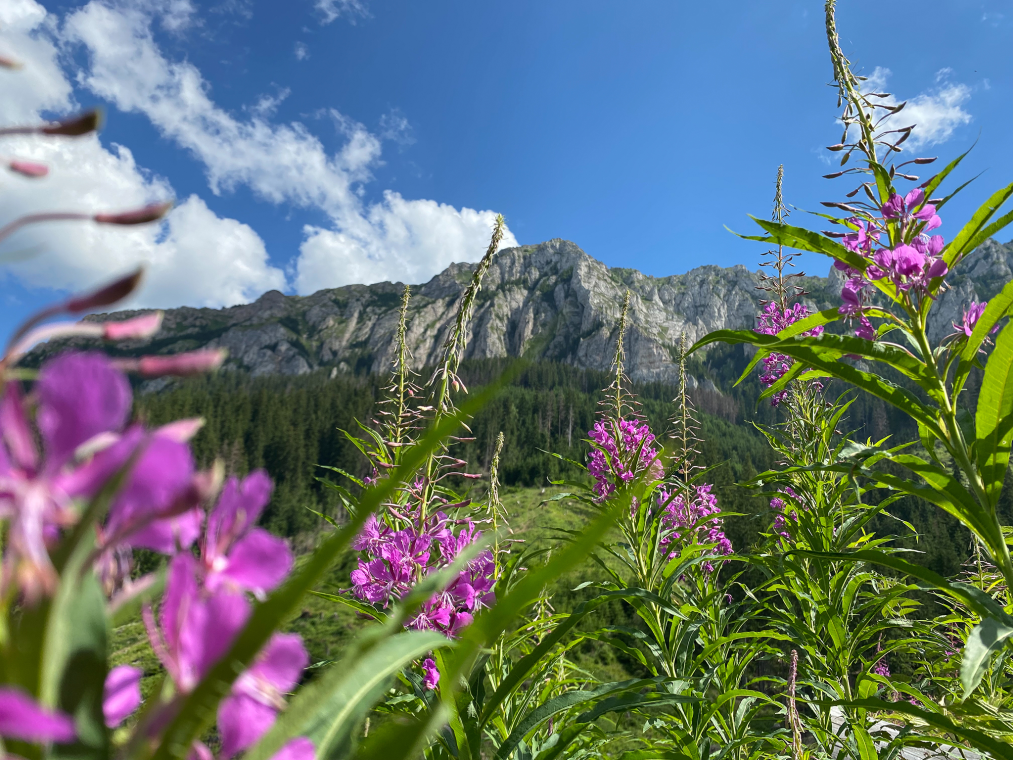

European beech (Fagus sylvatica), spruce (Picea abies), silver fir (Abies alba), rowan (Sorbus aucuparia), and sycamore maple (Acer pseudoplatanus) seedlings, planted in March and April on a barren mountainside in the Hășmaș Mountains of the Eastern Carpathians, are growing well!
https://maps.app.goo.gl/Wv85432g1pxnNKuW9
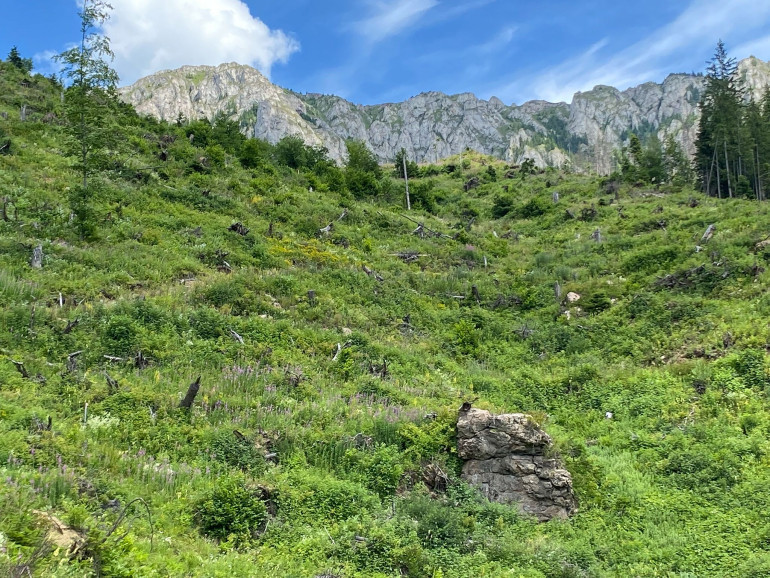
To be honest, the tree seedlings are not the most exciting sight on the mountainside. The area is full of flowering plants and berry bushes that have thrived since the old forest was destroyed by a storm in February 2020. With no trees to block the sunlight, the ground receives plenty of light, moisture, and nutrients, allowing these smaller plants to flourish.
However, this will slowly change over time. As the natural process of ecological succession takes place, the area will gradually return to a dense forest. The seedlings are growing roots and branches, ready to eventually create a more diverse and stable forest than the dark spruce forest that used to be there.
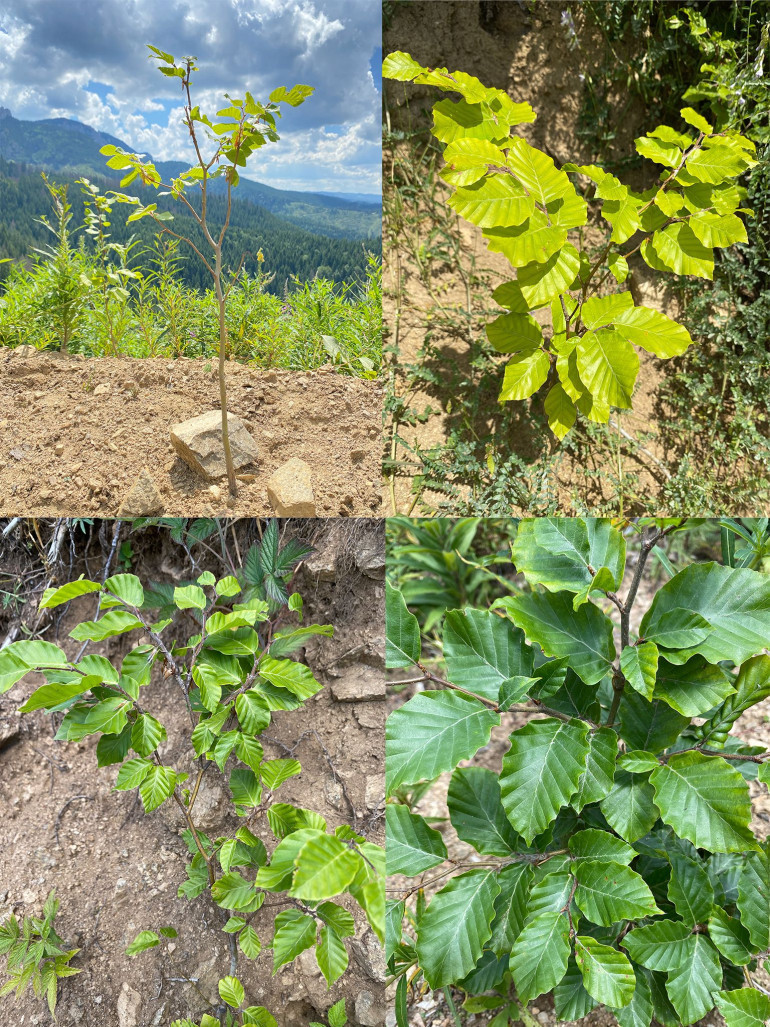
Fagus sylvatica seedlings (above)

Picea abies seedlings (above)
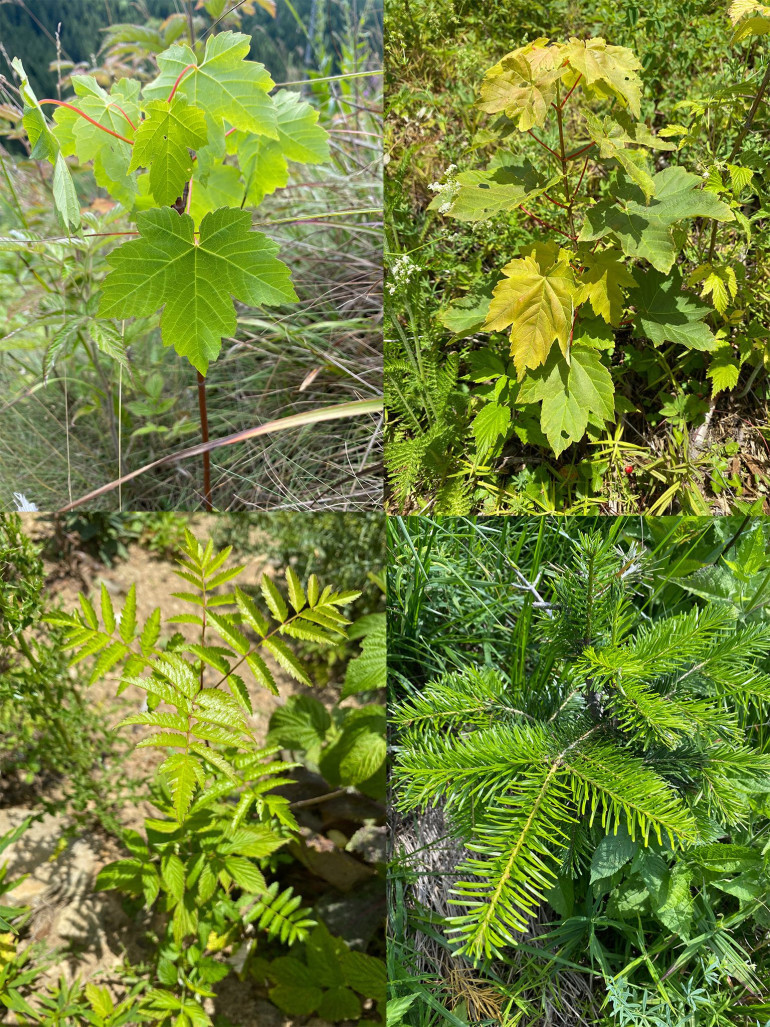
clockwise: Acer pseudoplatanus, Abies alba, Sorbus aucuparia seedlings (above)
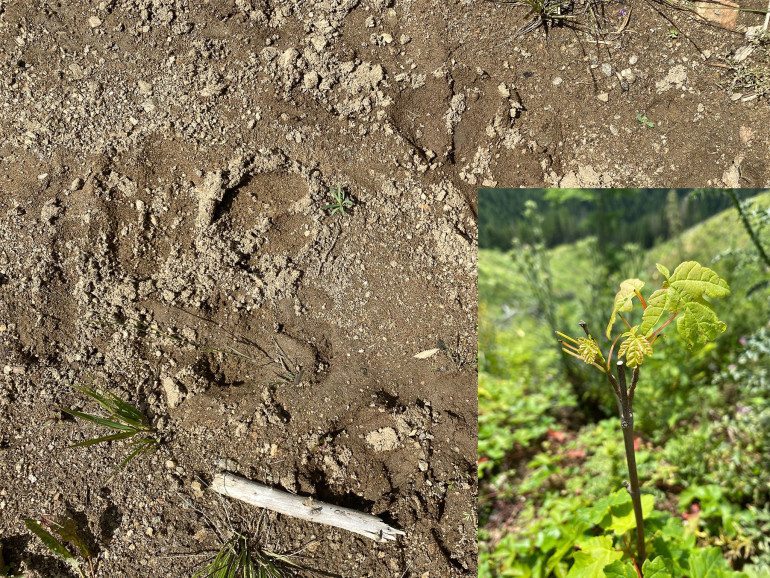
The presence of hoofprints points to the fact that deer are benefitting from the abundance of plants. Fortunately, with so many options, they are not heavily browsing on the planted seedlings. The damage caused by browsing (such as on this maple seedling) is minimal (above)

clockwise: Aquilegia sp., Digitalis grandiflora, Epilobium angustifolium, Tanacetum corymbosum (above)

Lilium martagon (above)
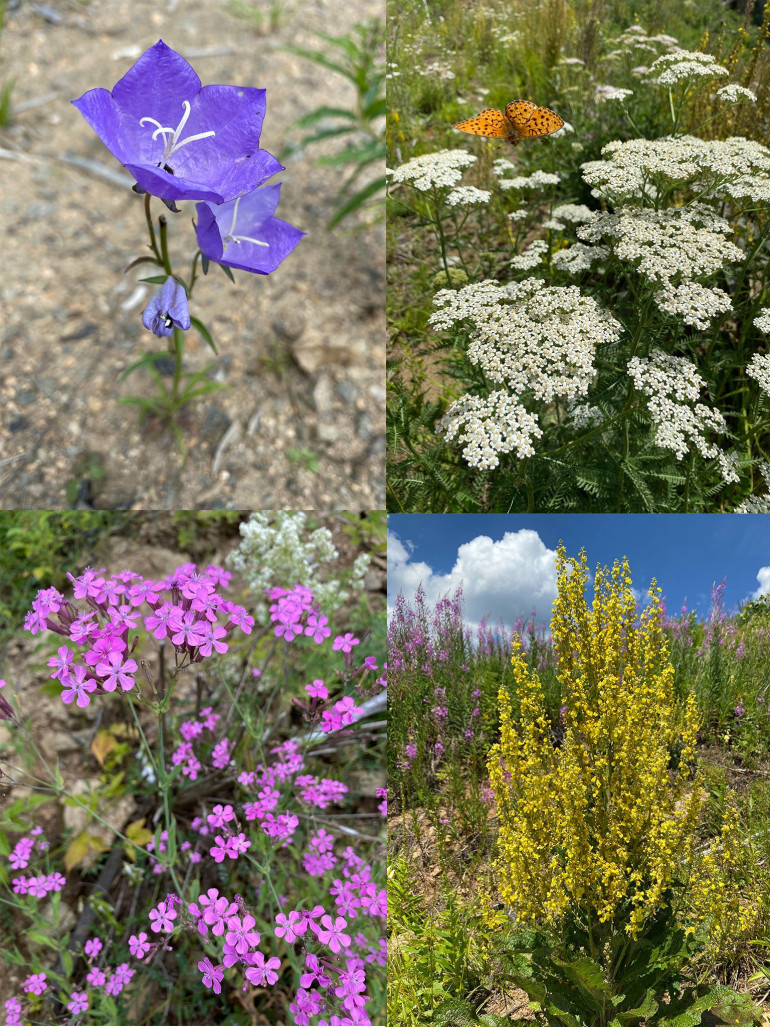
clockwise: Campanula sp., Achillea nobilis, Verbascum sp., Atocia sp. (above)
Comments (0)
Leave a comment