I. Activities status
During the previous four (4) months, some important activities were carried out on the Tree-Nation farm in Dosso, Niger. These are mainly the launch into production of woody plants and the expansion of the drip irrigation network by one (1) hectare for the #Moringa_oleifera. Add to this the operating activities of the farm.
1. Production of forest plants and fruit trees
a) Collection and filling of the plastic pots
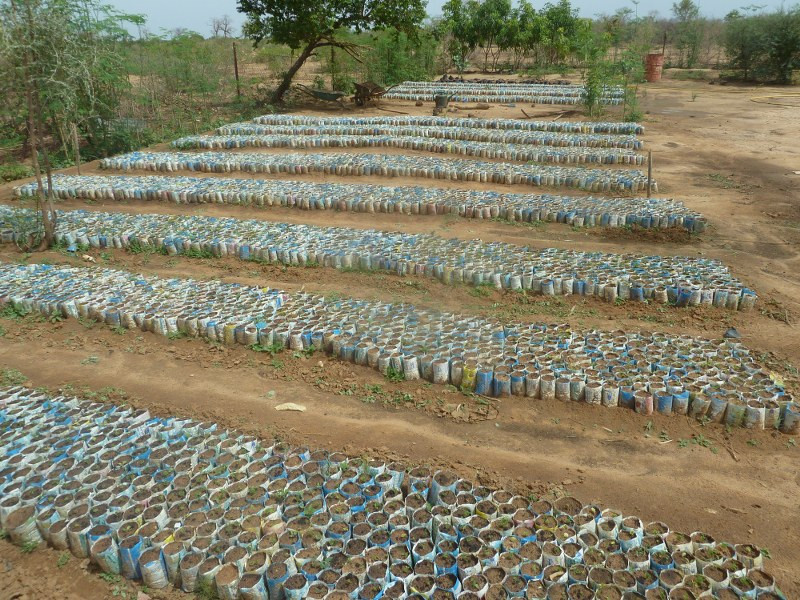
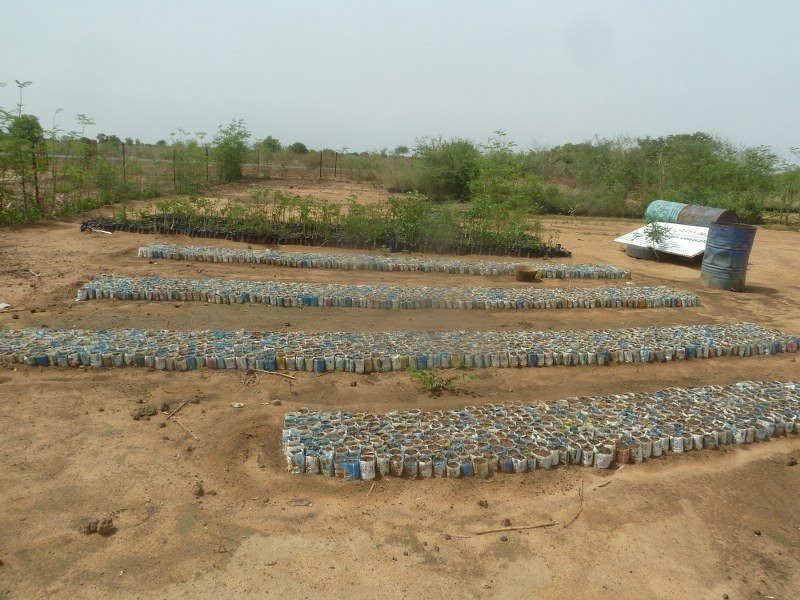
This year, as suggested by one of our partners, for our choice of plastic bags we selected the used milk packagings. These are very common and thrown away after use. The operation was to recover these bags at 2 francs the unit and puncture them in order to allow the filtering of excess of irrigation water and also to provide ventilation for the root system. The quantity estimate was made on the basis of our own consumption need for our field plus the needs of our identified partners (other sites).

Worth noting: the use of these bags is interesting from an ecological point of view. These plastic bags pose a serious pollution problem as they are thrown on roadsides and pollute the surrounding fields. There is no garbage picking service nor recycling. We thought it would be a good idea to give those bags a second life and fund their collection. We still have to assess the impact it will have on nursery plants.
b) Seeding
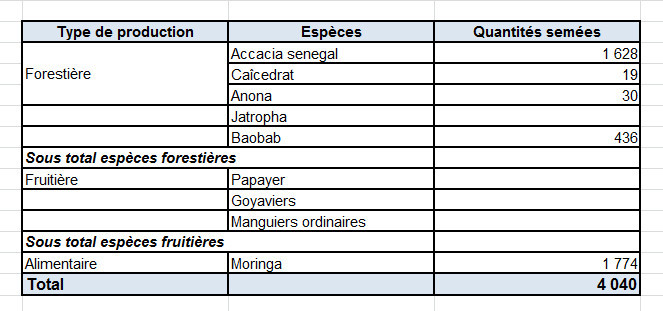
The seedling selection was focused on forest species and Moringa. The production of fruit trees is done as according to the demands of landowners in the area.
Also, the seeds are sourced from our own production and supplemented by acquisitions in the seed department of the Water and Forests National Office (Direction nationale des Eaux et Forêts).
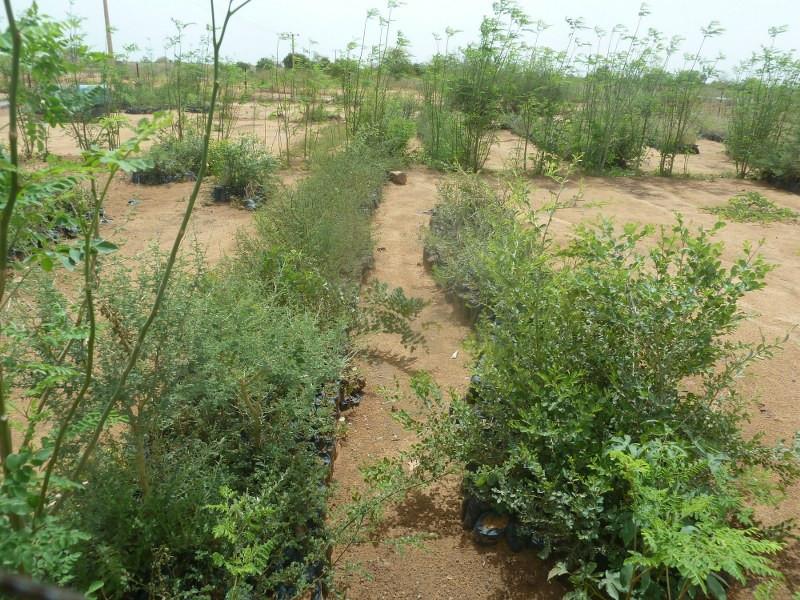
c) Situation in the nursery of remaining plants from last year
We still have a small stock of plants from previous year. We will use these plants to reinforce the #VegetalFence around the farm and/or the diversification and intensification of the biological potential of the farm.
2. Direct seeding of the Moringa
To cover 1 hectare of drip irrigation system it required more than 5,660 plants and the direct seeding of over 5400 seed holes with one or two seeds plus the restock of failed seedlings. The seeds were purchased from Maradi due to the scarcity of Moringa seed this year in Niger.
3. Use of forest and fruit plants (1 April to 28 July 2014)
Plantations in the farm and supply of plants to partners will be organized during August.
We received applications for 6000 plants for mid-August. Other needs may arise but we plan to reserve some plants to strengthen or create vegetal fences this year in the farm.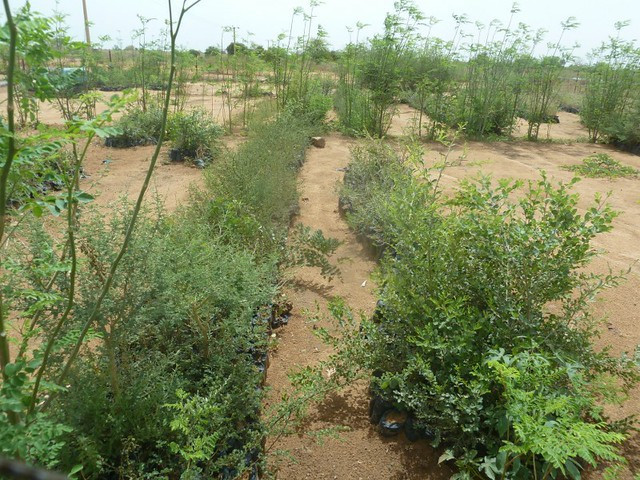
4. Non-timber forest production
The production of Moringa leaves remained low until July when regular rainfall helped to reach about 150 kg per decade only for the indoor hurdles of the nursery; the Moringa site being prensently regenerating as it was non-irrigated.
5. Construction of one (1) hectare of drip irrigation
It was originally intended to achieve three irrigation ponds reinforced with concrete and suspended at 70cm from ground level to increase the capacity of water storage operations with the deterioration of the main basin. Consulting a specialist in drip irrigation, we were recommended the acquisition of 3 m3 plastic basin to be elevated at 1,5m from ground level to facilitate a decent irrigation flow. Hence redirecting the funds earmarked for the ponds towards a complete drip network for one hectare with the making of a slab, purchase of the basin, acquisition of drip equipment and human labor.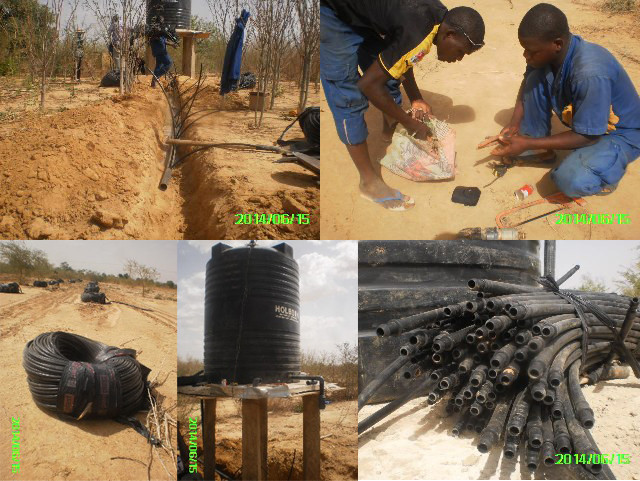
II. Staff status
The Tree-Nation farm employs 2 operators, 1 qualified nursery expert and 1 caretaker-gardener. And for the four months of seedling production an extra operator was assisting the nurseryman.
From April to May 2014 we also recruited 1 forestry technician for the launch phase of the nursery.
III. Infrastructure and equipment status
The infrastructure has deteriorated partly due to high winds in March and April. The warehouse, housing for laborers and material storage currently face problems. We hope to improve these important infrastructures for the farm.
Comments (0)
Leave a comment