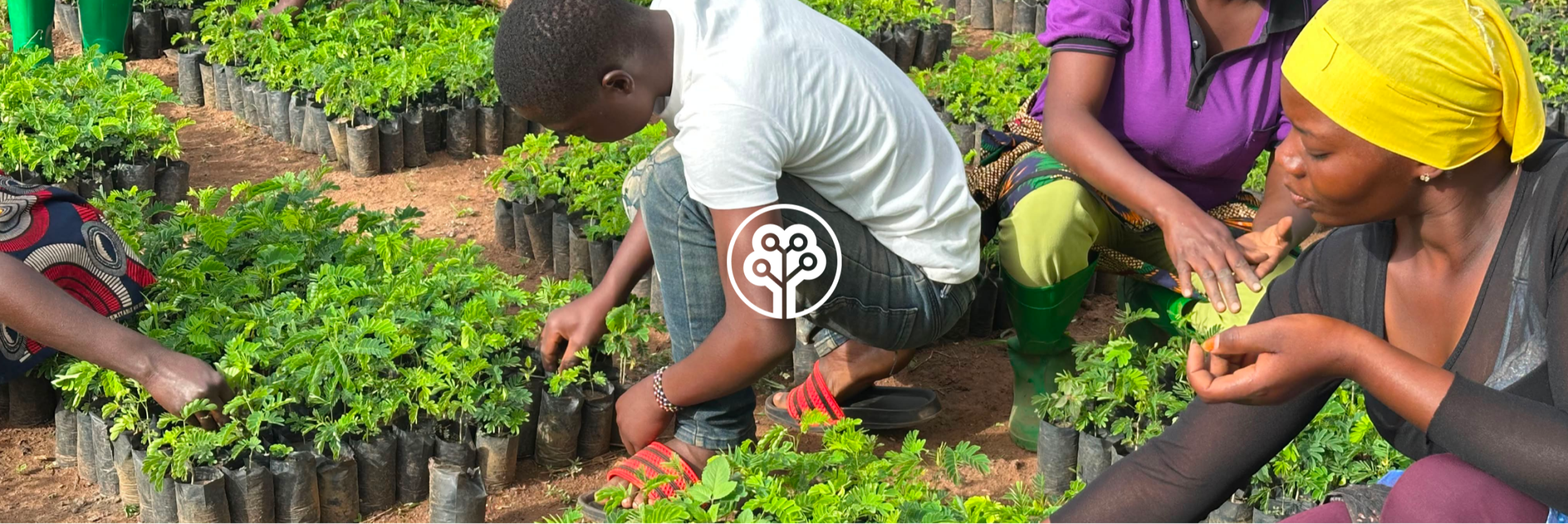

The Geita Tree Plantation for Community project in Tanzania has not had a straightforward journey. Since its inception in 2023, it has faced genuine operational setbacks: low survival rates, difficult terrain, and the complex social dynamics that community reforestation in semi-arid East Africa often entails. What makes this project worth writing about today is not that those challenges were avoided, but that they were worked through: systematically, honestly, and with measurable results.
This is a project that has earned its progress.
A Difficult Beginning
When the project was first established, survival rates were persistently low. Field assessments identified a combination of compounding factors: uncontrolled livestock intrusion damaging young trees, communal land tenure creating gaps in accountability, and a cultural landscape where livestock rearing and reforestation objectives were often in direct conflict. Limited community buy-in reduced post-planting maintenance, while semi-arid conditions and poorly matched species, notably Tamarindus indica and Brachystegia spiciformis, compounded losses further. None of these challenges were unique to Geita, but confronting them honestly was what ultimately allowed the project to change course.
None of these challenges were unique to Geita. But confronting them honestly, rather than working around them, was what ultimately allowed the project to change course.
Turning Points: Relocation, Reform, and Re-engagement
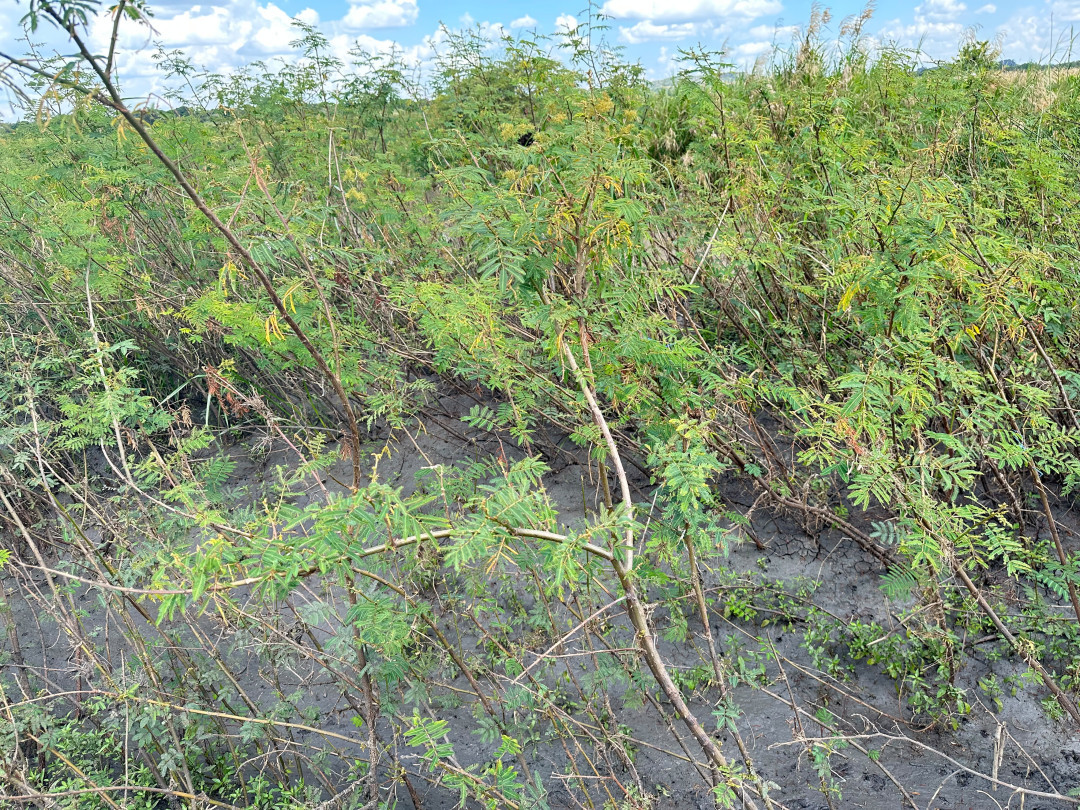
The project's recovery did not happen all at once. It came through a series of deliberate decisions: relocating to better-suited sites, revising species selection toward varieties more adapted to the local environment, and rebuilding community engagement so that maintenance and protection became genuinely shared responsibilities rather than external requirements.
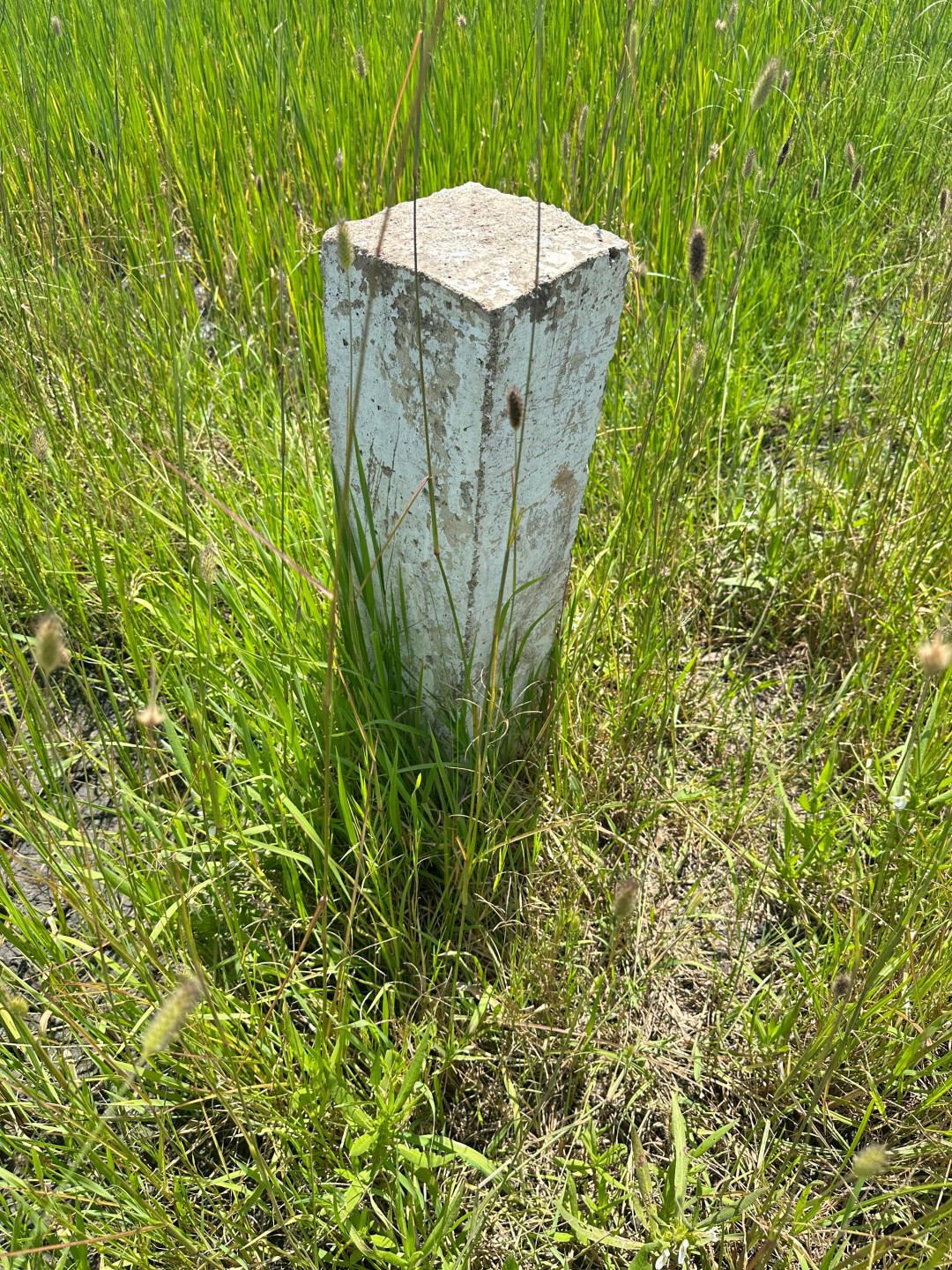
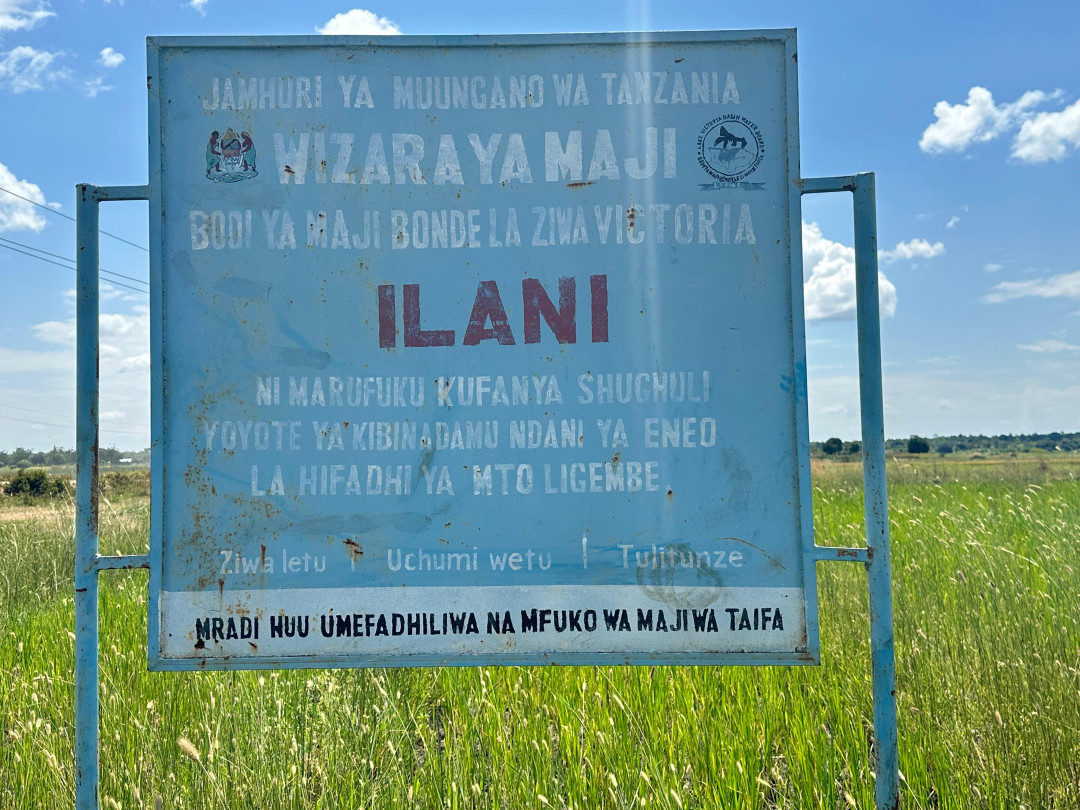
Similarly, the project has enhanced its collaboration with the government in order to improve the security and conservation of their planting sites. In River Ligembe, the government has placed beacons to mark a separation between farms and riparian areas thereby reducing conflicts. Within the forest areas, a team of security personnel has been deployed to secure the forest from illegal logging, grazing and harvesting of firewood.
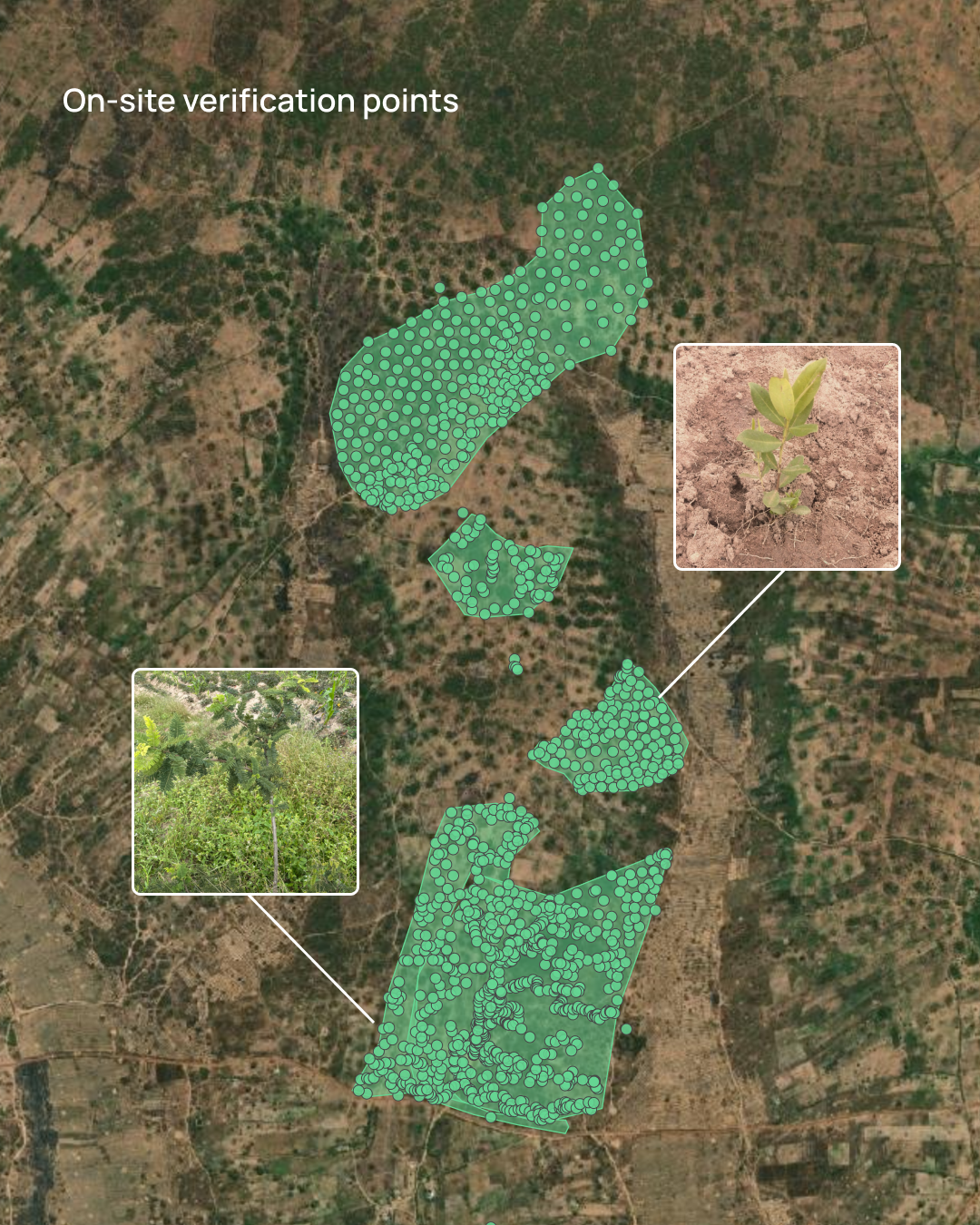
Reporting standards were also raised. The introduction of an improved and mandatory geotagged photographic documentation from the field gave Tree-Nation's team the ability to cross-reference reported data against remote sensing imagery, creating a more transparent and verifiable record of what was actually happening on the ground.
These changes were not dramatic in isolation. But together, they shifted the project onto a fundamentally different operational footing.
What We Found on the Ground
Last month, Tree-Nation's Environment team carried out a formal on-site verification visit to the Geita project, an assessment of survival rates, tree health, maintenance quality, and overall site conditions.
The results were clear and encouraging.
- Tree survival exceeded 80% across the verified sites. That figure represents a significant and documented improvement from the project's early performance, and it was confirmed through both direct field observation and cross-validation with remote sensing data collected before and after the visit.
- Tree health was assessed as good. Observed trees showed appropriate growth for their planting age, healthy canopy development, and no widespread signs of disease or environmental stress.
- Maintenance is active and visible. Consistent evidence of weeding, monitoring, and ongoing tree care was recorded across sites, a sign that community involvement in post-planting management has genuinely taken root.
- Six sites are now established without disturbance. This is perhaps the clearest indicator of the project's operational stability: active planting areas that have been protected and maintained without significant interference.
- Local authorities are playing an active role. In riparian planting zones, local governance structures have stepped in to protect the land from unauthorised activities. This kind of institutional backing is significant: it means the project's progress is not dependent solely on the project team, but is supported by wider structures of accountability and stewardship in the community.
What Drove the Recovery
Looking across the project's trajectory, a few factors stand out as particularly consequential.
Ecologically appropriate site selection and species choice made a foundational difference. Getting these basics right reduced losses from the start and gave communities something more likely to succeed, which in turn made continued investment of time and care more worthwhile.
Transparent, geotagged reporting created a feedback loop that raised standards on both sides. When field data can be independently verified, the quality of reporting tends to improve, and so does the quality of the decisions made on the basis of that data.
And the engagement of local authorities in protecting riparian areas signals something that is hard to engineer but essential to sustain: a sense of shared ownership over the land and what grows on it.
Looking Ahead
On the strength of these verified findings, Tree-Nation's Environment team has decided to continue and expand its support for the Geita Tree Plantation for Community project. Future phases will include more trees and additional planting sites, building directly on the foundation that five successfully established sites now provide.
Reforestation at the community level is slow, demanding work. It requires not just the right species in the right soil, but the right relationships: between project teams, communities, local institutions, and the land itself. Geita has shown that those relationships can be built, even after a difficult start.
We are committed to seeing this project grow.
Tree-Nation Environment Team | Field Verification
Comments (1)
Leave a comment