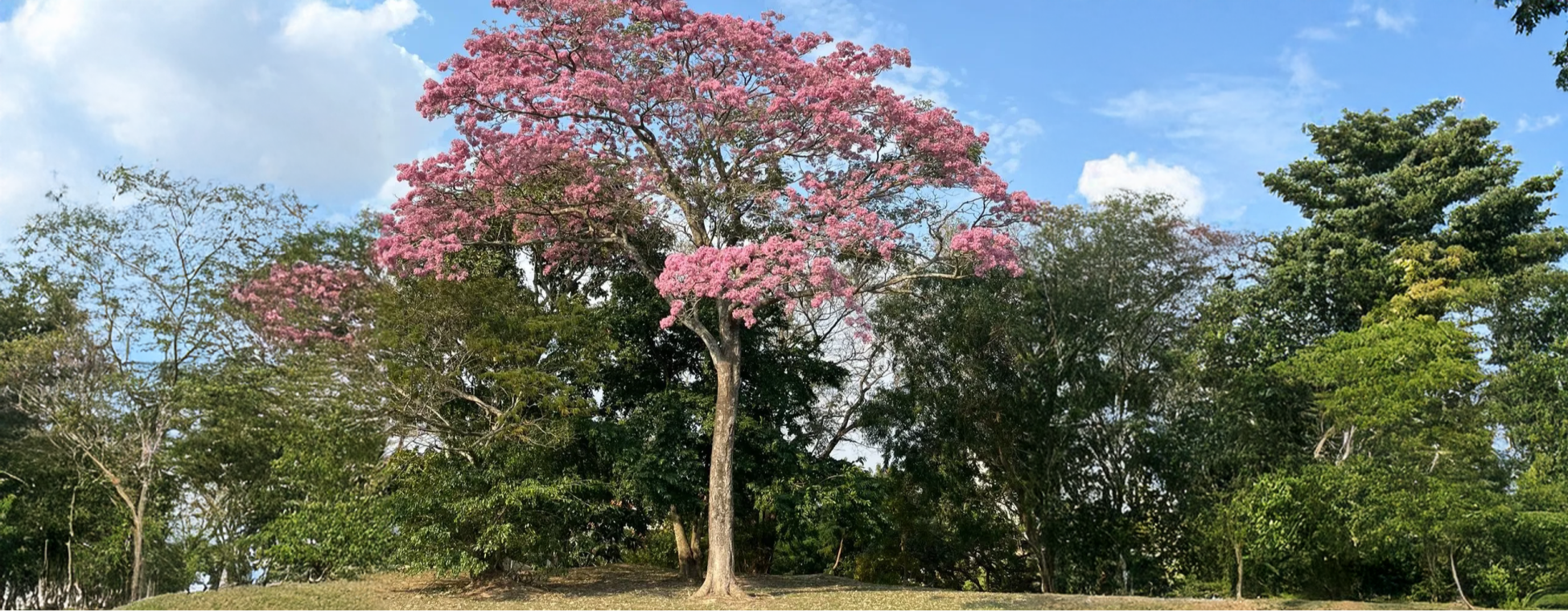

Beyond its breathtaking winter blooms, Tabebuia impetiginosa, known locally as Tajibo, stands as a fundamental pillar in our strategy for ecological restoration and the re-establishment of long-lost forests here in Bolivia. Its significance extends far beyond aesthetics, forming the very core of the windbreaks we implement to revitalize ecosystems. We have received numerous inquiries from the community regarding this remarkable species. Below, we address some of the most frequently asked questions:
Q: Is it native?
A: Yes, Tabebuia impetiginosa is indeed a native tree to Bolivia and the broader Neotropics. Its presence is not merely incidental; rather, this indigenous species is a cornerstone of our forest recovery initiatives. Beyond its cyclical beauty, its impressive stature, longevity, and crucial structural role are vital to the architecture and functionality of our ecosystems. Tabebuia impetiginosa enhances structural diversity and provides essential ecological niches that support a wide array of other native Bolivian species.
Q: What is the Tajibo's contribution to forest masses?
A: The robust presence and successful regeneration of Tabebuia impetiginosa significantly contribute to forest resilience, crucial landscape connectivity within Bolivia, and the maintenance of fundamental ecological processes. This tree plays a pivotal role in bridging fragmented forest areas and integrating forestry with agroforestry systems, effectively serving as a vital "biodiversity highway" that facilitates the movement and interaction of diverse native Bolivian flora and fauna.
Q: Is it efficient when it comes to carbon sequestration?
A: While all trees possess the capacity for carbon sequestration, their efficiency is intrinsically linked to factors such as their growth rate, ultimate size, geographic location within Bolivia, and lifespan. Quantifying the precise amount of CO₂ absorbed by a single species like Tabebuia impetiginosa is challenging due to varying environmental conditions and attempting to give a single number could be misleading. However, based on general principles of tree growth, we can confidently state that:
- Young, vigorously growing Tabebuia impetiginosa trees will likely have a higher annual carbon sequestration rate.
- Mature Tabebuia impetiginosa trees, while potentially having a lower annual rate, will contribute significantly to long-term carbon storage due to their substantial size and longevity.
As a long-lived tree, Tabebuia impetiginosa sequesters atmospheric carbon throughout its extended lifespan, storing it within its substantial woody and root biomass. This inherent characteristic makes it a significant ally in climate change mitigation efforts within our region.
Q: How does it protect soil?
A: The dense and extensive root system of Tabebuia impetiginosa actively safeguards soils against the erosive forces of wind and water, particularly in vulnerable areas such as slopes and riparian zones common in Bolivia. By stabilizing the ground, its root network significantly facilitates water infiltration, reducing surface runoff and soil loss. Furthermore, the deep-reaching roots play a crucial role in nutrient cycling, accessing nutrients from deeper soil horizons and subsequently enriching the topsoil through the decomposition of leaf litter, contributing to soil health in our local ecosystems.
Q: What type of biodiversity does it host?
A: Tabebuia impetiginosa serves as a vital resource, providing both sustenance (nectar and seeds) and shelter for a rich diversity of native Bolivian life. Its vibrant flowers attract a wide array of entomofauna, including bees, butterflies, and pollinating beetles crucial for our local flora, while its structure offers refuge for numerous avifauna species such as hummingbirds, toucans, and parrots found in Bolivia. Moreover, it supports a variety of epiphytes like bromeliads and orchids native to the region, as well as other associated flora and fauna, playing a critical role in maintaining the intricate functionality of the Bolivian forest ecosystem.
Q: What are the social benefits?
A: This remarkable tree species offers significant social and economic benefits to local Bolivian farmers and communities. As an integral component of our windbreak systems, Tabebuia impetiginosa contributes to the establishment of efficient agroforestry operations tailored to our regional needs. These systems, in turn, foster the creation of quality employment opportunities, lead to improved agricultural yields relevant to our local economy, and ultimately enhance the overall well-being and economic stability of the region.
Q: What type of soil is better to plant this tree?
Tabebuia impetiginosa is adaptable to a range of soil types prevalent in Bolivia, including sandy, loamy, and clay soils.The most crucial factor is good drainage, which is essential in many parts of our country. It can tolerate average, poor, and even somewhat acidic or alkaline soils common in our region, as long as they are well-drained and reasonably fertile with moderate moisture. Avoid planting in saline soils, which can be problematic in certain areas.
Q: How much rain a year does it need?
This species thrives in climates with moderate rainfall, typical of many forested areas in Bolivia. While specific figures can vary depending on the specific region within Bolivia, a general range of 1250 - 2000 mm (approximately 50 - 80 inches) of mean annual rainfall is considered suitable for healthy growth. Once established, Tabebuia impetiginosa can be quite drought-tolerant, especially in areas of Bolivia with around 50-65 inches of annual rainfall. However, supplemental watering may be needed, especially during the initial establishment phase and in particularly dry periods common in certain parts of the year.
Q: What temperatures does it withstand?
Tabebuia impetiginosa is best suited for the warm tropical to subtropical climates characteristic of much of Bolivia. It generally thrives in mean annual temperatures between 20-25°C (68-77°F), with the ability to tolerate ranges from 17-34°C (63-93°F) for short periods, as experienced in different parts of our country.
It is sensitive to cold temperatures; temperatures below -4°C (around 25°F) can cause significant damage or even death, especially with prolonged exposure, which can occur in higher altitude regions of Bolivia. While mature trees might tolerate brief dips slightly below freezing, young trees are more vulnerable to frost, which is a concern in certain areas. In areas with occasional frost, protection may be necessary, especially for younger plants.
By understanding the multifaceted contributions of Tabebuia impetiginosa within the specific context of Bolivia, we can better appreciate its vital role in our ecological restoration efforts and its profound impact on the environment and the communities that depend on it.
Comments (0)
Leave a comment