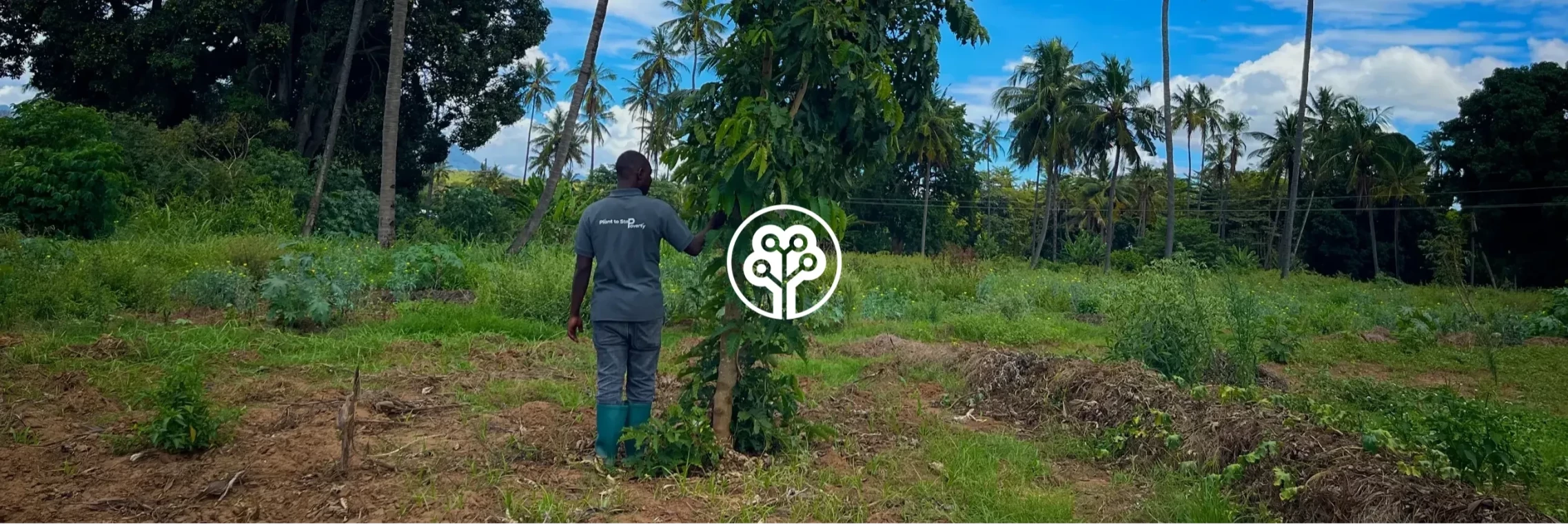

A new planting site has just launched in Mmbagwi, Tanzania, as part of the Plant to Stop Poverty project. The idea is simple: plant trees in a way that helps both people and nature. By combining tree planting with agroforestry, the project restores degraded land while helping local families build more secure livelihoods and adapt to climate change.
What makes this project special is that local villagers are involved from the start. They plant and care for the trees themselves, which means long-term impact — plus better access to food, income, and natural resources.
Why this project matters
In many rural parts of Tanzania, poverty leaves people with very few options. Charcoal production, illegal logging, and expanding farms into protected areas often become the only way to earn a living. Over time, this leads to deforestation, poorer soils, less water, and the loss of wildlife — making life even harder for communities.
Plant to Stop Poverty offers a different path. By planting trees on farms and community land, families can meet their needs without damaging nearby forests. It’s about breaking the cycle by restoring the land instead of exhausting it.
Project focus
The project is built around three main goals:
- Restoring degraded land through community-led tree planting
- Creating jobs and income opportunities for rural families
- Promoting agroforestry, so farming becomes more productive and resilient
Because communities are involved at every step, the benefits last far beyond the planting season.
The objective
The goal is to plant 500,000 trees in Mmbagwi. These trees will help bring life back to degraded land, protect water sources, and support biodiversity. At the same time, they’ll help farmers grow more, earn more, and rely less on nearby forest reserves.

Comentários (1)
Deixe um comentário