
#CarbonCatchers series
As discussed in the two previous articles, forest fires are a considerable problem faced by modern society, particularly in the face of climate change. For millions of years, forest fires have been a natural occurrence depending on environmental factors such as the concentration of oxygen in the #atmosphere, the earth’s surface temperature as well as having a source of #ignition as discussed in article 1. Around 9500 BC, the invention of agriculture saw the beginnings of using fire to clear forest land for more crops, through techniques like fire-stick farming. This, in return, helped stir the establishment of large civilisations. With its resulting growing population, human induced land transformation continued increasing and hasn’t stopped since then. The history of humans has been interwoven with the ability to use fire, as examined in article 2 of this series. The deliberate setting of forest fires for economic gain is a pervasive issue occurring all across the world and is both exacerbated by and contributing to climate change. In modern days, scale and speed of change are concerning. But the most threatening issue is how it may soon escape human control, as a positive feedback loop of climate change is outpacing our ability to stop the process. This final article of the series will explore what is being done to conserve forests and control forest fires, the challenges associated with forest protection and some innovative solutions to safeguard one of our most precious natural resources.
The protection of forests
The protection of forests seeks to prevent such human-induced abuses as unsustainable #logging and farming practices, the #felling of forests as a result of urban #sprawl, the pollution of forest soil and the intentional burning of forests to clear land. To prevent such activities, areas of forest are often designated as protected areas. Within these protected areas, human activities are generally limited (Stolton et al., 2013). The International Union for the Conservation of Nature (IUCN) defines a protected area as: “A clearly defined geographical space, recognised, dedicated and managed, through legal or other effective means, to achieve the long-term conservation of nature with associated ecosystem services and cultural values”. The IUCN has 6 categories of designated protected areas. They range in scale and rigidity from protected areas which allow the sustainable use of natural resources to natural monuments or features such as a sea cave to strict nature reserves which tightly control the interaction between humans and the reserve (Stolton et al., 2013). An example of a strict nature reserve is the Great Victoria Desert nature reserve in Australia. As well as providing protection to ecologically important areas, such as forests, many areas with protection status also undergo restoration and rehabilitation projects as part of the area management.
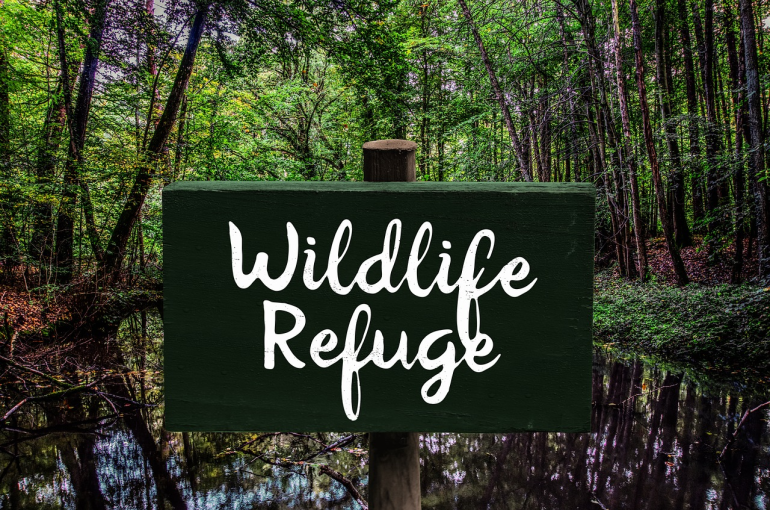
Figure 1: A wildlife refuge with a sign. Image from Pixabay.com.
These protected areas have had a significant contribution in preventing forest loss, however, the effectiveness of a protected area relies heavily on the willpower of the agency or government implementing the protection (Potapov et al., 2017). A global study in 2009 revealed that only 7.7% of global forest cover had protection status, concluding that this was insufficient, in particular in #biodiversity hotspot areas such as the Indonesian #jungle where protection was on average 8.4% of the total area (Schmitt et al., 2009). To combat this, in 2008, under the Convention of Biological Diversity (an international conference concerning biodiversity), countries recommitted to the target of effectively conserving “at least 10% of each of the world’s forest types” (In Schmitt et al.). This was updated under the Aichi targets (as part of the Convention on Biological Diversity) to protect a minimum of 17% of the global #terrestrial area by 2020 (Leberger et al., 2020; Convention on Biological Diversity, 2010). Despite these targets, 15 billion trees are still cut down or burned annually and progress towards the goal of 17% protection has been small as forest protection remains a major challenge worldwide (Crowther et al., 2015; Zafra-Calvo et al., 2019).
As mentioned previously, the key to the success of protecting an ecological area is in the political will to enforce protection. For example, in the Brazilian Amazon, although nearly 50% of the total area of the rainforest (equalling roughly 2.2 million km2) has protection status, the protected areas are poorly managed, underfunded and under-staffed leaving the areas still vulnerable to encroachment and disruption (Butler, 2011). IBAMA, Brazil’s environment agency which previously successfully protected vast areas of the Amazon from forest fires and deforestation, has experienced major budget cuts and disempowerment under current president Bolsonaro. This left the agency poorly equipped to deal with the substantial wildfires experienced in 2019 (Branford and Torres, 2019).
The role of non-governmental organisations in forest protection
To make up for this deficit in political will, many non-governmental organisations (NGOs) have formed to promote the protection of the world’s forests. These NGOs can range in activity from small groups which aim to raise awareness of environmental issues such as deforestation to those larger groups which undertake research themselves and even those which influence policy and help to manage the forest ecosystem (Johnson, 2020). This includes international NGOs such as Rainforest alliance, American forests, Forest Stewardship Council as well as better known organisations like Greenpeace and the World Wildlife Fund for Nature. There are hundreds more national or local organisations which act more regionally. A major benefit of NGOs is that they are often run not-for-profit and so are not driven by economic reasons and usually act out of interest for the environment rather than themselves.
According to the Food and Agriculture Organisation (FAO; 2017), NGOs have contributed to forest protection in three major ways. The first is their role in challenging long-held beliefs and posing controversial questions which many state agencies may not be able to ask. An example of this can be seen in the Philippines. The NGO the Legal Rights and Natural Resources Center questioned the government’s ownership of vast areas of forest lands where #indigenous people have lived long before the existence of the government, urging they be recognised as ancestral lands - the land and resources of indigenous peoples (La Vina, 1990). Their second role is in the development of new policies and defining the boundaries for new areas of nature reserves, such as the WWF’s role alongside the government to develop an action plan for the native forests of Madagascar in the 1980’s (WWF, 1990). Many NGOs have also participated in the Tropical Forests Action Programme, a framework developed originally in 1985 to deal with the growing forestry crisis. The third role is in implementing programs, either as an aid to the government or on their own. This can be seen in Indonesia where the NGO Bina Swadaya was involved in training the State Forest Corporation in community development skills as they went about involving local farmer groups in reforestation and management projects (Seymour, 1990). NGOs also engage in monitoring programmes such as the NASA-funded NGO Global Fire Emissions Database which uses satellites to monitor the effects of forest fires such as area burned and carbon emissions (GFED, 2020). The usefulness of NGOs in protecting natural forests cannot be overstated and as such has made them a target for the timber industry or other industries which seek to exploit the natural resources of forest areas. In fact, many countries have implemented strict laws which greatly limit the activities of NGOs and may have been threatened with imprisonment. There has even been police raids of NGO offices, with one raid in Brazil at the end of 2019 leading to the arrest of four volunteer firefighters who helped battle the Amazon forest fires of that year (Phillips, 2019).
Innovative solutions
The key to managing forest fires is early detection. As some areas of forest are so vast, it would be nearly impossible to patrol these areas frequently enough to enable detection. Thus, the use of unmanned aerial vehicles (UAVs) or drones to monitor forest fires has become much more commonplace (Sudhakar et al., 2020). The use of drones has also been implemented in search and rescue efforts during forest fires, increasing the likelihood of finding someone trapped in the blaze (Karma et al., 2015). While there are some drawbacks to the use of drones as monitoring systems such as limited flight capacity, heat sensitivity and possible false alarms, the technology is continually improving (Sudhakar et al., 2020). Satellite imagery can also improve the detection, monitoring and thus management of forest fires. In particular, satellite imagery can be employed to study trends and patterns of forest fires globally (Hislop et al., 2020).
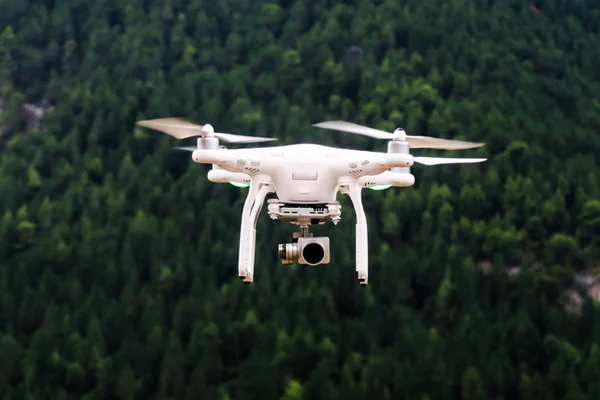
Figure 2: UAV in flight. Image by Jason Blackeye from unsplash.com.
#Reforestation and afforestation projects are also major solutions to deforestation associated with forest fires. Reforestation is the replanting of trees in an area which once contained forest but was damaged, destroyed or removed. Afforestation is the planting of trees in an area not previously forested (UNFCCC, 2013). The estimated global number of trees is 3.04 trillion and it is proposed that there is capacity for a further 1.2 trillion trees to be planted which would greatly increase the global capacity for carbon storage which will be explored in a future article (Crowther et al., 2015; Bastin et al., 2019). In 2006, a few months after the creation of Tree-Nation, a worldwide initiative launched by the UNEP (United Nation Environment Programme) started promoting the idea of reforestation, leading to the formation of many new projects. This initiative, the Plant for the Planet - Billion Tree Campaign, of which we, Tree-Nation, were one of the earliest and proud partner, was one of UNEP's most acclaimed success. Reforestation and afforestation is how at Tree-Nation we hope to make a difference with our numerous planting projects based all around the world, with some projects directly linked to reforesting areas burned by forest fires such as the St Jean d’Illac project. Bastin et al., (2019) estimated there is 0.9 billion hectares of land available in areas which naturally support forest cover and would increase global forest coverage by 25%. Depending on density and type of tree, between 1000 and 2500 trees can be planted per hectare. Thus, there is significant capacity to plant enough trees to revert part of the effects of deforestation.
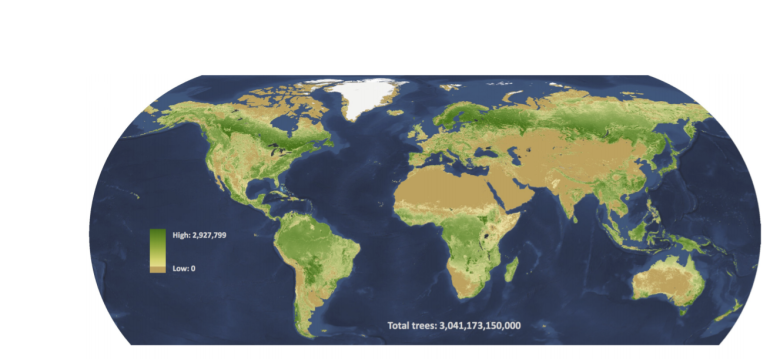
Figure 3: Map of global tree cover estimated from satellite imagery by Crowther et al., 2015.
The Reforestation Movement
As mentioned in the previous paragraph, there is great potential for tree planting globally. Many NGOs, countries and even some companies have already begun to reforest degraded areas of land. One of the more famous reforestation movements is the Green Belt Movement, which has planted over 51 million trees since it was set up in Kenya in 1977, and led founder Wagnari Maathai to be the first African woman to win a Nobel peace prize. The goal of this movement is not just to reforest degraded areas in rural Kenya, but to empower local women and the community to engage in these reforestation activities (The Green Belt Movement, 2020). The Great Green Wall is another movement based in Northern Africa which aims to plant a ‘wall of trees’ all across the continent from West to East so as to contain the spread of the Sahara desert, a process known as desertification. This project is a huge collaboration of NGOs, 20 African countries, and international organisations such as the African Union, the United Nations and the World Bank (Vizcarra, 2019). An analogous project was also launched in China, which as of 2017 had planted 66 billion trees across Northern China in the “Great Green Wall of China” (Petri, 2017). Many other countries have launched similar initiatives along with the support of NGOs and international organisations, for example Pakistan has committed to planting 10 billion trees as part of the “10 billion tree tsunami” (Constable, 2018), the government of New South Wales, Australia, has committed to planting 5 million trees by 2030 (Visentin, 2018) and the Irish government has committed to planting 22 million trees every year to 2040, planting a total of 440 million trees (Hutton, 2019). In the US, the Trump re-election campaign has promised to plant a trillion trees. Unfortunately, the political origins behind many of these grand projects may prove a potential issue to achieve these lofty goals which are often set on a very long timeframe, usually after the elected party is out of office. Beyond these broad scale projects, there are thousands of small scale reforestation projects happening all across the world, such as those established here at Tree-Nation.
Conclusion
It is imperative that society puts more emphasis on the protection and safeguarding of forests. Forest systems are the largest storehouses of carbon after the world’s oceans, and therefore are critical in the fight against climate change. The protection of forests through #legislation has been shown to work, and the global amount of forest cover which is protected must be increased. Furthermore, novel solutions such as the use of drones and satellite imagery to monitor the spread of wildfires and forest cover have already significantly aided in containing the spread of destruction. Finally, reforestation and rehabilitation projects to restore the world’s natural forests are a necessity. All of these solutions together, it is hoped, will safeguard the world’s forests, not just against wildfires, but from degradation and biodiversity loss which are essential to limit the effects of climate change. There is hope.
Trends
- Since the beginning of human civilisation, global tree cover has decreased by 46%. With global efforts of reforestation, though, this trend may be reversed in the coming decades.
- 15 billion trees are felled every year, a number which has increased in the last decade from 7 billion and is likely to continue increasing, mainly as a result of insufficient political will to halt deforestation.
- However, more and more forests are being protected by legislation under the Aichi targets and with improved monitoring from drones and satellite imagery, there is hope that illegal felling and setting of forest fires may decrease in the future.
- Based on historic trends of food consumption and deforestation, scientists have argued that forest cover will continue to decline and stabilize at a global cover of 22% of total land mass over the next century. However, if food production and consumption stabilises, reforestation efforts are predicted to increase global forest cover to 35% of total land in the next 70 years (Pagnutti et al., 2013). Current global forest cover is estimated to cover 30% of the earth land mass.
Calculations
- There is an estimated 3.04 trillion trees globally
- There is space to plant a further 1.2 trillion trees if the land is not used for agricultural or urban use
- There is 0.9 billion hectares of land available for tree planting which would increase forest area by 25% of current global forest cover
Keywords: #forestfires #logging #climatechange #deforestation #NGO afforestation #forestprotection #wildlife #EcoEducation
References:
Bastin, J.-F., Finegold, Y., Garcia, C., Mollicone, D., Rezende, M., Routh, D., Zohner, C. M., Crowther, T. W., 2019. The global tree restoration potential. Science, 365(6448), 76-79.
Branford, S. and Torres, M., 2019. As 2019 Amazon fires die down, Brazilian deforestation roars ahead. Mongabay Series: Amazon Conservation, accessed April 2020, https://news.mongabay.com/2019/10/as-2019-amazon-f....
Butler, R. A., 2011. Protected areas cover 44% of the Brazilian Amazon. Mongabay, accessed April 2020, https://news.mongabay.com/2011/04/protected-areas-....
Crowther, T. W., Glick, H. B., Covey, K. R., Bettigole, C., Maynard, D. S., Thomas, S. M., Smith, J. R., Hintler, G., Duguid, M. C., Amatulli, G., Tuanmu, M. N., Jetz, W., Salas, C., Stam, C., Piotto, D., Tavani, R., Green, S., Bruce, G., Williams, S. J., Wiser, S. K., Huber, M. O., Hengeveld, G. M., Nabuurs, G. J., Tikhonova, E., Borchardt, P., Li, C. F., Powrie, L. W., Fischer, M., Hemp, A., Homeier, J., Cho, P., Vibrans, A. C., Umunay, P. M., Piao, S. L., Rowe, C. W., Ashton, M. S., Crane, P. R., Bradford, M. A., 2015. Mapping tree density at a global scale. Nature, 525(7568), 201-205.
Constable, P., 2018. In Pakistan, an ambitious effort to plant 10 billion trees takes root. The Washington Post, accessed May 2020, https://www.washingtonpost.com/world/asia_pacific/...
Convention on Biological Diversity, 2010. Aichi Target 11 – Technical Rationale Extended. COP/10/INF/12/Rev.1, Accessed April 2020, https://www.cbd.int/sp/targets/rationale/target-11....
GFED, 2020. Global fire emissions database. Accessed May 2020, http://www.globalfiredata.org/
Hislop, S., Haywood, A., Jones, S., Soto-Berelov, M., Skidmore, A., Nguyen, T. H., 2020. A satellite data driven approach to monitoring and reporting fire disturbance and recovery across boreal and temperate forests. International Journal of Applied Earth Observation and Geoinformation, 87, 102034.
Hutton, B., 2019. Climate Change: Ireland plans to plant 440m trees by 2040. The Irish Times, accessed May 2020, https://www.irishtimes.com/news/environment/climat...
Johnson, B., 2020. The basics of Non-Governmental Organisations. Thought co, Accessed April 2020, https://www.thoughtco.com/ngo-definition-3555283.
Korten, F. F., 1990. NGOs and the Forestry Sector: an Overview. Unasylva, 43(171), 3-10.
Leberger, R., Rosa, I. M. D., Guerra, C. A., Wolf, F., Pereira, H. M., 2020. Global patterns of forest loss across IUCN categories of protected areas. Biological Conservation, 241, 108299.
La Vina, A. G. M., 1990. Democratizing access to forest resources: a legal critique of national forest policy. Philippine Natural Resources Law Journal, 3, 2-17.
Pagnutti, C., Bauch, C. T., Anand, M., 2013. Outlook on a worldwide forest transition. PLoS ONE, 8(10), e75890.
Petri, A. E., 2017. China's “Great Green Wall” fights expanding desert. National Geographic, accessed May 2020, https://www.nationalgeographic.com/news/2017/04/ch...
Phillips, D., 2019. Police raid office of Brazil NGO linked to brigade that helped battle Amazon fires. The Guardian, accessed May 2020, https://www.theguardian.com/world/2019/nov/26/braz...
Schmitt, C. B., Burgess, N. D., Coad, L., Belokurov, A., Besancon, C., Boisrobert, L., Campbell, A., Fish, L., Gliddon, D., Humphries, K., Kapos, V., Loucks, C., Lysenko, I., Miles, L., Mills, C., Minnemeyer, S., Pistorius, T., Ravilious, C., Steininger, M., Winkel, G., 2009. Global analysis of the protection status of the world’s forests. Biological Conservation, 142(10), 2122-2130.
Seymour, F. J., 1990. Social forestry on public lands in Indonesia: a blurring of ends and means? Baltimore, The Johns Hopkins University Press.
Stolton, S., Shadie, P., Dudley, N., 2013. IUCN WCPA best practice guidance on recognising protected areas and assigning management categories and governance types. Best Practice Guidance Series, 21, Gland, Switzerland: IUCN.
The Green Belt Movement, 2020. Who We Are. Accessed May 2020, http://www.greenbeltmovement.org/who-we-are
The Trillion Tree Campaign, 2020. The trillion tree campaign. Accessed April 2020.
UNFCCC, 2013. Afforestation and Reforestation projects under the clean development mechanism: A reference manual. Bonn, Germany, ISBN 978-92-9219-120-7
Visentin, L., 2018. Sydney to be cooled by an extra five million trees by 2030. The Sydney Morning Herald, accessed May 2020, https://www.smh.com.au/politics/nsw/sydney-to-be-c...
Vizcarra, N., 2019. Here stands the Great Green Wall: A 3-part series on the progress and holdbacks of one of history’s most ambitious efforts. Landscape news, accessed May 2020, https://news.globallandscapesforum.org/40521/here-...
WWF, 1990. A combined report. Washington, D. C., World Wide Fund for Nature and the Conservation Foundation.
WWF, 2020. Importance of forests. Accessed April 2020, https://wwf.panda.org/our_work/forests/importance_....
Zafra-Calvo, N., Garmendia, E., Pascual, U., Palomo, I., Gross-Camp, N., Brockington, D., Cortes-Vanquez, J.-A., Coolsaet, B., Burgess, N. D., 2019. Progress toward equitably managed protected areas in Aichi Target 11: A global survey. BioScience, 69(3), 191-197.
Comentários (1)
Deixe um comentário