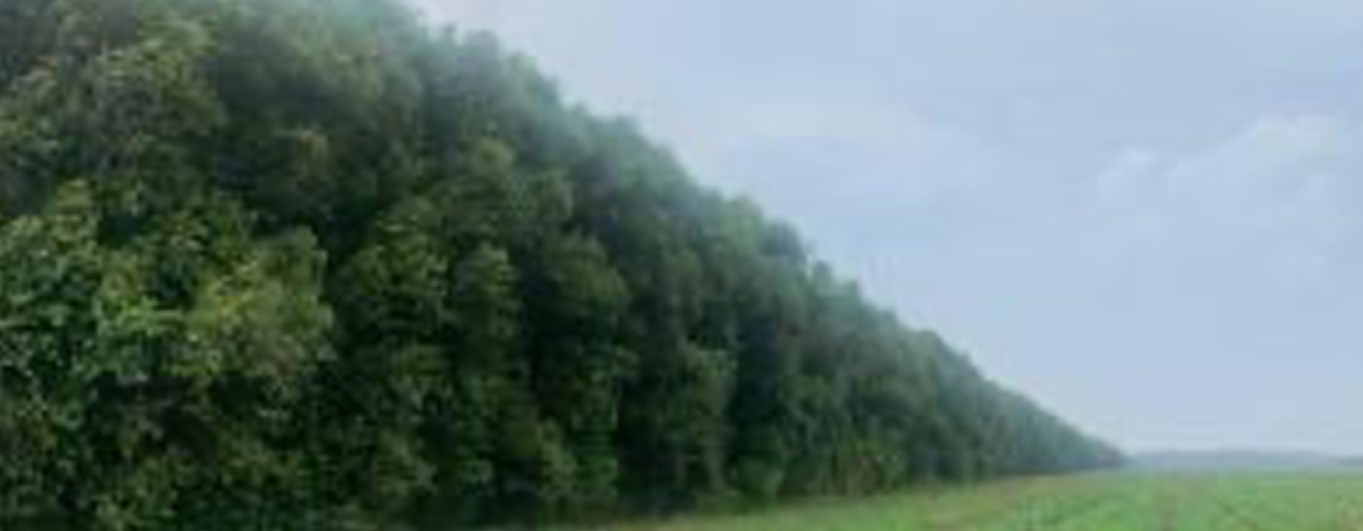

Our records and field experience demonstrate that forests, through the use of forest curtains (Windshields or windbreakers) linked to conservation of natural forests, produce the following benefits:
- Increased crop productivity per hectare: Trees can improve soil fertility, protect crops from wind, and provide shade, resulting in higher yields.
- Reduced need for chemical fertilizers: Leaf litter and tree roots enrich the soil with nutrients, reducing reliance on external fertilizers.
- Stabilization of water cycles: Forests help regulate water flow, improving infiltration and reducing runoff.
- Improved humidity conditions: The presence of trees creates a more humid microclimate, benefiting crops during dry periods.
- Minimized flood effects: Forests act as sponges, absorbing excess water and reducing the risk of flooding.
- Prevention of wind erosion: Forest curtains serve as natural barriers against the wind, protecting crops and preventing the loss of fertile soil.
- Reduced need of deforestation: As there is more productivity per hectare, the need of more land for agriculture and cattle reduces, therefore the pressure on the natural forest diminishes.
Therefore:
Planting trees in agricultural fields increases on-farm productivity and minimizes agricultural risks.
Going further:
- Biodiversity: Forests are home to a wide variety of species, contributing to ecosystem health and providing pollination services.
- Climate change resilience: Trees capture carbon from the atmosphere, helping to mitigate climate change and its impacts on agriculture.
- Community well-being: Forests offer scenic beauty, recreational spaces, and improve people's quality of life.
- Temperature reduction: Trees offer a much cooler temperature under their shade providing shelter for types of life.
- Animal fodder: Trees can offer fodder in form of seeds and leaves, ensuring animal feed in tough and adverse climate conditions.
This information reinforces the idea that integrating trees into agricultural systems is not only beneficial for the environment, but also improves the productivity and sustainability of agriculture.
Comentários (0)
Deixe um comentário