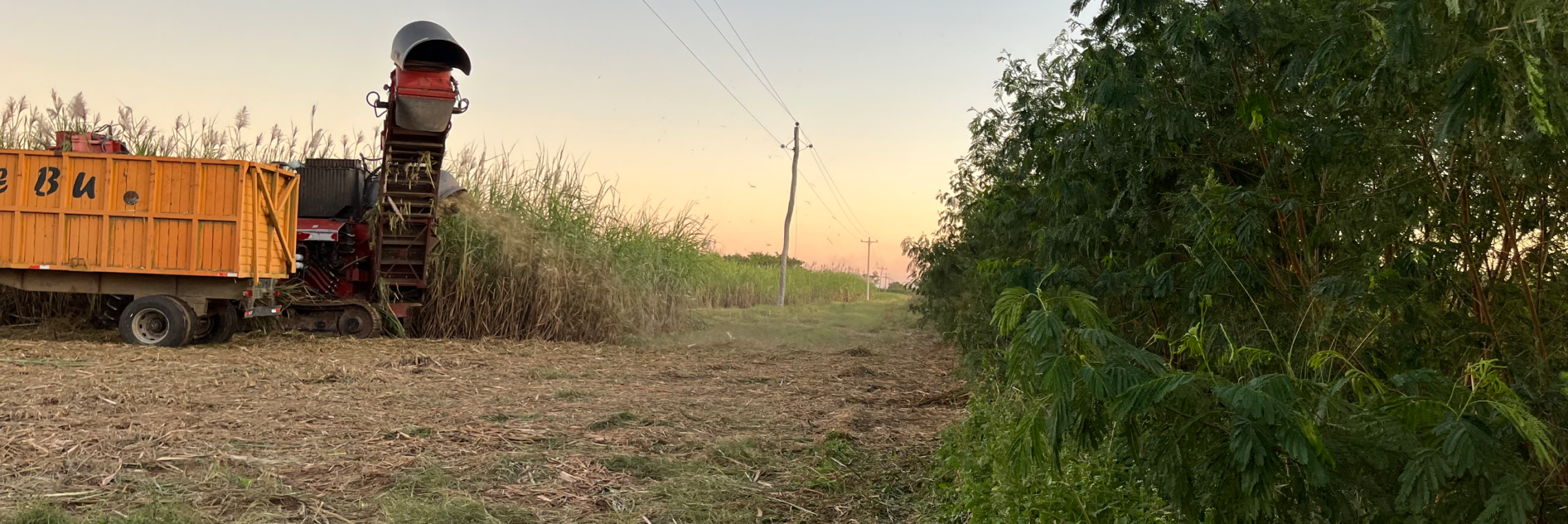

Growing Together: How Tree Windbreakers Revolutionize Sugar Cane Production
In vast monoculture landscapes, the wind is an unseen threat, damaging fragile sugar cane plants and acting as a major vector for pests and diseases. We are tackling this challenge by introducing a groundbreaking agroforestry system that converts open fields into thriving, sustainable ecosystems.
Our solution is the strategic planting of tree windbreakers, creating vital green infrastructure right in the heart of huge sugar cane extensions. These natural barriers significantly reduce the effects of wind, leading to astonishing results for local farmers.
The Power of Partnership
These outcomes are supported by deep experience: based on 20 years of continuous field monitoring and data collected from more than 400 farmers, reducing wind stress enables them to produce at least 11% more yield than they could without windbreakers. This isn't just about higher production; it’s about efficiency and sustainability.
Furthermore, this agroforestry system also drastically reduces the need for expensive drainage investments and reliance on agrochemicals, allowing farmers to save around 16% of their normal budget. The trees support a move toward more organic agriculture because their fallen leaves and branches act as excellent natural fertilizer for the sugar cane. This creates a true small-scale circular economy where waste becomes a nutrient.
The core idea is simple: farmers and nature become partners, nourishing each other. Farmers care for the trees, and the trees deliver better yields and lower costs back to the farm.
A Holistic Approach to Global Challenges
The system’s benefits reach far beyond the farm gate:
- Poverty Reduction: Better, more reliable production and higher savings lead to economic resilience for agricultural communities.
- Fighting Deforestation: By increasing productivity on existing land, there is less pressure to expand agriculture by destroying forests.
- Climate Action: The trees actively sequester carbon, providing a natural climate solution.
For maximum positive impact, we convert simple windbreakers into real, resilient forests by using native species, fostering local pollinators, and prioritizing biodiversity. This approach ensures a stronger, more sustainable future for both agriculture and the planet.
Comentários (0)
Deixe um comentário