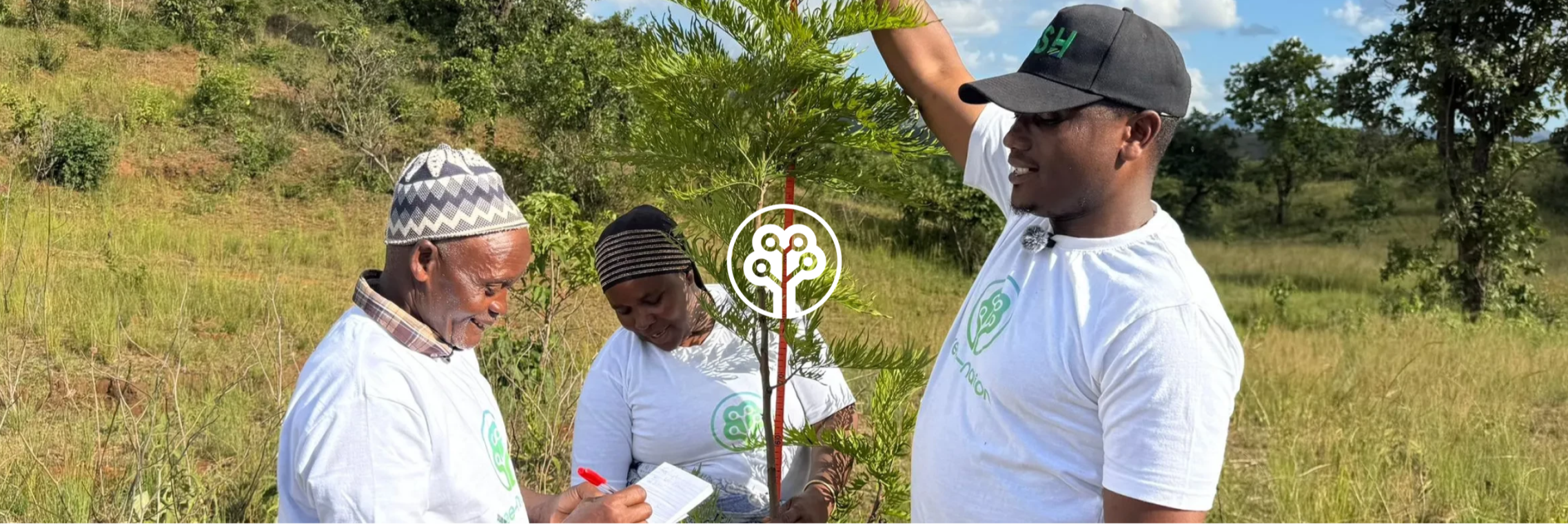

Since 2023, we have supported the Mlola Biodiversity Restoration project in the Usambara Mountains, part of Tanzania's Tanga region and one of the most biodiverse, and most threatened, forest systems in East Africa. Over three years, the project has worked with local communities to plant more than 170,000 native trees across several restoration sites in the Mlola division.
Community impact
The project's model has also included more than just environmental impact. Part of the approach has been putting local communities at the center of implementation, with men, women, and village leaders all involved in site preparation, tree planting, and ongoing site maintenance.
70% of jobs created by the project went to people from local communities, giving them an additional income source through their involvement in these environmental activities. The project has also engaged over 260 students, promoting environmental awareness alongside the planting itself.
What verification found
As with all projects we support, we monitor progress through two complementary channels: remote monitoring (geo-tagged photos, monitoring reports, and satellite vegetation data) and on-site verification, where our team visits planting sites directly to assess survival, density, and tree health.
Reforestation rarely comes without its challenges. Selecting the right site is often one of the first hurdles, as is making sure every member of the local community understands the long-term value of restoring the land.
Results have varied significantly across sites. At Kwemfumbii 01 and 02, verification confirmed strong outcomes: trees averaging 2.5 meters in height after two and a half years, an 81% survival rate, and a "good" health rating. Other sites have not performed to the same standard. Verified survival rates at some plots fell well below target, in one case to 38%.
A field verification done by our team in January 2026 identified the cause at one such site: the ground had been used for informal grazing, was exposed to wildfires set deliberately to stimulate fresh pasture, and included rocky sections poorly suited to tree growth from the start. The recommendation was to relocate planting away from that site rather than continue investing in it.
These findings are reflected in the project's verification score, which moved from 94.6 in 2024 to 77.7 in 2025, driven mainly by below-target survival rates and gaps in photographic documentation of planting sites.
What's being done about it
The local team has responded with several concrete changes:
- Planting schedules realigned to the rainy season
- Greater use of drought-tolerant, site-appropriate species
- Firebreaks, thorn fencing, and community fire monitors introduced at exposed sites
- Underperforming sites relocated, with trees already planted on the new ground at our Mnarani site
Where we stand now
The project's results are genuinely mixed: some sites are performing well and delivering real biodiversity and community benefits, while others have underperformed due to site selection and management issues that on-site verification has now clearly identified.
Given these findings, our priority for Mlola now shifts to a maintenance and monitoring phase. We will continue tracking all sites remotely, assessing progress at the sites where trees have already been planted. Over the coming years, this closer monitoring will give us a clearer picture of the project's long-term potential, and it's on that evidence that we'll base any future decision to expand further.
Comentários (1)
Deixe um comentário