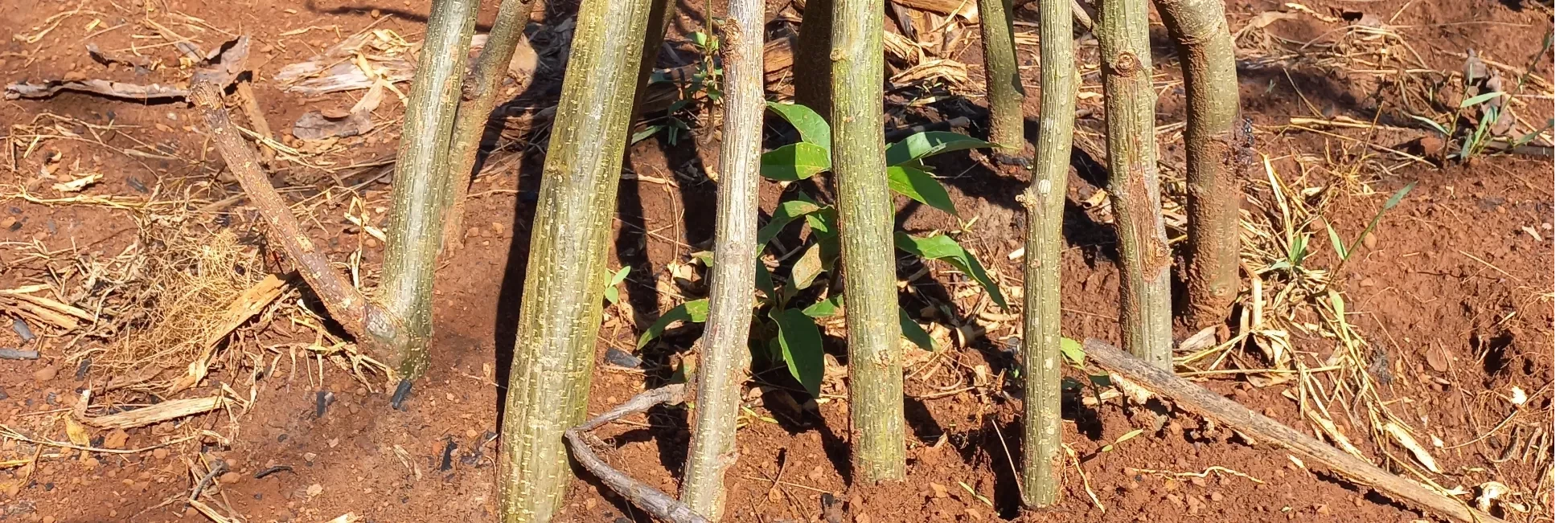

In ongoing efforts to enhance tree survival rates across our restoration sites, community members and field teams have adopted a simple yet effective method of protecting young seedlings using wooden stick enclosures. The structure, made from locally available sticks arranged in a conical or teepee-like shape, is proving instrumental in increasing seedling survival in areas prone to animal grazing, harsh weather, and human interference.
This innovation has emerged as a practical solution to one of the major challenges in tree planting—seedling mortality during the early stages of growth. The protective structure serves as a physical barrier against livestock such as goats, cows, and sheep, which often feed on young seedlings or trample them while grazing. By enclosing the seedlings, the wooden frame deters animals from reaching them, giving the trees ample time to establish strong roots and stems. In communities where free-range grazing is common, this intervention has already shown visible improvements, with field monitoring indicating fewer cases of damaged or uprooted seedlings.
Beyond protection from animals, the structures are helping to moderate environmental conditions around the seedlings. In open fields and exposed landscapes, seedlings often suffer from heat stress, dehydration, and strong winds. The wooden cover provides partial shade, reducing direct sunlight exposure and preventing excessive water loss from the soil. This creates a more favorable microclimate for growth by retaining soil moisture and shielding the seedlings from the drying effects of the wind. In addition, the structure offers physical support, helping seedlings to grow upright and remain stable even under challenging weather conditions.
Another benefit observed is the improved visibility of planted seedlings. The stick enclosures act as markers, making it easier for field officers, farmers, and local caretakers to identify and avoid damaging the seedlings during maintenance activities like weeding or mulching. This visibility also serves as a reminder of the community’s collective responsibility in caring for the newly planted trees, fostering a stronger sense of ownership and stewardship among local residents.
Overall, the introduction of these low-cost protective structures is making a measurable difference in METGE’s reforestation efforts. Preliminary observations from several planting sites indicate a notable increase in survival rates, particularly in grazing-prone areas. The use of these enclosures demonstrates how simple, locally adaptable innovations can significantly contribute to long-term tree establishment and landscape restoration.
Comentários (0)
Deixe um comentário