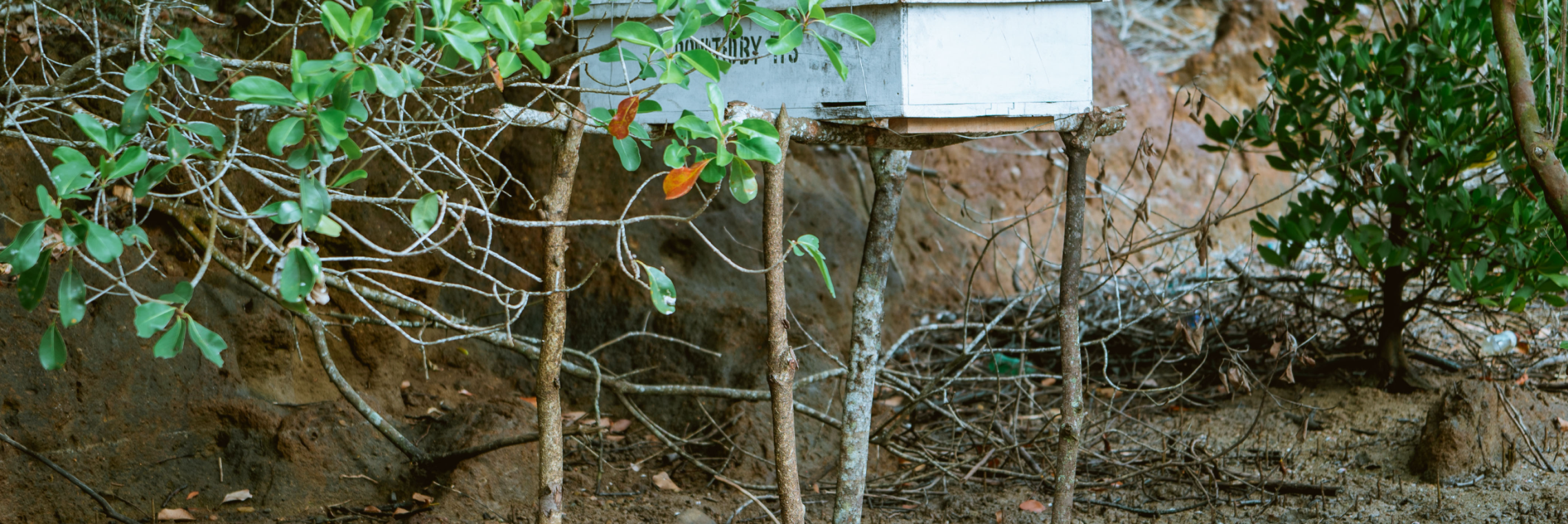

We are attached to mangrove tree planting in Tanga Coastline in Indian Ocean. By combining mangrove planting with beekeeping creates a synergistic relationship that enhances ecosystem health through several key mechanisms.
First, the introduction of managed honeybee colonies, such as Apis mellifera or native stingless bees, significantly boosts the pollination of local mangrove flora, which in turn supports the natural regeneration and structural complexity of the forest. This increased floral visitation ensures higher reproductive success for mangrove trees, leading to more robust forest growth.
Second, the practice creates a direct economic incentive for local communities to protect and restore mangrove habitats, as the health of the forest directly correlates to honey yield and quality. By assigning tangible value to the standing forest, communities are less likely to engage in destructive activities like overexploitation of timber or aquaculture conversion.
Finally, the presence of bees contributes to broader ecosystem stability by supporting the diverse plant life that provides essential habitat for marine organisms, including juvenile fish, crustaceans, and threatened species like sea turtles and dugongs. This integrated approach effectively bridges the gap between socioeconomic resilience and environmental conservation.
Comentários (2)
Deixe um comentário