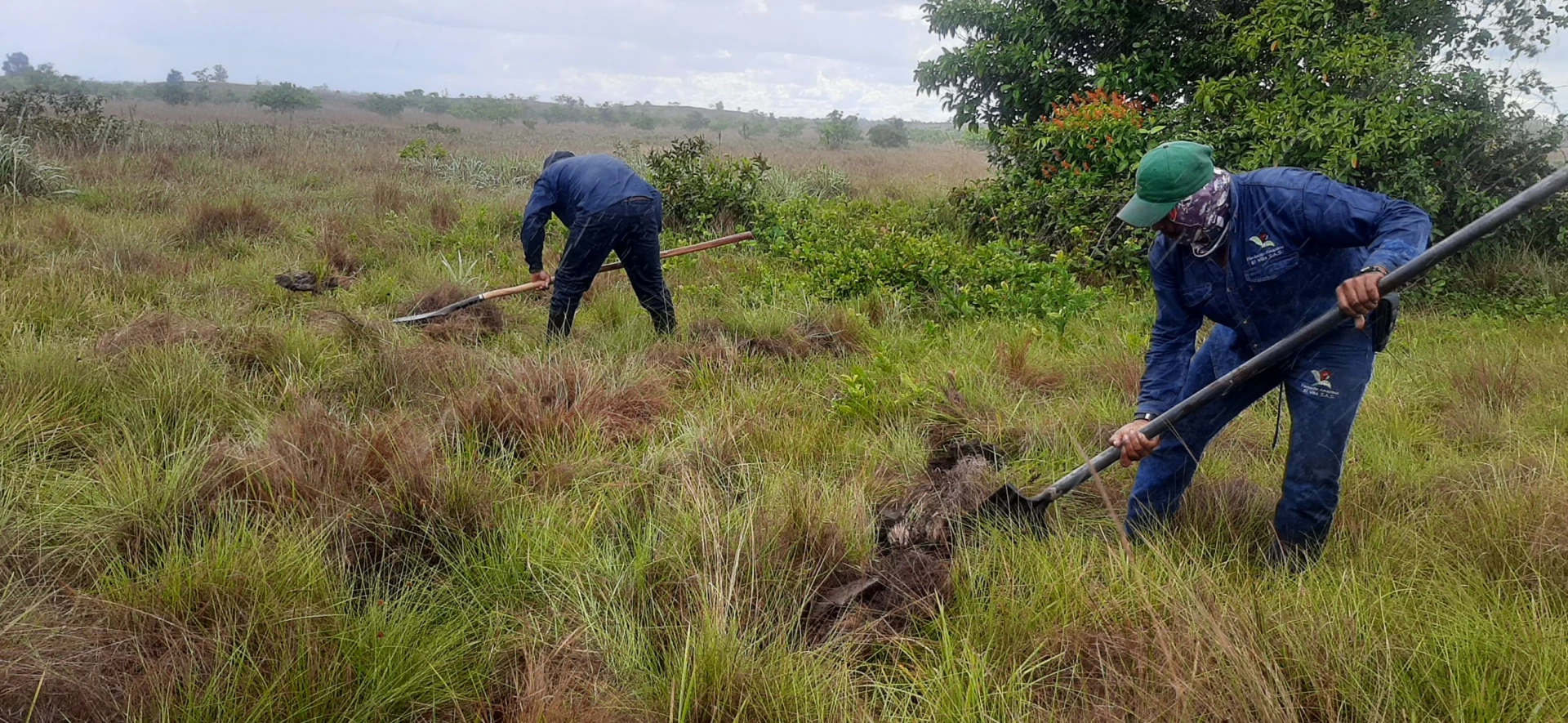

Here at Sacred seeds, the simarouba tree is one of our all-time favourites, for multiple reasons including medicinal properties, food value, timber uses, shade and an excellent habitat for fauna. Simaroubas are always included in every restoration planting off site and have also been a part of our living fences program. Simarouba are found in the wet and rainy areas of the Amazon and parts of Asia, making it ideal for planting in our inundated zones of the Orinoco River basin.
MEDICINAL VALUE.
In India, it is known as Lakshmi Taru tree and is well researched for its different medicinal properties especially for curing cancer and improving immunity in cancer patients. In Cuba, the leaves and bark are used as a powerful digestive aid and harmful organism cleanser. In Guatemala, it's been a traditional remedy against certain vector diseases. As far back as the 18th century, explorers from France reported that people in Guyana used Simarouba bark against dysentery. They brought the herb back to France where it became, and still is, a regarded therapy.
Simarouba has a long history in herbal medicine in many countries. An important herbal drug used against dysentery hence its bark became known as dysentery bark. The bark, leaf extract, fruit pulp and seeds of Simarouba are well known for their different types of pharmacological properties such as analgesic, antimicrobial, antiviral, anti-parasitic, vermifuge and astringent. Simarouba contains various compounds but the most active are chemicals known as quassinoids.
FRUITS
Fruit pulp is rich in sugars and can be used in fermented and nonfermented beverages. The pulp can be used in preparation of jam. The fruits are also a source of natural colorants.
SEED OIL
Seed oil can be easily refined, bleached, deodorized, and fractionated. The fat content allows it to be made into a margarine and hence used as a butter replacement for baking in Vegan circles. Simarouba oil is also used in industrial manufacture of soap, lubricant, paint, varnishes, pharmaceuticals, cosmetics, among other things. After oil extraction, the left-over Simarouba meal is reported to have high nutritional indices and digestibility hence can be added in the production of animal food.
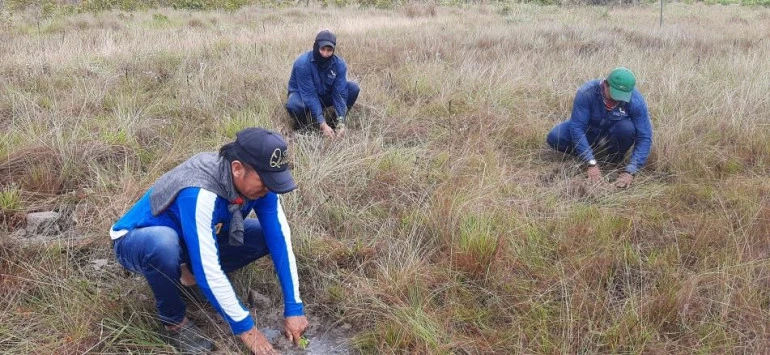
Photo: January 2022 Planting Simaruba in Sacred Seeds Garden
SHELL
The seed shells can be used in activated charcoal industry and particleboard industry. They can also be used as briquettes to heat boilers thereby generating thermal energy
TIMBER
The wood is useful in making light furniture, toys, matches, packing material, paper industry. Waste wood can be used to generate biogas.
MANURE
The press cake, after extraction of the oil, is rich in nitrogen, phosphorus and potash with traces of calcium, magnesium, and sodium. The leaf litter (20-40 kg / tree / year) (10,000-15,000 kg/ha/year) makes good manure, increasing soil fertility and the carbon content of the soil. As earthworms find it tasty the leaves are a good source of vermicompost.
Trees like Simaruba being a part of food forests can provide healthy, diverse and real solutions and is an amazing tree to be planted in our sacred seeds garden.
Note: Information about the herbal medical effects of this spectacular tree and its folkloric uses are not intended to replace the advice of your doctor. If you have a severe medical condition or health concern, see your physician.
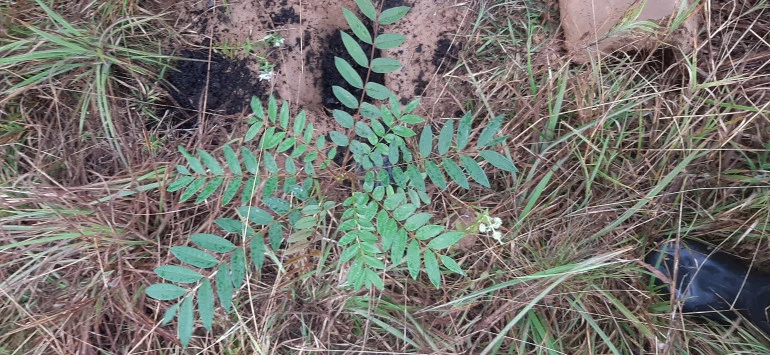
Photo: January 2022 - Newly planted Simaruba seedling in Sacred Seeds Garden with biochar and organic compost.