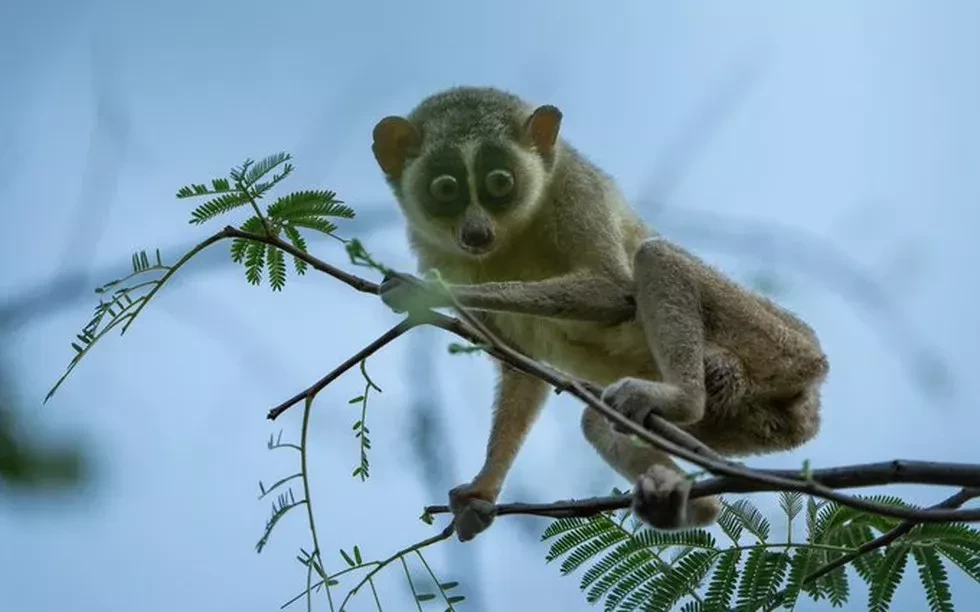

The slender loris, a captivating and elusive nocturnal primate, holds a unique place in India's biodiversity. With its large, soulful eyes and delicate frame, the slender loris has long captured the imagination of nature enthusiasts and conservationists alike. However, this enchanting creature faces numerous threats that have led to a concerning decline in its population across the country.
Historically, the slender loris inhabited a wide range of forested habitats across southern and central India, including tropical rainforests, dry deciduous forests, and scrublands. However, habitat loss and fragmentation due to deforestation, urbanization, and agricultural expansion have significantly reduced its suitable habitat, pushing this enigmatic primate towards the brink of extinction.
Furthermore, the illegal pet trade poses a significant threat to slender loris populations, as these small primates are often captured from the wild and sold as exotic pets. The demand for slender lorises in the illegal wildlife trade persists despite legal protections, exacerbating the pressures on wild populations and undermining conservation efforts.
In addition to direct threats, slender lorises are also vulnerable to secondary impacts such as roadkill, electrocution on power lines, and pesticide poisoning. These incidental threats further exacerbate the challenges facing slender loris conservation in India.
Despite these formidable challenges, concerted efforts are underway to conserve and protect the slender loris and its remaining habitats. Several organizations and conservation groups are actively involved in research, monitoring, and conservation initiatives aimed at safeguarding this species.
One of the key strategies for slender loris conservation involves habitat restoration and protection. Efforts are being made to identify and conserve critical habitats for slender lorises, including the establishment of protected areas and planting trees for wildlife corridors to connect fragmented habitats and facilitate movement between populations.
Furthermore, awareness and education campaigns are essential for engaging local communities and raising awareness about the importance of slender loris conservation. By involving stakeholders at all levels, from local communities to policymakers, these initiatives seek to foster a sense of stewardship and promote coexistence between humans and wildlife.
Research efforts are also underway to better understand the ecology, behavior, and population dynamics of slender lorises in India. By gathering crucial data on their distribution, habitat requirements, and conservation status, researchers can inform evidence-based conservation strategies and management decisions.
In conclusion, while the slender loris faces numerous threats in India, there is hope for its conservation through collaborative efforts and targeted interventions.
Comentários (2)
Deixe um comentário