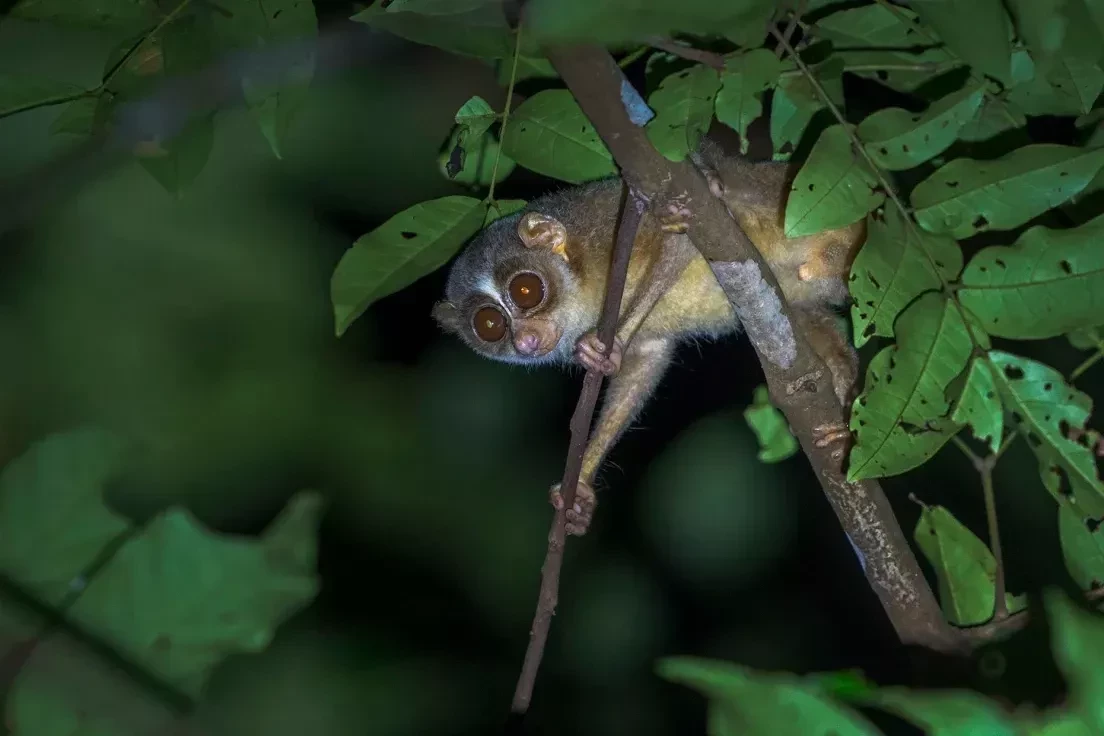

The monsoon season brings profound changes to the tropical forests of southern India, home to the slender loris. This small, nocturnal primate eagerly anticipates the rains, as they bring numerous benefits to its ecosystem and lifestyle.
1. Increased Food Availability: Monsoon rains lead to an explosion of insect life, a significant part of the slender loris's diet. The abundance of insects, along with fruits and flowers, ensures ample food supply.
2. Enhanced Habitat: The lush vegetation during the monsoon provides excellent cover and habitat for the slender loris. Dense foliage offers protection from predators and harsh weather, allowing the loris to thrive.
3. Breeding Season: The monsoon often coincides with the breeding season, creating optimal conditions for raising young due to the abundance of food and water.
Tree Planting During Monsoon:
1. Habitat Restoration: Monsoon tree planting helps restore degraded forest areas, creating a rich and diverse habitat for the slender loris. Native tree species provide food, shelter, and breeding grounds.
2. Biodiversity Conservation: Planting trees during the monsoon promotes biodiversity by supporting a wide array of insects, birds, and other wildlife, enhancing overall forest health.
3. Water Conservation: Trees maintain the water table and prevent soil erosion. Planting trees during the monsoon ensures a sustainable water supply essential for the slender loris's long-term survival.
In summary, the monsoon season positively impacts the slender loris by enhancing food availability, habitat quality, and breeding conditions. Monsoon tree planting further supports these benefits, promoting habitat restoration, biodiversity conservation, and water management, ensuring a thriving ecosystem for the slender loris.
Comentários (0)
Deixe um comentário