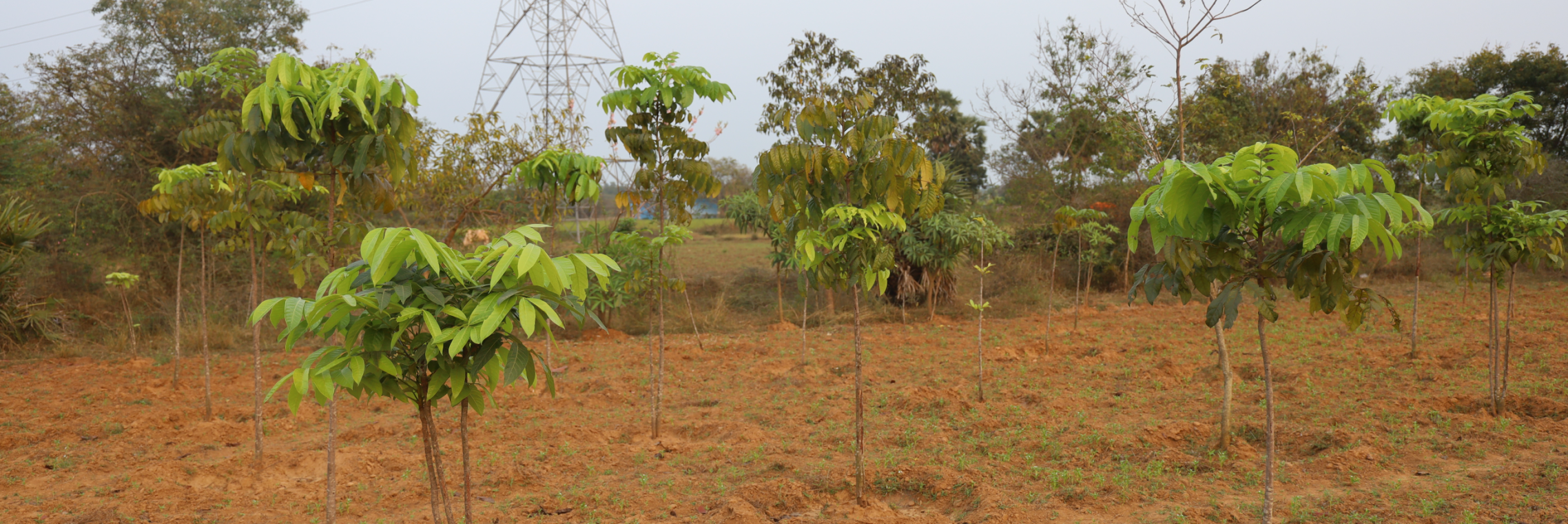

A forest may appear quiet from the outside. Trees stand still, leaves move with the wind and the forest floor may seem unchanged from one day to the next. But beneath this calm surface, countless processes are constantly taking place. Trees are absorbing carbon, moving water, building soil, recycling nutrients and creating cooler, more humid conditions around them. Much of this work happens quietly, without us noticing.
One of the most important things trees do is store carbon. Through photosynthesis, trees absorb carbon dioxide from the atmosphere and use it to grow leaves, branches, trunks and roots. Some of this carbon remains stored in the tree for years, while a significant amount also enters the soil through roots, fallen leaves and other organic matter. A healthy forest therefore functions as an important natural carbon store.
Trees also help move water through the landscape. Their roots take up water from the soil, while leaves release water vapour into the atmosphere through a process known as transpiration. At the same time, forests help rainwater reach and remain in the soil. Roots create spaces that allow water to infiltrate, while fallen leaves and organic matter help slow the movement of rainwater across the ground. Together, these processes influence how water moves through a forest.
Then there is the soil beneath our feet. Forest soil is not simply dirt supporting trees; it is a living system filled with microorganisms, fungi, insects, roots and decomposing organic matter. When leaves, branches and other plant material fall to the forest floor, they gradually break down and return nutrients to the soil. These nutrients can then be taken up again by plants, creating a continuous cycle between trees, soil and living organisms.
Tree roots also help hold soil together. By creating a network beneath the ground, they can reduce soil erosion and help stabilise the landscape. Fallen leaves provide another layer of protection by covering the soil and reducing the impact of rainfall and drying. Over time, this continuous process contributes to healthier and more fertile forest soils.
Trees also influence the temperature around them. Their canopies provide shade, reducing the amount of direct sunlight reaching the ground. Water released through transpiration can further contribute to cooling the surrounding environment. As a result, forests can create their own microclimates, with conditions that may be cooler and more humid than nearby open areas.
None of these processes happen in isolation. Carbon storage, water movement, soil formation, nutrient cycling and temperature regulation are all connected. A tree takes carbon from the atmosphere, draws water from the soil, adds organic matter to the ground and provides shade for organisms living beneath its canopy. At the same time, fungi, insects, microorganisms and other plants contribute to keeping these systems functioning.
This is why the value of a forest cannot be measured only by the number of trees it contains. A healthy forest is a constantly working ecosystem. Its most important contributions may be the ones that are hardest to see: the carbon stored inside its biomass and soil, the water moving through its roots, the nutrients returning to the ground and the countless organisms working beneath the forest floor.
For communities and landscapes that depend on healthy forests, these invisible processes have very visible consequences. They influence soil fertility, water availability, local temperatures, biodiversity and the ability of ecosystems to withstand environmental pressures.
Restoring forests is therefore about more than putting trees into the ground. It is about bringing these natural processes back into a landscape. As trees grow and ecosystems develop, they can gradually begin performing the quiet work that healthy forests have carried out for generations.
The forest may look still, but it is never inactive. Beneath every canopy, roots are moving water, leaves are returning nutrients, organisms are building soil and trees are storing carbon. Much of the forest’s most important work happens where we cannot see it but its benefits reach far beyond the trees themselves.
Comentários (0)
Deixe um comentário