India97.9 Puntuación de calidad
The Agroforestry Tree Plantation project empowers small and marginalized farmers by promoting sustainable agroforestry farming practices. By planting diverse tree species on degraded farmland, we want to create sustainable livelihoods for small and marginal farmers through innovative agroforestry models that improve soil quality and reduce the impact of climate change.
During a recent monitoring visit, we observed a healthy and vibrant agroforestry plot with saplings establishing well across the farm. Seeing the plantation flourish is an encouraging sign of the positive progress being made through consistent care and management.
With high summer temperatures and a delayed monsoon this year, maintaining adequate moisture for the saplings has been a challenge for farmers. Drip irrigation has helped deliver water directly to the root zone, supporting sapling survival while using water more efficiently during
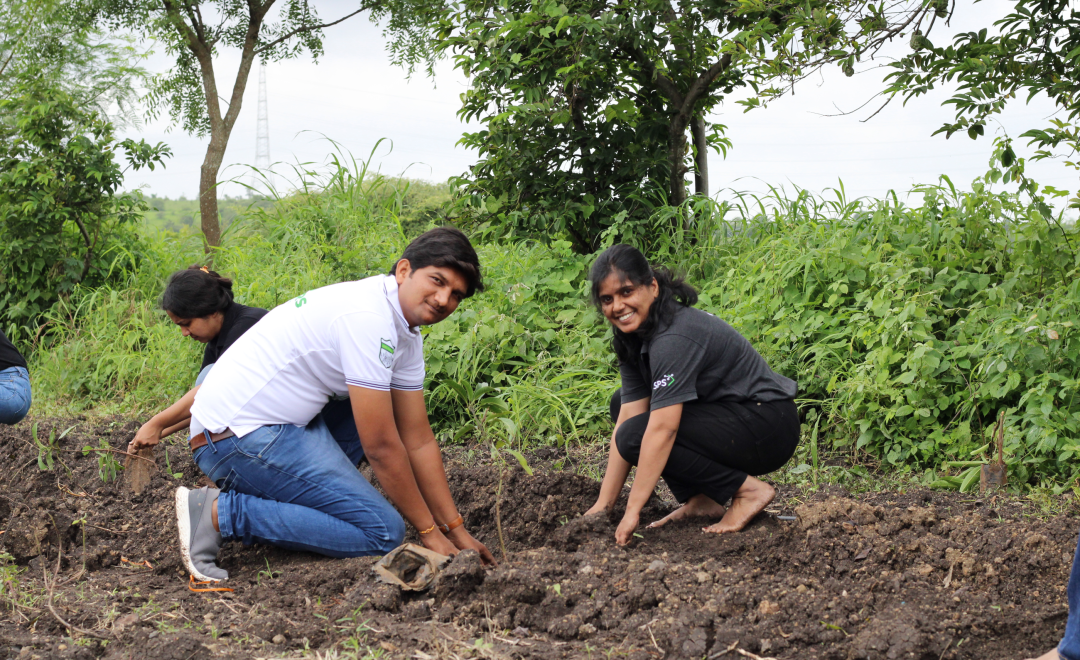
ver másWomen play an important role in plantation activities, from transporting saplings to supporting planting and aftercare. Their participation helps ensure that planting activities are carried out efficiently!
Collecting baseline data is an important step in agroforestry projects. By visiting farmers and documenting information, our team can better understand each farm’s needs and track changes over time.
Regular visits to farmers help us stay connected with the progress of agroforestry plantations. These conversations provide an opportunity to discuss tree growth, address challenges, and share timely guidance, helping farmers care for their plantations more effectively.
Once the saplings reach the field, they are carefully transferred to the plantation spots. Proper handling during this stage helps protect the roots and ensures smooth planting across the site.
Transporting saplings to the farmer’s field is a careful process to avoid damage and stress to young plants. Proper handling during this stage helps maintain plant health and improves their chances of successful establishment after planting.
Every plantation begins with pit digging, which helps create the right conditions for saplings to establish. Properly prepared pits support root growth, improve water retention, and increase the chances of healthy tree development.
Changing intercrops in agroforestry helps improve soil health and reduce pest risks. It also allows better use of farm resources and supports more stable crop growth across seasons.
Continuous monitoring of agroforestry plots helps us ensure that farms are thriving, while enabling farmers to receive timely guidance for better care and management of their trees.
Saplings are growing alongside seasonal crops as part of our agroforestry model.
By integrating young trees within cultivated fields, we improve soil structure, enhance biodiversity, and create long-term resilience for farmers while maintaining current crop productivity.
In November, 1,730 saplings were planted at Village Kanhur. Species planted at the field are Santalum album, Bambusa bambos, Tamarindus indica, Mangifera indica, Citrus limon.
The sloping terrain and uneven land conditions required additional effort for sapling movement and pit
We promote the use of low-cost bio-fertilizer to naturally improve soil health in our agroforestry plots. It boosts microbial activity, supports early plant growth, and reduces reliance on chemicals. By encouraging simple, sustainable practices like this, we help farmers strengthen
ver másWe have planted 1,150 saplings on a farmer’s field in Pabal village. The planting includes Mangifera indica, Psidium guajava, and Cocos nucifera.
This mix of species supports soil health, improves biodiversity, and helps strengthen the long-term resilience of the farmland.
At our Dhamari village site in Pune, we’ve set up a drip irrigation system to support the 700 trees recently planted under our agroforestry project. This system ensures each tree gets just the right amount of water, saving resources while supporting strong, healthy growth, even during
ver más