
Feeling like July is especially hot this year?
No, it’s not your imagination. July 2021 is on track to be the hottest July ever, a trend that has increased every year since 2019. In fact, 2019 shocked scientists across the globe when it beat out the previously surprising record-breaking July of 2016, so the fact that each summer keeps getting hotter is a serious cause for concern.
In an interview with USA Today in 2020, Michael Mann, a meteorologist from Penn State University, noted that increasing summer temperatures are a sure sign of human-caused climate change, saying, “The trend of record heat continues – a trend which we’ve shown in past publications can only be explained by the warming impact of fossil fuel burning.”
July being the hottest month of the year isn’t exactly new -- it’s been the case for quite a long time. What’s primarily concerning, however, is that the average temperature of days in July is increasing year-to-year, and that’s what has scientists and climate experts worried.
Experts believe this is due to a number of issues, all climate-change-related. In an article for BBC, Isabelle Gerretsen outlined the major contributors to rising temperature averages:
- Atmospheric CO2 levels beat their previous record highs in 2020, the highest they’ve been since around four million years ago, even despite the COVID-19 pandemic forcing most of us inside
- Record heat, with 2020 being the hottest year ever for Europe, which led to the largest wildfires ever recorded in danger zones in America and the “black summer” of fires in Australia.
- Warming global temperatures are drastically affecting Arctic Ice, with June 2020 being the hottest ever recorded in parts of the Arctic Circle, and areas that typically remain under permafrost are taking significant losses, which further releases additional greenhouse gases
The most significant damage done by increasing annual averages? Damage to forests. 2020 being one of the hottest years for Europe led to the largest wildfires ever recorded in danger zones in America and the “black summer” of fires in Australia.
According to the United Nations Food and Agricultural Organisation (FAO), the annual rate of deforestation is more than 13 million hectares per year (approximately the size of Greece).
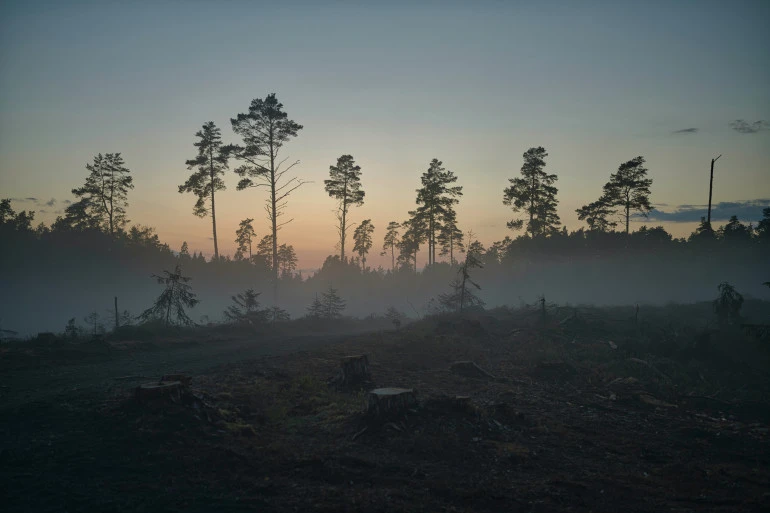
Deforestation is particularly damaging because not only does it significantly endanger the environment, but because the terrestrial biosphere, combined with oceans, removes about 45% of the CO2 emitted by human activities each year. So when those trees are cut down or burned, that carbon is released into the atmosphere, further affecting all of the above as well.
We’re running out of time, and the only possible solution is an immediate and global effort to reverse climate change through environmental protection actions.
At Tree-Nation, we are working tirelessly to gather and coordinate reforestation efforts because we believe preserving our world’s forests may be our only hope for saving the planet.


