
#ClimateDictionary #Albedo #EcoEducation
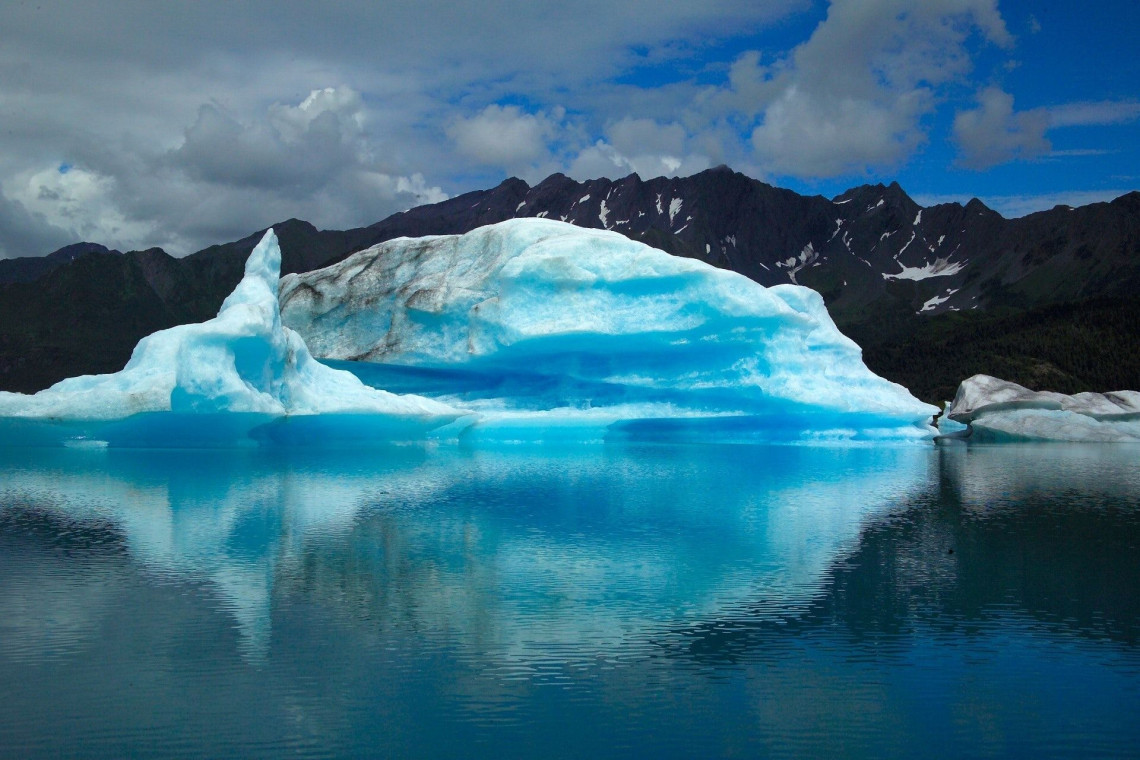
The albedo effect is the amount of solar radiation that reflects away from an object compared with the amount that gets absorbed. This is another term for reflectivity. A surface (like a shiny ball) that is perfectly reflective will have a score of 1. In contrast, a completely dark object that does not reflect at all would have a score of 0. All objects have a score between 0 and 1.
This score can also be shown as a percentage. For example, an albedo of 1 would indicate that 100% of the light is reflected.
Since the sun’s radiation is composed of both light and heat, a lower albedo indicates that more heat is trapped in the earth’s atmosphere by absorption. This happens because the radiation that is not reflected will be absorbed by the earth’s surface and will increase the global temperature. The energy that is absorbed melts snow and ice.
The Albedo Effect of the Earth
The albedo of the earth as a whole is 0.367. This includes the amount of radiation directly reflected back to space by clouds.
Fresh snow has a score of 0.9, because it reflects radiation. Sea ice that is covered with fresh snow reflects about 85% of the sunlight that hits it, so its score is 0.85.
In contrast, the ocean has a very low score. In general, water reflects about 10% of the radiation that contacts it. This is an albedo of 0.1. Open Arctic waters reflect even less radiation. Their albedo is 0.07.
The albedo of land ranges from 0.1 to 0.4.
The Effects of the Albedo Effect on Climate
When the albedo is lower, the planet absorbs more radiation from the sun and warms. With a higher albedo, the earth is more reflective. The radiation is returned to space, and the planet cools.
Implications on Global Warming
The polar ice caps currently reflect radiation, helping to cool the earth. However, global warming will cause them to melt, revealing dark ocean water that will absorb more sunlight.
This will contribute even more to global warming and is more likely to melt large masses of ice, creating a tipping point, as sea levels continue to rise.
When this happens, warm areas in the winter do not build up as much ice, and the ice that is there is more likely to melt in the following spring.
Recent research shows that the sparser the Arctic ice, the more it can be spread by winds and currents, accelerating the melting of the summer ice even more.
Effects of Different Parts of the Earth on the Overall Albedo Effect
When light shines, it does so in a straight path. However, if it hits an obstacle, the light will scatter into another direction. An obstacle can be as small as dust or water vapor.
Light scattering sends much of the heat away from the earth and cools the planet, therefore lowering the albedo. However, this effect is complicated, since different molecules vary in how effectively they scatter light. Water vapor, CO2, sulfates, and nitrates scatter most of the light with a substantial amount reflected back into space.
However, dark-colored compounds like black carbon absorb the energy, causing warming. This is a particular problem in the Arctic. Dark aerosols from wildfires and pollution are deposited on the ice. When they absorb energy, they accelerate the process of warming and melt even more ice.
The Complications of Clouds
The effect of clouds on the Albedo effect is complicated. Approximately half of the earth is covered in clouds, which can either reflect sunlight (cooling the Earth) or trap heat (warming it).
The location of the clouds affects whether they warm or cool the Earth.
Clouds close to the earth (within one or two miles of the surface) tend to cool the planet. Low clouds tend to be thicker. They mostly reflect the heat from the sun, increasing the albedo.
In contrast, high, thin clouds are more likely to trap heat and warm the surface of the Earth.
Overall, the effect of clouds on the earth’s surface is to cool it.
The effect of climate change on clouds is an active area of research. Scientists predict that there will be fewer clouds to cool the Earth down, and this will contribute to global warming.
This feedback is difficult to measure and incorporate into climate models.
Can the Earth’s Albedo Change?
The Earth’s Albedo is stable in the long run but variable over the short term.
It can change after a major volcanic eruption. Such eruptions emit large amounts of sulfur dioxide, which combines with water. This creates particles of sulfuric acid, which intermix with clouds and scatter light. Much of this light is then reflected away from the Earth, cooling it.
If these emissions of sulfuric acid enter the atmosphere, they can cool the Earth for months.
In fact, this is what happened when Mount Pinatubo in the Philippines erupted in 1991. The average temperature of the Earth dropped below average for more than a year.
This gave rise to a controversial geoengineering concept: spraying sulfuric acid into the stratosphere to cool the earth down.
Effects of the Albedo Effect on Public Health
The residents of urban cities tend to be at greater risk for heat-related illnesses – due to the urban heat island effect, which is closely related to the albedo effect.
Urban Heat Island Effect
Urban areas experience higher temperatures, because roads, buildings, and other types of infrastructure absorb heat and then re-emit more than water bodies and forests.
Temperatures in urban areas during the day are typically about 17 ºC to 14 ºC higher than those in outlying areas, while they tend to be about 16 ºC to 15ºC higher at night.
There are several reasons for this. Materials like roofing or pavements usually release less solar energy, and structures like buildings, roads, and sidewalks provide less moisture and shade than natural landscapes.
Heat islands often become more pronounced after sunset, as the heat from urban materials is slowly released.
These higher temperatures can have serious effects on older adults, children, pregnant women, people who live alone or are homeless, and those with existing health conditions. The Centers for Disease Control and Prevention recorded more than 10,500 heat-related deaths from 2004 to 2018 in the US.
A key way to reduce the difference in surface albedo characteristics would be to increase the albedo of surfaces in the urban areas.
Increase in Rates of Skin Cancer
Increases in ambient temperature could result in a greater number of deaths due to the increase in the effectiveness of UV radiation at higher temperatures.
A model of increasing temperatures in the UK suggests that the synergistic relationship between the depletion of ozone and increasing temperatures could cause as many as 5,000-6.000 cases of skin cancer a year by 2050.
Flooding in Coastal Areas
As sea levels rise, there will be more frequent and intense flooding. This could directly affect the availability of drinking water.
As the groundwater rises, it brings toxins to the surface that can then contaminate drinking water. These range from microbial pathogens to heavy metals like lead and arsenic. Children are particularly sensitive to these contaminants.
Even worse are the likely deaths or injuries associated with flooding in coastal areas. Most of the deaths that occur during coastal flooding are from drowning in the floodwaters. Even carbon monoxide poisoning can be traced to floods, since many people run generators inside their houses.
Measurement and History of the Earth’s Albedo
NASA has two satellites, Terra and Aqua, that are constantly seeking evidence that the Albedo is changing over time.
The term “albedo” arose from the words “dark” and “light.” It is derived from Latin for the word white, which is “albus.”
It first appeared in 1760 in a treatise written by Johann Heinrich Lambert.
Since then, the albedo has become a critical way to assess the degree of global warming from areas and predict future changes in climate. For example, the albedo helps to document the acceleration of the melting of the polar caps and predicts that even more dire melting will occur as the remaining ice disperses and becomes more vulnerable to melting.
As the ravages of climate change increase in the near future, the albedo will help to analyze the changes expected, which could provide hope to ameliorate some of them and help to save the planet from more destructive effects.
Before Climate Change
·The albedo effect is defined as the amount of electromagnetic radiation that reflects away from an object compared with the amount that gets absorbed.
·A shiny ball that is perfectly reflective will have an albedo of 1.
·A completely dark object that does not reflect at all would have an albedo of 0.
·All objects have a score between 0 and 1.
·Sea ice that is covered with snow has an albedo of 0.85, while open Arctic waters have a value of 0.07.
After Climate Change
·The polar ice caps melt, and the visible dark ocean water has a much lower albedo.
·The visible ocean water will contribute more to global warming, and it is more likely to melt large masses of ice.
·Areas that are warmer in the winter will not build up more ice.
·The ice that is there is more likely to melt, contributing to potentially dangerous increases in sea level.
References:
• Bharath, A.K. and Turner, R.J. 2009. Impact of climate change on skin cancer. J. R. Soc. Med. Accessed in May 2021.
https://www.ncbi.nlm.nih.gov/pmc/articles/PMC2697050/
• Britannica.com. 2021. Efficiency of solar energy utilization. Accessed in February 2021.
https://www.britannica.com/science/biosphere/Efficiency-of-solar-energy-utilization
• Cain, F. 2009. Albedo of the earth. Universe Today. Accessed in February 2021.
https://www.universetoday.com/25819/albedo-of-the-earth/
• Cain, F. 2021. Albedo effect. Universe Today. Accessed in February 2021.
https://www.universetoday.com/39937/albedo-effect/
• CK-12. 2021. 2.5 Scattering of Light. Accessed in May 2021.
https://www.ck12.org/book/cbse-physics-book-class-x/section/2.5/
• Climate Kids. 2021. How do clouds affect earth’s climate? NASA. Accessed in February 2021.
https://climatekids.nasa.gov/cloud-climate/
• CDC. 2021. Coastal flooding, climate change, and your health. What you can do to prepare. Accessed in May 2021.
https://www.cdc.gov/climateandhealth/pubs/CoastalFloodingClimateChangeandYourHealth-508.pdf
• de Gruijl, F.R. 1999. Skin cancer and solar UV radiation. Eur. J. Cancer. Accessed in May 2021.
https://pubmed.ncbi.nlm.nih.gov/10711242/
• Earth Observatory. 2021. Aerosols and incoming sunlight (direct effects). NASA. Accessed in February 2021.
https://earthobservatory.nasa.gov/features/Aerosols/page3.php
• Friedman, M.M. 2021. Leaf color and shape enhance cooling effect. Ask Nature. Accessed in July 2021.
https://asknature.org/strategy/leaf-color-and-shape-enhance-cooling-effect/
• Kirschbaum, M.U.F. et al. 2011. Implication of albedo changes following afforestation on the benefits of forests as carbon sinks. Biogeosciences. Accessed in February 2021.
https://bg.copernicus.org/articles/8/3687/2011/
• Perkins, S. et al. 2019. Core concept: albedo is a simple concept that plays complicated roles in climate and astronomy. PNAS. Accessed in February 2021.
https://www.pnas.org/content/116/51/25369
• van der Leun, J.C. and de Gruijl. 2002. Climate change and skin cancer. Photochem. Photobiol. Sci. Accessed in May 2021.
https://pubmed.ncbi.nlm.nih.gov/12653470/
• Vatani, L. et al. 2019. Tree species effects on albedo, soil carbon and nitrogen in a temperate forest in Iran. Austrian Journal of Forest Science. Accessed in February 2021.
https://www.forestscience.at/content/dam/holz/forest-science/2019/03/CB1903_Art5_.pdf
Commentaires (0)
Laissez un commentaire