
As climate threats grow, including rising heat, deforestation, and changing ecosystems, planting a tree makes a powerful impact. At Tree-Nation, we’re committed to fighting climate change by providing the space for planters and sponsors to thrive. Behind every tree is a story of dedication and impact.
Recently, Oriana Medina from our environment team sat down with Ignacio Molina, the founder of the Ketrawe Foundation and leader of the Windshields project in Bolivia. Together, they explored how reforestation is revitalizing communities and economies. Since 2020, Tree-Nation has partnered with Ignacio to plant nearly 200,000 trees in the Bolivian Amazon, and the results are nothing short of inspiring.
Want to hear it straight from Ignacio and Oriana? Check out the full video on YouTube or listen to the podcast on Spotify. Let’s get started!
From small beginnings to conservation
The Ketrawe Foundation’s journey began in 2005 with a mission to plant trees. Ignacio Molina, the founder, recalls those early days when the focus was on creating tree plantations on peasant lands in Bolivia. These weren’t typical timber farms; the trees served as collateral for bank loans, enabling the sons of local farmers to attend university. “We’ve sent over 500 students to universities,” Ignacio shares proudly. “Some of them went abroad.” This approach turned trees into pathways to education, offering tangible benefits to rural families.
But as the years passed, Ignacio and his team grew uneasy about the commercial aspect of their work. “We were sad to see the trees being cut down,” he admits. This discomfort sparked a pivot toward conservation. They began planting trees as buffers between agricultural fields and forests, hoping to protect the natural landscape. Yet, they soon discovered that farmers often ignored these buffers, cutting them down to expand their fields. “The forest was being cut for economic reasons,” Ignacio explains. “So we had to find a way to bring it back for economic reasons.”
The team needed a strategy that aligned financial incentives with ecological preservation: a balance that would benefit both the land and its people. After years of trial and error, the Windshields project was born.
A revolution for forests and farmers
The Windshields project introduced windbreaks, strips of trees planted between agricultural fields. Although it seems like a straightforward concept, its effects are profound. Ignacio describes how these lines tackle multiple issues at once. They prevent soil erosion by blocking strong winds, a common problem in Bolivia’s Santa Cruz region, where aeolian erosion can degrade up to 4% of farmland. They also shield crops from wind damage, boosting yields significantly. “The wheat and maize had increased between 20%, 23% or so,” Ignacio notes, still amazed by the results. Sugarcane yields rose by 12%, soybeans by 9%, and sorghum by up to 15%.
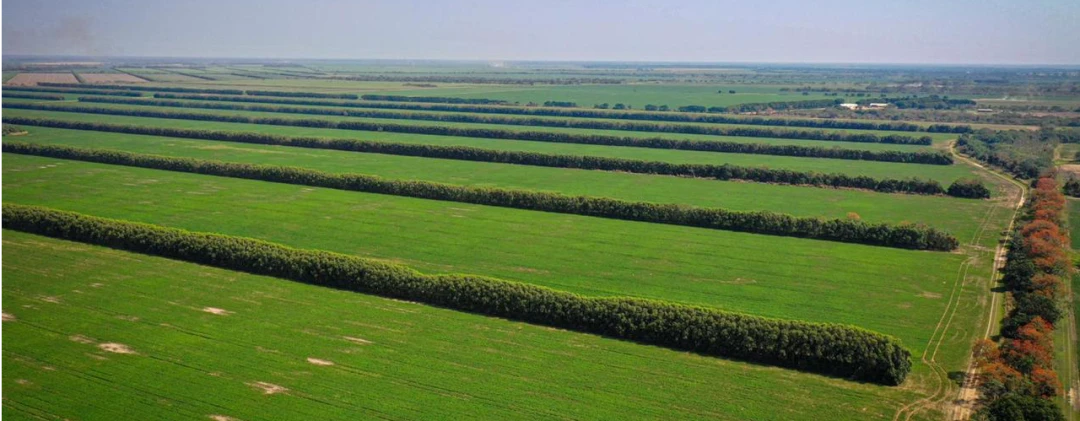
For farmers, the math was compelling. They not only recovered that loss through increased productivity but also frequently outperformed financially by allocating just 10% of their land to windbreaks. “They could allow themselves to give us 10% of their land and have better yields,” Ignacio says. This economic upside turned skeptics into advocates. Early on, farmers saw the team as “Martians” for suggesting they sacrifice cropland. However, opinions changed as the advantages became evident.
Beyond agriculture, windbreaks deliver ecological wins. These lengthy, slender tree lines serve as "biodiversity highways," sometimes extending for kilometres.” Monkeys, turtles, birds, and insects have returned, reconnecting fragmented habitats. “We introduced back 10% of the forest that used to be there,” Ignacio explains. The trees also fix nitrogen in the soil, reducing the need for fertilizers, and attract pollinators like bees, further enhancing crop growth. Perhaps most crucially, they curb the drift of pesticides like glyphosate, protecting nearby jungles and communities from harm. “We have happy farmers over there with their windshields. And we have health. We have biodiversity back again.”
Tailoring trees to the terrain
Success like this doesn’t come without effort. Ignacio highlights that planting trees involves rigorous science and is not a one-size-fits-all undertaking. “We cannot plant trees randomly,” he insists. The Ketrawe team conducts deep soil analyses to understand each site’s unique conditions, from nutrient levels to climate variations. Windbreaks span diverse terrains, so species selection must adapt to shifting soils and weather patterns. “We need trees that can support a drought or very high temperatures,” Ignacio says, noting the Amazon basin’s intense heat and dry seasons.
This scientific precision extends to species choice. Native trees are prioritized for their resilience and compatibility with local ecosystems. The team collaborates with universities in Spain, the U.S., and beyond to refine their approach, measuring everything from carbon sequestration to water and social footprints. Some windbreaks are now certified for carbon credits, though Ignacio clarifies, “The carbon from Tree-Nation’s trees is yours, not ours.”
Elements of change
Unlike projects in Europe battling rabbits or deer, Ignacio’s team contends with aggressive weeds and insects. “The weeds will grow very fast, much faster than the tree,” he explains. Some grasses tower two meters high in just four months, while trees take a year to match that height. Native species help, as does the farmers’ vested interest in protecting their investment. “Since there’s an economic interest, they chase whatever is affecting the tree,” Ignacio says.
Weather poses another challenge. Without irrigation, the windbreaks rely on drought-tolerant species to survive Bolivia’s dry spells. Through experimentation, the team has honed a formula that works, achieving a 92% survival rate after five years. This hardy approach is reflected in their nurseries, where seedlings are raised outdoors and exposed to actual conditions right away. “The strongest ones make it,” Ignacio says, ensuring only the toughest trees reach the windbreaks.
Creating the emerging trend across Bolivia
What began with a handful of farmers has exploded into a phenomenon. “We have millions of hectares with this system now in Bolivia,” Ignacio reports. Demand outstripped supply, and farmers in Bolivia, Brazil, and Paraguay began replicating the windbreak model on their own. “We’re only working on around 1% of those windbreakers,” he says. “The rest are self-made.” A glance at Google Earth reveals countless green lines crisscrossing the Santa Cruz region.
Sustainability must be financial as well as ecological.
“We want to be financially sustainable and ecologically sustainable,” Ignacio asserts. By ensuring everyone in the supply chain, from seed providers to planters, earns a living, the project creates a self-perpetuating cycle of care for the forest.
Empowering Communities
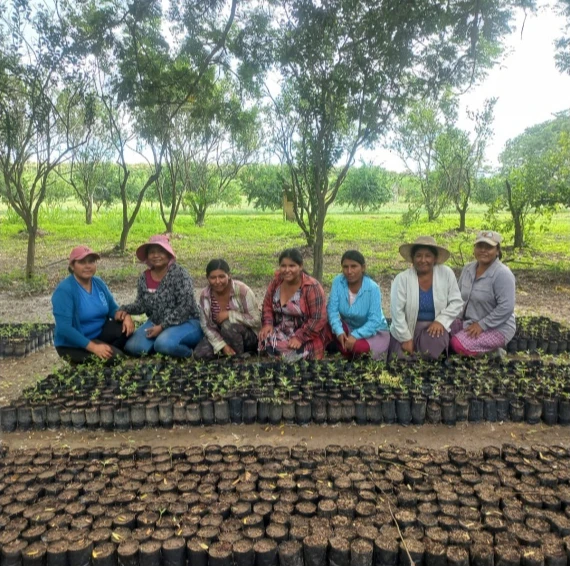
The Windshields project’s impact extends far beyond the environment. It’s created jobs and opportunities, especially for women in rural Bolivia. “The smile of our brave women who work in the field when they have a job in a poor country like Bolivia,” he says. That income means a lot to them, it’s the ability to send kids to school. “When they see that they can send their children to school, it’s the best,” he adds.
Science and Scale
Looking forward, Ignacio’s team is doubling down on research and expansion. Partnerships with universities will deepen their understanding of biodiversity and water impacts, while certification efforts continue to quantify their environmental footprint. “We’re going to have that by the end of the year,” he promises to make windbreaks even more effective and replicable worldwide.
Plant a Tree Today
As Earth Day 2025 nears, the urgency of climate action is undeniable. Ignacio’s story proves that reforestation can rebuild ecosystems and uplift lives. At Tree-Nation, every tree you plant supports projects like Windshields. Whether you’re an individual or a business, you can make a difference in just a few clicks.
Watch the full interview on YouTube or tune into the podcast on Spotify. Plant a tree and join us in growing a better future.


