
#Viruses #ClimateDictionary #EcoEducation
"When in the middle of a pandemic, priorities are set on fighting the immediate consequences of the virus, and rightly so. But while the COVID-19 quickly replaced Climate Change as the trendiest threat on humanity, we shall see that they are linked. In fact Climate Change, through deforestation, is most probably the cause of COVID-19. While knowing this will not send us back in time to fix our mistakes, it is important to look ahead and prepare ourselves against future outbreaks." - Maxime Renaudin, Tree-Nation founder
There’s no escaping the current global pandemic, COVID-19 is in the news everywhere. This is no surprise given that it has now spread to nearly every country in the world and infected over 3 million people. Sadly, there have been upwards of 225,000 recorded deaths as of May 1st 2020 as a result of this novel virus. There has been much discourse on how to treat the disease, and the science community is currently working on a vaccine in many different institutions. And while there have also been investigations into the origins of the virus, with bats being the probable source, many have overlooked the more sinister underlying factor for the rapid spread of this virus - climate change.
Viruses and their transmission
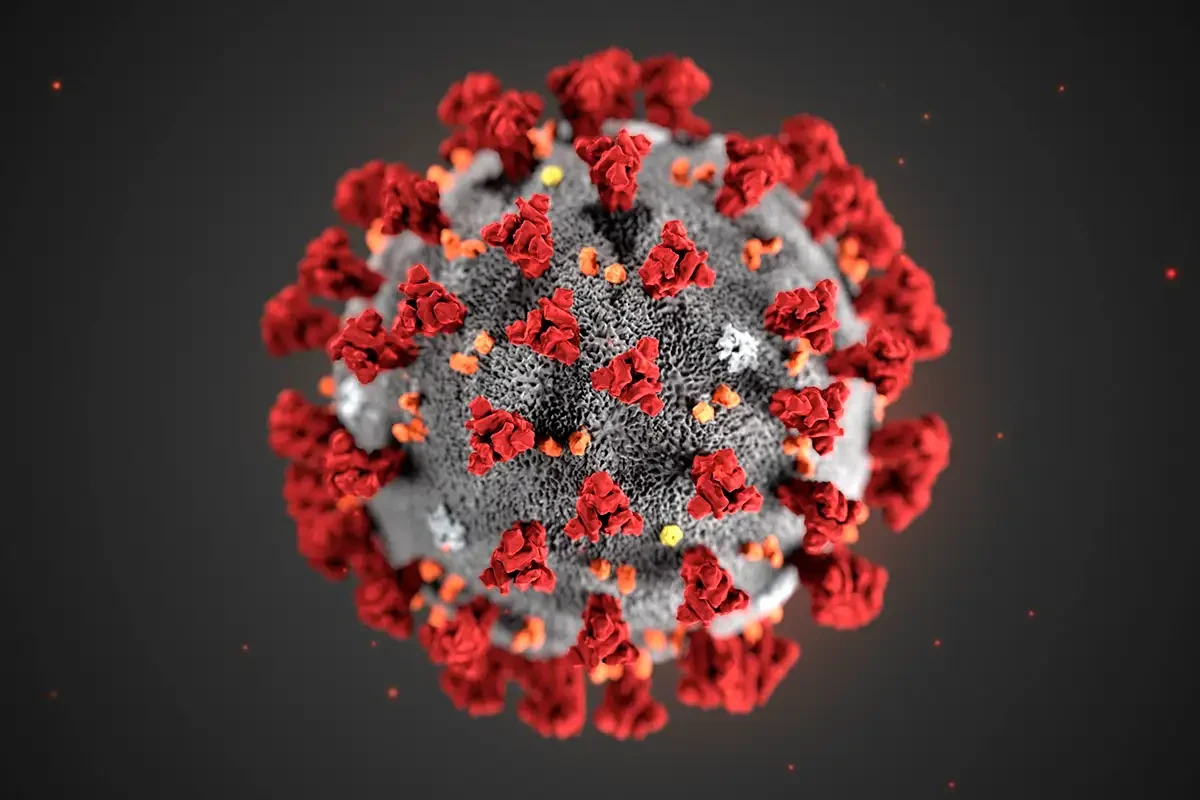
A virus is a microscopic agent with the potential to cause disease which lives inside a host cell and depends on the host cell for survival. They are incredibly small, some only several nanometers in length (a nanometer is 1 millionth of a millimeter). Inside this host cell, it reproduces by hijacking the normal cellular functions. Eventually, the virus kills the host cell, releasing many newly replicated viruses to go and infect other cells. Viruses are found in practically every ecosystem on earth and infect nearly every type of organism, even bacteria. Viruses play an important role in the natural environment in recycling nutrients, and account for significant proportions of the carbon cycling in the ocean. This occurs when viruses infect plankton and other marine microorganisms, eventually killing the host cells and releasing nutrients like carbon, nitrogen and silica which are then available again to other organisms (Rohwer et al., 2009).
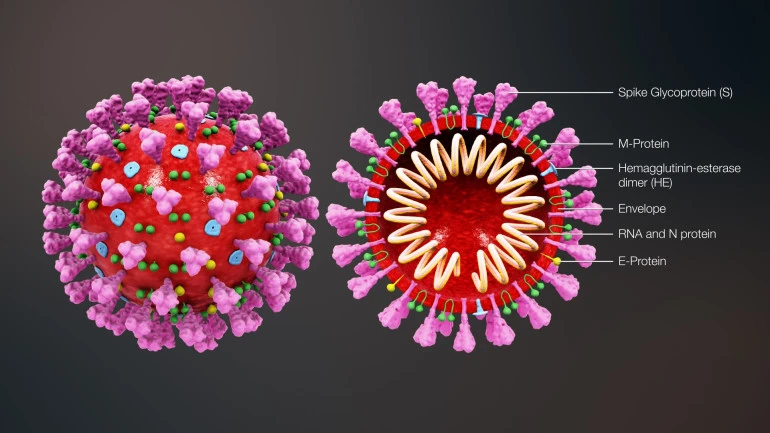
Figure 1: The external and internal structure of the COVID-19 virus. Spike glycoprotein is a protein on the surface of the virus which allows it to attach to host cells. RNA and N protein is the genetic material contained inside the virus envelope, which is made up of protein. Hemagglutinin-esterase dimer is another type of protein which enables the virus to invade the host cell. Image taken from rebelm.com.
Viruses can be spread from one organism to another in a number of ways, such as in cough droplets for influenza, through water supplies with faecal contamination for norovirus or through kissing for Epstein-Barr virus and herpes virus. Viruses can also be spread by vectors which are disease-bearing organisms. For example, mosquitoes transmit West Nile Virus to birds and humans. A disease that originates in animals and is spread to humans is known as a #zoonotic disease. It is thought this is how COVID-19 was first spread to humans, through a viral vector. Current research points to #bats as being the original source of COVID-19, with it being passed to #pangolins as an intermediate host before being transmitted to humans (Zhou et al., 2020). In fact, bats are the usual suspect for coronaviruses, as the small mammals are thought to host thousands of yet-to-be-discovered coronaviruses (Bryner, 2020). Zoonotic diseases are of serious concern, as more than 60% of the newly emerging infectious diseases since 1940 have animal origins (Jones et al., 2008).
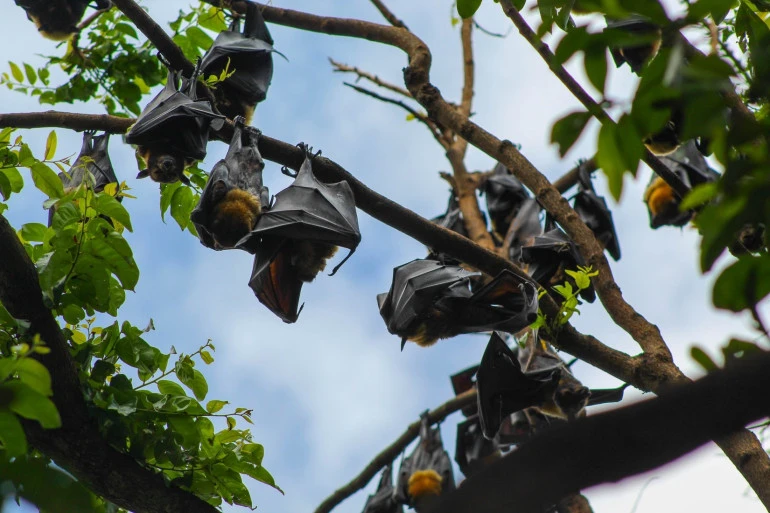
Figure 2: Bats resting during the day when they are not active.
The interaction between viruses and climate change
The evidence is building to support the claim that climate change will result in increased numbers and intensity of pandemics. This can occur as a result of a number of factors such as the melting of permafrost, the extension of species ranges through warming, and improved survival of viruses over winter months. We must also consider the effects of some indirect factors. For example, climate change will ultimately make some areas of the world unliveable, thus more people will be crowded into smaller spaces, enabling higher rates of transmission of viruses from one person to another. Other human activities such as exploitation of the natural environment (in particular #deforestation), urbanisation and increased global travel also contribute to the increase in global pandemics such as the COVID-19 pandemic (Madhav et al., 2018).
Climate change has now reached the stage where permafrost has started to melt. Permafrost is frozen ground which has a temperature below 0°C and has been frozen for a least 2 years. It is typically widespread in the Arctic, sub-Arctic and Antarctica which all have annual mean temperatures below 0°C (Péwé, 1999). With further warming, there is projected to be increased melting of the permafrost. The concern is that buried deep in the permafrost are ancient viruses, which once the permafrost has melted, will be released once more. Such diseases could include anthrax, which had frequent outbreaks in North Russia during the late 19th and early 20th centuries, causing the deaths of 1.5 million deer. These deer were then buried in the permafrost and could be uncovered if enough melting were to take place. It is unclear thus far whether these anthrax organisms will be viable, but there is cause for concern (Revich and Podolnaya, 2011). One study found 30,000 year old viruses, which infect soil microorganisms, in the permafrost which retained their infectivity (Legendre et al., 2015). This study proves there is a possibility that viruses such as the black death, smallpox and the Spanish Influenza, which are thought to be trapped in the permafrost, as well as anthrax could be viable. The effects of these are unimaginable. But the most lethal viruses could be the ones our recent ancestors never encountered, the oldest viruses stuck in the ice for aeons, for which we never developed any immunity. Better the devil you know than the devil you don’t.
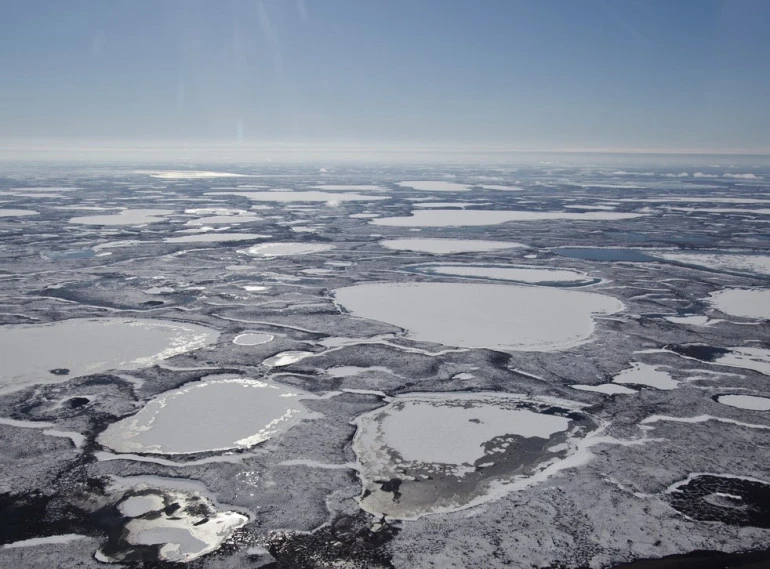
Figure 3: Permafrost in the Arctic.
Another consequence of climate change will be the extension of the range of disease-bearing mosquitoes. They generally prefer hot and humid environments, with infestations currently common in tropical areas (Gill, 1921). Roughly 200 million are infected by mosquitoes annually with between 700,000 to 1 million deaths attributable to mosquitoes. However, not all mosquitoes can pass on infections. The temperature between which they can transmit diseases is 16°C and 38°C (Worland, 2016). As global temperatures increase with climate change, mosquitoes will be able to survive in areas previously unavailable to them, and transmit viruses where they previously could not. Their future spread will also be aided by human movement, such as the mass migration from areas no longer suitable to live in as a result of climate devastation. With this expansion in the mosquitoes range, there will be concomitant extension of the range of mosquito-borne viruses such as the Zika virus, yellow fever, Dengue virus and chikungunya virus among others (Kraemer et al., 2019). It is very difficult to say how mosquitoes' range will be extended with climate change, but scientists have estimated that by 2060 under a moderate emissions scenario, their range will extend by 8% and under a high emissions scenario, their range will extend by 13% (Monaghan et al., 2016). This could be disastrous for European populations, for example, which have not built up any resistance to diseases such as malaria.
The change in land use and loss of #habitat has also been shown to be a major driving factor in increasing the prevalence of zoonotic disease outbreaks. For example, many strains of Influenza originate in waterfowl birds, many of which have lost significant areas of habitat. The loss of their natural habitat, wetlands, can be attributed to both climate change as increasing temperatures dry out some #wetland areas, and the change in land use where wetlands have been drained and converted into golf courses, agricultural land etc. In fact, a third of global wetlands have been lost over the last several centuries due to changes in land use. This loss of habitat results in crowding of waterfowl, stress and some often move into human-inhabited areas (e.g. geese, swans), thus increasing the overall risk of transmission (Vandegrift et al., 2010). Deforestation in other areas can have the same effect on zoonotic disease transmission by reducing habitat for animals, increasing their crowding and forcing them into human-inhabited areas thus enabling transmission. Specifically, in the case of COVID-19, deforestation of areas inhabited by bats likely brought bats closer to human populations, possibly enabling the spread of the novel coronavirus from bats to pangolins and subsequently to humans. Deforestation encroaching on bats' natural habitats is a particular concern as bats play host to significantly more viruses than any other mammal (Olival et al., 2017).
Dangers
The obvious consequence of an increased frequency of pandemics such as the COVID-19 pandemic is the risk to public health. There will likely be a widespread increase in morbidity and mortality, with disproportionate effects on lower income countries. The risk to public health of viruses such as smallpox which we no longer have a natural immunity to are unthinkable. Beyond this, there will be significant economic consequences, with economic growth severely limited during a pandemic. As we can see with this current pandemic, many economies are suffering and it is likely that many countries will experience an economic recession as a result of COVID-19 (Jonas, 2013). Behaviour will also be altered by increased pandemics - many people may still be fearful of going to busy or crowded places once the pandemic is under control. Evidence also suggests that it increases social tensions and discrimination in society (Price-Smith, 2009). Furthermore, pandemics can heighten existing political tensions and can lead to unrest. For example, during the 2014 West Africa Ebola epidemic, the containment measures implemented led to riots and violence (McCoy, 2014). Pandemics also give political leaders the perfect excuse for power grabs and can ensue in severe consequences on people’s freedom and rights which unfortunately are not always restored once the pandemic has passed. The negative effects of a pandemic on mental health as well cannot be overstated.
Solutions and mitigation
A way to reduce the spread of zoonotic viruses would be to halt the infringement on wild animals habitat that is so commonplace in today’s world. Deforestation and habitat loss and #fragmentation leaves many animals no option but to live among or close-by humans, where there is increased risk of transmitting an infectious disease. By protecting their habitats (in particular bats #roost in trees), we limit our own exposure to these diseases (Morse et al., 2012). Furthermore, the illegal trade of species such as the pangolin also increases the risk of transmitting these diseases across the world. Thus, ending such trade should be a priority. Climate change mitigation will also help to prevent the spread of viruses through preventing the extension of certain species ranges e.g. mosquito and the melting of permafrost. Climate change solutions include transitioning from fossil fuels to renewable energy resources, engaging in reforestation and afforestation and working to reduce carbon emissions by making changes to our own lifestyles.
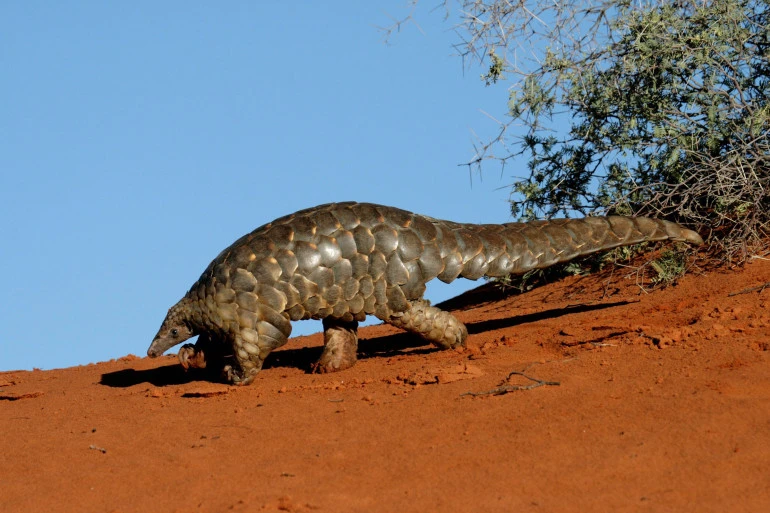
Figure 4: A pangolin. This animal is found in Asia and sub-Saharan Africa. It is frequently the victim of poaching, as its scales are highly valued, and is listed as vulnerable to extinction by the IUCN. It is also threatened by deforestation. The pangolin is thought to have been an intermediate host between bats and humans for COVID-19 as the virus found in pangolins and humans are 99% identical.
While mitigating climate change will concurrently help fight the spread of viruses, there are also a number of strategies that can enable us to fight its consequences and become more prepared. The first, and most important, being that investing in public health infrastructure and improving overall health, sanitation and drinking water supplies will greatly improve our ability to cope with another pandemic. Situational awareness will also greatly improve our ability to respond to a pandemic. Situational awareness in this context can be defined as having a well informed view of disease threats and the resources to cope with these threats, including the state of the health system, financial resources and mitigation policies (ASPR, 2014). Quickly identifying the disease as a risk to public health and implementing measures rapidly greatly reduces the load on the health system as well as reducing the numbers of people infected. As was seen during the SARS pandemic in 2003, a delay of even one week in implementing control measures tripled the size of the outbreak, increasing its duration (Wallinga and Teunis, 2004).
Key points
- A virus is a microscopic infectious agent which consists of genetic material (e.g. DNA) surrounded by a protein coat. They rely on host cells to survive.
- Viruses often originate in animals (a vector for the virus) and are transmitted to humans through close contact e.g. a mosquito bite can transmit a virus. These types of viruses are known as zoonotic.
- Viral pandemics are predicted to increase with climate change as disease-bearing animals such as mosquitoes can extend their range with increasing temperatures. The melting of permafrost also has the potential to release long dormant viruses. Additionally, those forced to migrate as a result of a changing climate will increase population densities, making it easier for viruses to spread among a population.
- There are a number of mitigation measures that can be taken, with the most important being to immediately stop the destruction of the natural environment which brings wildlife into urban areas, enabling the spread of zoonotic viruses.
#EcoEducation
References:
ASPR (Assistant Secretary for Preparedness and Response), 2014. Public Health and Medical Situational Awareness Strategy. Strategy document for situational awareness implementation plan U.S. Department of Health and Human Services, Washington, DC.
Bryner, J., 2020. 6 new coronaviruses found in bats. LiveScience, accessed May 2020, https://www.livescience.com/6-new-coronaviruses-fo...
Gill, C. A., 1921. The role of meteorology in malaria. Indian Journal of Medical Research, 8(4), 633-693.
Hendrickx, G., Schaffner, F., Moore, C. G., Nax, H. H., Bengtsson, L., Wetter, E., Tatem, A. J., Brownstein, J. S., Smith, D. L., Lambrechts, L., Cauchemez, S., Linard, C., Faria, N. R., Pybus, O. G., Scott, T. W., Liu, Q., Yu, H., Wint, G. R. W., Hay, S. I., Golding, N., 2019. Past and future spread of the arbovirus vectors Aedes aegypti and Aedes albopictus. Nature Microbiology, 4, 854-863.
Kraemer, M. U. G., Reiner, R. C., Brady, O. J., Messina, J. P., Gilbert, M., Pigott, D. M., Yi, D., Johnson, K., Earl, L., Marczak, L. B., Shirude, S., Weaver, N. D., Bisanzio, D., Perkins, T. A., Lai, S., Lu, X., Jones, P., Coelho, G. E., Carvalho, R. G., Van Bortel, W., Marsboom, C.,
Jonas, O. B., 2013. Pandemic Risk. Background paper for World Development Report 2014, World Bank, Washington, DC.
Jones, K. E., Patel, N. G., Levy, M. A., Storeygard, A., Balk, D., Gittleman, J. L., Daszak, P., 2008. Global trends in emerging infectious diseases. Nature, 451, 990-993.
Legendre, M., Lartigue, A., Bertaux, L., Jeudy, S., Bartoli, J., Lescot, M., Alempic, J.-M., Ramus, C., Bruley, C., Labadie, K., Shmakova, L., Rivkina, E., Couté, Y., Abergel, C., Claverie, J.-M., 2015. In-depth study of Mollivirus sibericum, a new 30,000 year old giant virus infecting Acanthamoeba. Proceedings of the National Academy of Science of the United States of America, 112(38), E5327-E5335.
Madhav, N., Oppenheim, B., Gallivan, M., Mulembakani, P., Rubin, E., Wolfe, N., 2018. Chapter 17: Pandemics: Risks, Impacts and Mitigation. In: Disease Control Priorities: Improving Health and Reducing Poverty 3rd edition. Eds. Jamison, D. T., Gelband, H., Horton, S., Washington DC.
McCoy, T., 2014. Why the brutal murder of several Ebola workers may hint at more violence to come. Washington post, accessed May 2020, https://www.washingtonpost.com/news/morning-mix/wp...
Monaghan, A. J., Morin, C. W., Steinhoff, D. F., Wilhelmi, O., Hayden, M., Quattrochi, D. A., Reiskind, M., Lloyd, A. L., Smith, K., Schmidt, C. A., Scalf, P. E., Ernst, K., 2016. On the seasonal occurrence and abundance of the Zika virus vector mosquito Aedes aegypti in the contiguous United States. PLoS Curr, 16(8).
Morse, S. S., Mazet, J. A. K., Woolhouse, M., Parrish, C. R., Carroll, D., Karesh, W. B., Zambrana-Torrelio, C., Lipkin, W. I., Daszak, P., 2012. Prediction and prevention of the next pandemic zoonosis. Lancet, 380(9857), 1956-65.
Olival, K. J., Hosseini, P. R., Zambrana-Torrelio, C., Ross, N., Bogich, T. L., Daszak, P., 2017. Host and viral traits predict zoonotic spillover from mammals. Nature, 546, 646-650.
Péwé, T. L., 1999. Permafrost. Britannica, accessed May 2020, https://www.britannica.com/science/permafrost
Price-Smith, A. T., 2009. Contagion and chaos: disease, ecology and national security in the era of globalization. Cambridge, MA: MIT Press.
Revich, B. A. and Podolnaya, M. A., 2011. Thawing of permafrost may disturb historic cattle burial grounds in East Siberia. Global Health Action, 4(1).
Rohwer, F., Prangishvili, D., Lindell, D., 2009. Roles of viruses in the environment. Environmental Microbiology, 11(11).
Vandegrift, K. J., Sokolow, S. H., Daszak, P., Kilpatrick, A. M., 2010. Ecology of avian influenza viruses in a changing world. Annals of the New York Academy of Sciences, 1195, 113-128.
Wallinga, J. and Teunis, P., 2004. Different epidemic curves for severe acute respiratory syndrome reveal similar impacts of control measures. American Journal of Epidemiology, 160(6), 509-516.
Worland, J., 2016. How climate change could spread diseases like Zika. Time, accessed May 2020, https://time.com/4200851/climate-change-mosquitoes...
Zhou, P., Yang, X. L., Wang, X. G., Hu, B., Zhang, L., Zhang, W., Si, H. R., Zhu, Y., Li, B., Huang, C. L., Chen, H. D., chen, J., Luo, Y., Guo, H., Jiang, R. D., Liu, M. Q., Chen, Y., Shen, X. R., Wang, X., Zheng, X. S., Zhao, K., Chen, Q. J., Deng, F., Liu, L. L., Yan B., Zhan, F. X., Wang, Y. Y., Xiao, G. F., Shi, Z. L., 2020. A pneumonia outbreak associated with a new coronavirus of probably bat origin. Nature, 579, 270-273.


