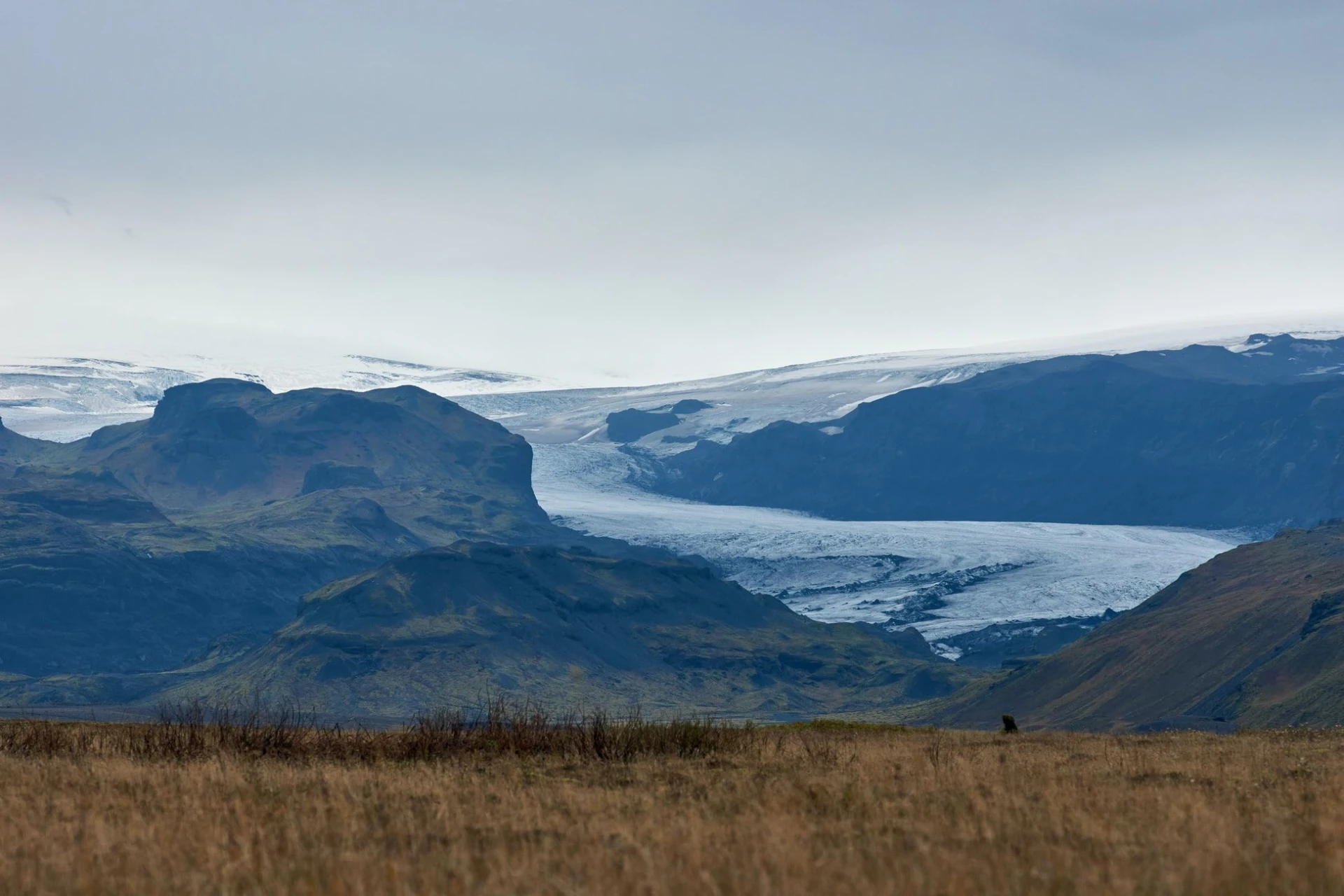

Permafrost is any land that is frozen for two years or more; it primarily consists of ice but is also made up of rocks, soil, sediment and other frozen materials (Cho, 2018). 24% of the Northern Hemisphere, over nine million square miles, fits this definition and is found in northern Russia, The Tibetan plateau, parts of Canada, Alaska, Iceland, Greenland and Siberia (Struzik, 2020). It is also present, although less so, in the Southern Hemisphere in the South American Andes, New Zealand’s Southern Alps as well as Antarctica (Denchak, 2018).
Permafrost can extend from a few feet below the earth’s surface to over a mile, it can cover entire regions like in Alaska or in a single isolated spot like in the Tibetan plateau. It can also be found on the floor of the Arctic Ocean as undersea permafrost (Denchak, 2018). The issue arises when permafrost thaws, as it consist of not only ice but #soil and #sediment and large amounts of greenhouse gases trapped under the icy seal, such as #methane, nitrous oxide and CO2. Permafrost can also store organic material such as remnants of dead plants, animals and #microbes. Microbial decomposition of such organic material also result in methanogenesis, the production and release of additional methane.
The Amount of Permafrost that is expected to thaw varies drastically and depends on the rate that carbon is released from permafrost. Permafrost contains an estimated 1400 gigatons of carbon, which is nearly twice as much as is currently contained in the earth’s atmosphere and four times as much as humans have emitted since the Industrial Revolution (Struzik, 2020). As global temperatures rise, permafrost is at risk of thawing out and potentially releasing 10s to 100s of gigatons of long held carbon into the atmosphere by 2100 (Schadel, 2020).
Scientists fear that the carbon released from permafrost could reach a “tipping point” which could trigger an irreversible cycle of permafrost thaw (Cho, 2018). Once the organic matter in permafrost thaws and decomposes, it releases greenhouse gases like CO2 and methane into the earth’s atmosphere, further adding to the greenhouse gases being emitted by humans that cause global warming. Scientists fear that once this “tipping point” is reached, the thawing of permafrost will be impossible to stop due to the greenhouse gases being released from the permafrost itself creating a feedback loop of greenhouse gas emission. Because permafrost thaw occurs due to the increase in greenhouse gases currently in the atmosphere, the additional emissions caused by permafrost thaw will result in permafrost thaw continuing regardless of human emissions.
The Damaging Effects of Permafrost Thaw
Both CO2 and methane pose a threat to the earth’s atmosphere. They present different problems when released into the earth’s atmosphere and are released by thawed permafrost in different conditions. Top-down thaw tends to release more CO2 while abrupt thaw tends to release methane. Methane is 28-36 times more damaging to the climate than CO2 over a century, but methane is oxidised to CO2 in roughly one decade which means the change in the amount of CO2 in the atmosphere is more important for calculating long-term climate change (Schadel, 2020).
When it comes to the rate of permafrost thaw, many scientist’s initial projections of the carbon being released have been surpassed due to their projections underestimating the amount of abrupt thaw that occurs. Top-down thaw occurs gradually as a result of warmer temperatures causing the soil to thaw from the top down. Abrupt thaw occurs suddenly and unpredictably below the surface. Previous projection models only accounted for top-down thaw, but recent estimates predict that abrupt thaw and collapsing soil could double carbon release from permafrost (Schadel, 2020).
Permafrost can contain up to 80% ice. Although the ice melts, the other materials that make up permafrost do not. When abrupt thaw occurs, the once solid ground collapses, leaving the landscaped pockmarked by “thermokarst” lakes filled with meltwater, rain and snow. These wet conditions promote the release of the greenhouse gas methane, while drier conditions promote the release of CO2. When top-down thaw occurs in uplands, there is more likely to be natural drainage which creates drier soil conditions that promote the acceleration of the now exposed organic matter to decompose, which releases CO2. So while abrupt thaw damages the land with thermokarst and releases more methane, Top-Down Thaw drains the land, thus releasing larger amounts of CO2 (Schadel, 2020).
Another negative impact caused by the organic matter found in permafrost is the release of pathogens frozen within the ice. It is believed that #bacteria and #viruses can lie dormant for thousands of years within the organic matter frozen in permafrost. A 2016 anthrax outbreak in Siberia was linked to a reindeer carcass that was exposed to thawed permafrost, killing 2,300 reindeer and hospitalising over 90 people, 50 of whom were children (BBC, 2016). The potential viruses dormant within permafrost that could awaken due to thaw could prove to be extremely fatal to humans as these once frozen pathogens have the potential to introduce viruses that humans don’t have any natural antibodies to fight off. If permafrost reaches a tipping point where it will continue to melt, there is no telling what sort of viruses and pathogens we will be exposing ourselves to (Schadel, 2020).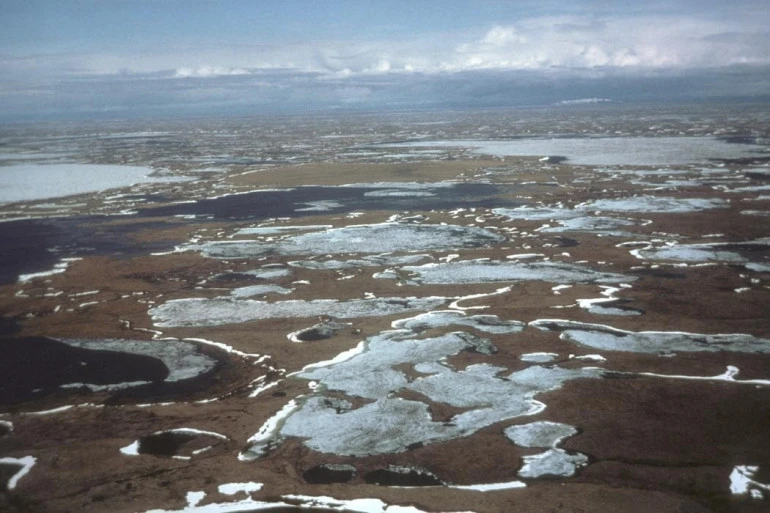
Figure 1: Thermokarsts as a result of abrupt permafrost thaw.
Case Studies of Permafrost Thaw
Although most of the areas mentioned in the first paragraph have been somehow affected by permafrost thaw, the most impacted area is the Arctic Circle. The temperature increase due to global warming is more than twice as high as the global average in the Arctic Circle. In addition to the Arctic releasing large amounts of methane and CO2 due to permafrost, there have been drastic changes in the landscape and the ecosystem which have negatively affected both the Arctic wildlife and the indigenous people’s ability to survive. The disintegration of subterranean ice from abrupt thaw causes the inorganic materials found in permafrost to become unstable when the ice from permafrost has melted. This can lead to thawing slumps, or landslides; which can lead to seashores collapsing, lakes draining, and water taking on more sediments that drastically alter the water chemistry in the region (Struzik, 2020).
The East Siberian Arctic Shelf (ESAS) is at risk of releasing large amounts of methane that was frozen into “methane hydrates'' or “clathrates” in the region. About one sixth of the earth’s methane is frozen as methane #hydrates. Thawing of permafrost is releasing this methane which if released in large quantities could be catastrophic for the climate system (Schadel, 2020). There is also an issue of crumbling infrastructure of roads, train lines, buildings, and airports.
Research conducted by Philip Marsh, who has established a research station in Trail Valley Creek in 1991 in the Canadian Arctic, has concluded from his research that climate warming will dry up 15,000 of the 45,000 lakes in the Mackenzie River Delta. Geographer and permafrost expert Antoni Lewkowicz has observed a drastic increase of the amount of #slumps in the Banks Island from 60 slumps in 1984 to 4,000 slumps in 2013. This increase in slumps could lead to the release of more #pathogens that are capable of killing muskoxen, caribou, and nesting birds. As well as the anthrax outbreak in Siberia from unfrozen reindeer carcasses, there have been reports of massive die-offs of muskoxen on the Banks and Victoria islands in Canada (Struzik, 2020).
Although the immediate impact of permafrost thaw is primarily affecting regions where permafrost is most present, the long term impact of permafrost thaw will be much more global and catastrophic for the planet’s ecosystem. The short term effects will be drastic changes to populated areas like the Northern territories of Canada or the East Siberian Arctic Shelf that will dismantle the infrastructure, pose a threat to the food sources for the wildlife, and release once dormant #pathogens. The long term impact will result in the permafrost being a major, if not the main contributor to global warming should permafrost thaw reach its tipping point.
Once the greenhouse gases stored in permafrost are released from the rapid thawing occurring, it will negatively affect climates beyond regions where there is permafrost.
Passed a certain threshold, and even in a scenario where greenhouse gases are no longer being emitted by human activity, permafrost thaw may be unstoppable. This makes it all the more urgent. Both greenhouse gases already produced by human activities and still trapped in our atmosphere as well as additional methane being released by permafrost itself will contribute to making the thawing process continue.
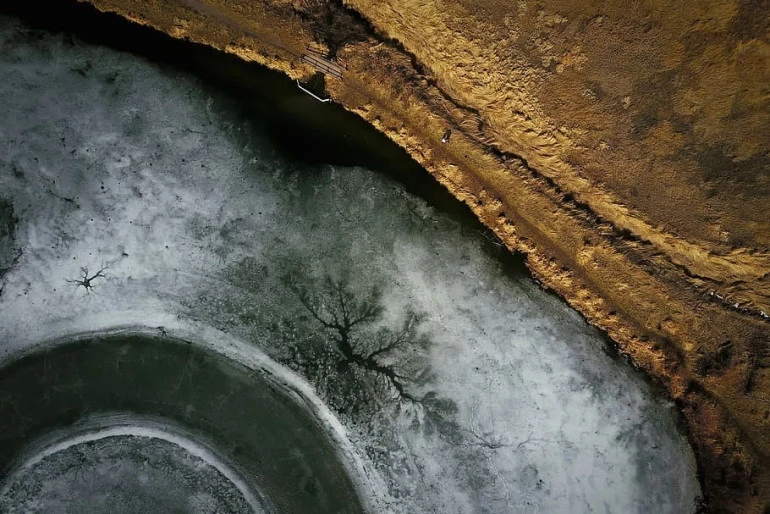
Figure 2: Effects of permafrost thaw on landscape.
What Can Be Done to Stop Permafrost Thaw
While scientists work to improve model projections for permafrost thaw, governments, corporations and individuals can work towards curbing the negative effects of permafrost thaw in two distinct ways: by reducing future emissions and capturing existing emissions. Planting trees or other effective carbon capture mechanisms reduces the amount of CO2 currently in the atmosphere. Combined with a transition to a low carbon economy it will be key to limit any further permafrost thaw. The other essential benefit of carbon capture programs is to buy time. By delaying the permafrost tipping point by a few years it gives humanity the needed time to successfully transition to sustainable habits.
It can be noted that one of the small benefits of the Arctic getting warmer is that there is an increased amount of plant growth in the region that could subside a portion of the greenhouse gases being released from permafrost. Despite the benefits of new plant life acting as a carbon capture in the Arctic region and elsewhere, it is unclear to what extent the plants will be able to curb the massive and rapid release of greenhouse gases being emitted by thawing permafrost. Other phenomenons will temper results too. In particular in those northern regions the #albedo effect, refracting solar heat into space, will be less prominent with increased vegetation.
To summarize Permafrost can only be stopped by stopping climate change itself and at the same time it really puts a clock on climate change by setting a tipping point, which should convince us to act fast.
Estimating the Risk
To really understand the risk of Permafrost it is essential to understand the rate of permafrost thaw and, as a consequence, the rate of release of GHG emissions. This can tell us how far (or close) we are from a tipping point and when we are at risk or getting into irreversible escalating damage. Burning of fossil fuels makes up about 25% of the global greenhouse gas emissions per year. Roughly 10,000 million tons of CO2 are emitted through the burning of fossil fuels each year (EPA, 2020). Permafrost thaw emits 300-600 million tonnes of greenhouse gases a year, not making as huge an impact in the emission rates as many of the industries that cause global warming. But all records show that permafrost thaw is accelerating making it important to monitor and also because of the tipping point permafrost will eventually hit. Some scientists estimate that there is somewhere between 1460bn-1600bn tonnes of carbon in the earth’s permafrost, nearly twice as much as is currently in the earth’s atmosphere (Resnick, 2019).
It’s extremely difficult for scientists to guess at what point permafrost thaw will hit this tipping point and be beyond human capabilities to fix. More research should be done on estimating permafrost’s current and future thawing rate. Permafrost, not unlike many other phenomenon of climate change, has often been underestimated in previous scientific climatic models.
Permafrost also deserve more education directed to the general public, to explain its role on climate change and the related risks. This article is our modest participation to this effort.
Before Climate Change
- Permafrost is defined as any land frozen for more than two years. It consists of 80% Ice
- Permafrost is 24% of the Northern Hemisphere or 9 million square miles.
- Permafrost usually sits beneath an active layer of ice that thaws and refreezes every year.
- Permafrost contains an estimated 1400 gigatons of carbon, which is nearly twice as much as is currently contained in the earth’s atmosphere.
After Climate Change
- Top-Down Permafrost Thaw occurs when the surface of permafrost melts along with the active layer of ice. It generally tends to release more CO2
- Abrupt Permafrost Thaw occurs suddenly and unpredictably below the surface. It is much more difficult to predict and tends to release methane
- Thermokarst is when the landscaped pockmarked by abrupt permafrost thaw, leaving the lands damaged with meltwater, rain and snow.
- As well as greenhouse gases, permafrost also stores unknown pathogens.
- The Tipping Point of Permafrost Thaw refers to a point where permafrost will continue to thaw regardless of human efforts to mitigate climate change and release the vasts amounts of carbon within permafrost.
Keywords: #EcoEducation #climatechange #permafrost
Bibliography
BBC, 2016. BBC: Russia anthrax outbreak affects dozens in north Siberia. [Online]
Available at: https://www.bbc.com/news/world-europe-36951542
[Accessed 17 May 2020].
Cho, R., 2018. Earth Institutre Columbia University: Why Thawing Permafrost Matters. [Online]
Available at: https://blogs.ei.columbia.edu/2018/01/11/thawing-p...
[Accessed 17 May 2020].
Denchak, M., 2018. NRDC: Permafrost Everything You Need To Know. [Online]
Available at: https://www.nrdc.org/stories/permafrost-everything...
[Accessed 17 May 2020].
EPA, 2020. Global Greenhouse Gas Emissions Data. [Online]
Available at: https://www.epa.gov/ghgemissions/global-greenhouse...
[Accessed 18 May 2020].
Resnick, B., 2019. Vox: Scientists feared unstoppable emissions from melting permafrost. They may have already started.. [Online]
Available at: https://www.vox.com/energy-and-environment/2019/12...
[Accessed 18 May 2020].
Schadel, D. C., 2020. CarbonBrief: The irreversible emissions of a permafrost ‘tipping point’. [Online]
Available at: https://www.carbonbrief.org/guest-post-the-irrever...
[Accessed 17 May 2020].
Struzik, E., 2020. Yale 360: How Thawing Permafrost is Beginning to Transfrom the Arctic. [Online]
Available at: https://e360.yale.edu/features/how-melting-permafr...
[Accessed 17 May 2020].


