
by Dexter B. Dombro
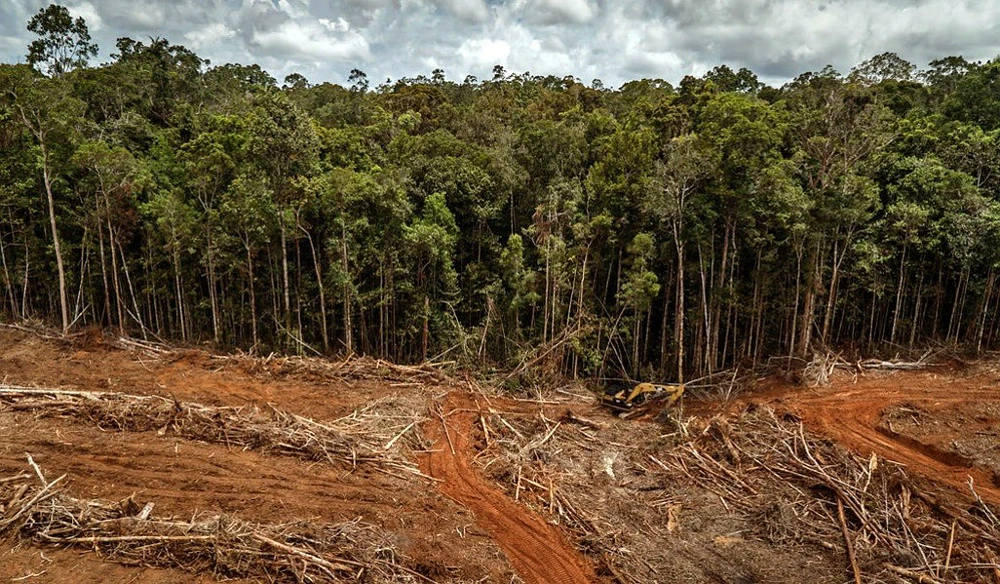
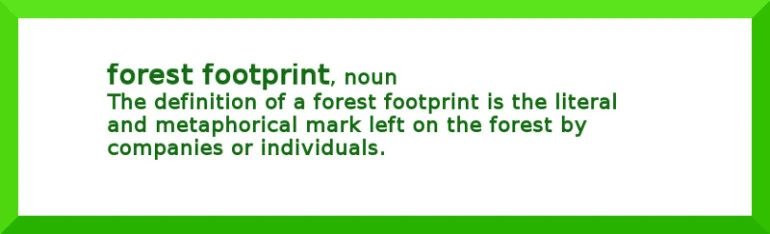
Most of us have heard of and understand the meaning behind one’s carbon footprint. However, there is another concept that is just as important, our forest footprint. This concept started as a campaign by the French NGO Envol Vert to make people aware of the impact their consumer preferences were having on the planet’s forests. The concept is so important, that it now even has its own dictionary definition:
As a consumer, determining your forest footprint can be difficult. Consider this: You go to the store and buy a pair of leather shoes. If you ask where the shoes came from, the answer is that they came from a shoe factory in your country. You phone the shoe factory and ask them where they got the leather from to make the shoes, and they tell you that it came from a leather tanning company in your country. So you phone the leather tanning company and ask them where they got the cow hide from that they used to make the leather. They tell you that it came from a cattle ranch in your country. You phone the cattle ranch and ask them where they have their cows. They tell you that they have happy cows with nice pastures. But what they do not tell you is that they chopped down the neighboring forest in order to make pasture for the cows that provided the hide that the leather tanner sold to the shoe factory. This is an example of your shoes having a very definite forest footprint.
In France, many consumers are now demanding to know the forest footprint of the products they are buying, whether it is food, clothing, BBQ charcoal or candies. The steel used to manufacture a car may come from a mine where they cleared the forest in order to excavate the iron ore. There are very few products that do not have a forest footprint somewhere in their chain of production or delivery. Following the example of the French, people in other countries are starting to take notice and are looking at this issue with a fresh awareness, given that deforestation is one of the principle causes of climate change, desertification and global warming.
This isn’t just an issue for consumers. Companies that want to sell their products are starting to realize that they need to take more care with their supply chain. In the example I gave above, the shoe factory is in a difficult position if people stop buying their shoes, because they have deforestation in their supply chain. Many companies are starting to take a very serious look at this issue and are implementing traceability mechanisms in their supply chain. This means requesting a certificate from every single supplier certifying that their product has no forest footprint, or if it does, what they are doing to change that. If a supplier can’t offer a reasonable answer, they may lose the supply contract.
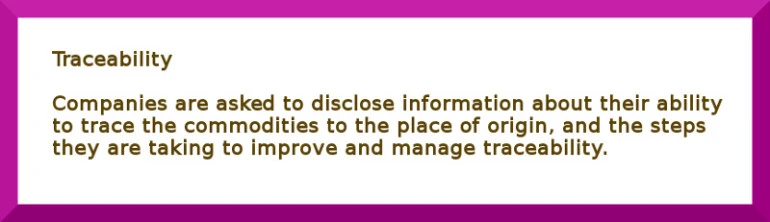
The World Resource Institute and the World Business Council for Sustainable Development have started a process to ask companies to implement traceability, but to also provide full disclosure about public commitments and policies related to sustainability, sustainable sourcing, third-party certification systems and deforestation. Companies are also asked to disclose information about public commitments and policies related to climate change. These disclosures may become as stringent and important as those governing stock market and financial disclosures are today. This initiative can be seen at the Sustainable Forest Products web site. Companies will be measured by the actions they are taking to manage those risks.
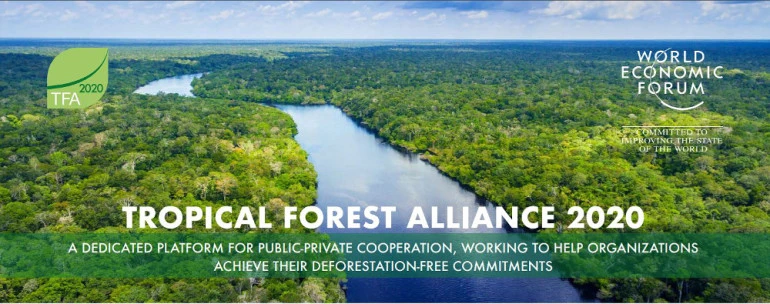
This leads directly into another interesting topic. The annual meeting of world leaders at Davos, Switzerland, resulted in the creation of the Tropical Forest Alliance or TFA2020. The TFA asked countries to establish “zero deforestation” processes. The idea is to protect existing forest, meaning that no new activity, including tree planting, should involve the logging of existing forest in order to plant something or to build something. While tree planting is absolutely needed to help our planet in the struggle against climate change, preserving and conserving existing forests and their biodiversity should be equally important.
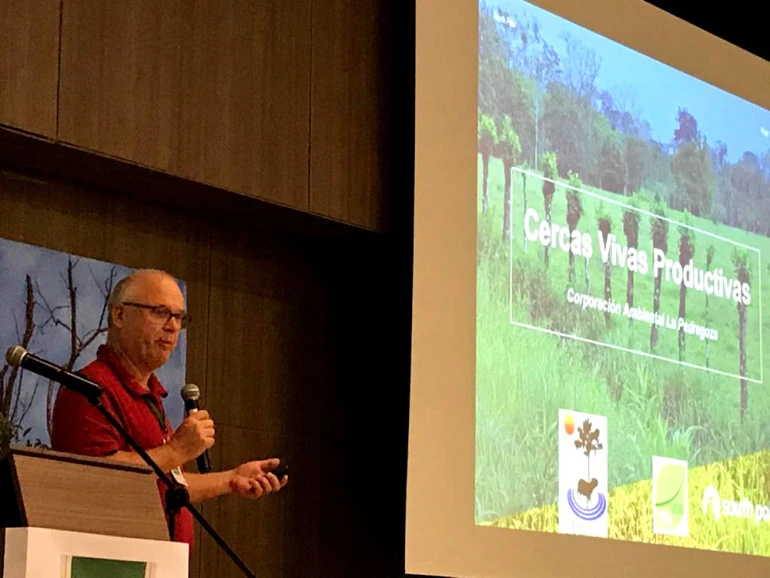
Dexter Dombro, representing Sacred Seeds and La Pedregoza, doing a presentation at a TFA2020 event.
A prime example of this is the problem suffered by the palm oil industry, which happily chopped down much of Malaysia’s rain forests in order to plant oil palms so that we, as consumers, could enjoy fast foods like fried chicken or chocolate bread spreads. The modern palm oil industry is looking to correct these problems, with cattle and dairy industries not far behind. This means that the concept of “zero deforestation” is another example of the importance of traceability for companies and consumer behavior.
In Colombia, the Ministry of the Environment and Sustainable Development has been signing pacts with palm oil, cattle and dairy producers, and is looking to get corporate commitments from other sectors of the economy, to publicly implement “zero deforestation” initiatives. For example, 10 dairy companies in Colombia’s Amazon region have publicly declared their intention to be more stringent with their supply chain and to only purchase from dairy producers who can establish that their production meets ”zero deforestation” criteria. I hope this article encourages Tree-Nation members to examine their own country’s policies, and to start asking questions as consumers about the origin and impact of the products they are purchasing.


