Sacred Seeds Garden

Sacred Seeds Garden

CO Colombie
Achevé

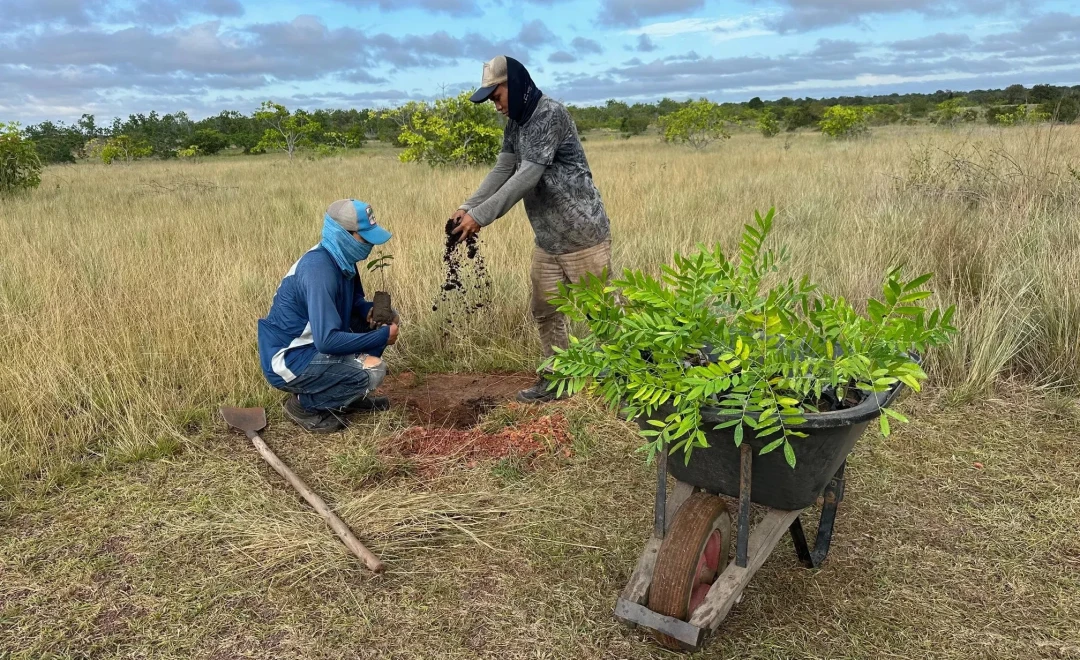
Our project is creating and planting a botanical garden in the Orinoco River basin to conserve the traditional medicinal trees and plants of this region. The project is being done with indigenous guidance as well as a knowledge sharing agreement with Missouri Botanical Gardens in the USA.

43,248Arbres financés sur 43,229
15,621 TCO2 capturé
1,648Abonnés
162 mises à jour
octobre 2017

Congratulations to Walter Garcia and to his professor Olga Patricia Pinzon of the forestry department at the Universidad Distrital in Bogota. Walter did his thesis work at La Pedregoza examining beetles of the Carabidae family in our forest plantations. They worked for several weeks

 Voir plus
25 oct. 2017

We are very proud to announce the publication of our latest book regarding the Congrio tree (Acosmium nitens), which has suffered a lot due to indiscriminate logging in the past. The book is the result of Proyecto Vida Silvestre, during which La Pedregoza did restoration planting

 Voir plus
23 oct. 2017

Sassafras seeds are ripe late in the year. We germinate them in germination beds, in order to get the best results. They are taken to the rain forest in December and January for planting, depending on when the inundations recede. Planting is tricky, because the Sassafras likes a

 Voir plus
23 oct. 2017

Natural silviculture isn't just about planting trees. It involves considering whether there is a beneficial ground cover one might plant. One plant that caught our attention is a variety of wild bitter melon that seems to provide considerable ground cover around other trees and plants,

 Voir plus
16 oct. 2017
Trish Geidel · 23 novembre 2017

Thanx Dexter, for the info & yes, I agree, it is rather Pretty ! <3 xxx

septembre 2017

The Carambola tree, best known for its star-shaped fruits, is a delight to have in any tropical garden. Together with mangoes and tamarinds, the Carambola (Averrhoa carambolo) made its way from India with the Portuguese to the Americas, where it is now very common. However, it can

 Voir plus
28 sept. 2017
Trish Geidel · 23 novembre 2017

Lovely, Green leaves with a sheen on them & a lil group of cute, Brown l...

In Vichada the A&ccedil;ai palm grows in morichals, which are heavily treed savanna drainage creeks that have very wet soils. In this dense natural setting the palm shoots up high so that its leaves can reach the sunlight, resulting in a skinny trunk that can be 20 meters tall (see

 Voir plus
17 sept. 2017
Dexter Dombro · 1 décembre 2017

You need to drop a note to Tree-Nation, it seems to be a technical problem.

Trish Geidel · 23 novembre 2017

How do I get to the rest of the story ? xxx

We make our own Efficient Microorganisms (EM) for improving soil micro-fauna and help the trees in their nutrient uptake. One of the ingredients is flour made from any legume, like beans or lentils. Our grain mill needs 3-phase power to operate, so we have it set up in town. This

 Voir plus
10 sept. 2017
Dexter Dombro · 17 septembre 2017

Thanks Trish. Actually, the recipe is thousands of years old. In India it is ...

Trish Geidel · 15 septembre 2017

WOW, TURNING BEANS INTO FLOUR & ADDING MOLASSES, TO FEED MICROORGANISMS, ...

août 2017

The Saladillo rojo (Caraipa llanorum) is the emblematic tree of the savanna in Vichada. Historically, there was a medicinal use for the seed pods seen here of this tree, but the knowledge seems to have been lost. It still plays an important role in local communities, providing wood

 Voir plus
26 août 2017
Dexter Dombro · 28 septembre 2017

So are the trees, they really stand out in the savanna.

Gabriela B. · 24 septembre 2017

The fruits are beautiful !!

Our Achiote or Onoto trees just finished flowering and are already forming fruit and seed pods. The seeds make one of the world's most popular organic red food colors, and they have numerous medicinal uses. They look so awesome that we just love to visit these trees every month

 Voir plus
24 août 2017
Trish Geidel · 23 novembre 2017

Nothing like the real thing, that is without any chemicals ! xxx

It always gives us a thrill when we see wildlife making use of the areas we have protected, restored or planted with trees. Victor Scharnhorst, a German student doing an internship at La Pedregoza, managed to get a photo of a porcupine high up in one of the trees. These guys can

 Voir plus
24 août 2017
Trish Geidel · 23 novembre 2017

Thanku Dexter, ; I think they are cute tooo ! xxx

The Orejero tree (Enterolobium cyclocarpum), also known as the Guanacaste in Central America, is one of the world's great shade trees for cattle and wildlife. It has remarkable medicinal properties, and is an excellent addition to silvopastoral systems. The Sacred Seeds Botanical

 Voir plus
13 août 2017
Trish Geidel · 23 novembre 2017

Way to go Dexter & all the other folks involved ! xxx

juillet 2017

We were able to obtain several hundred endangered Sassafras (Ocotea cymbarum) seeds this year, which we have now germinated in the tree nursery. These trees will be planted inside the natural reserve and in shaded areas of the Sacred Seeds Botanical Garden starting in September or

 Voir plus
27 juil. 2017
Dexter Dombro · 1 décembre 2017

The species naturally has reddish and green leaves mixed when young. Once pla...

Trish Geidel · 23 novembre 2017

i assume, the Brown leaves are a lil bit younger, than the Green leaves ? xxx

When germinating some trees, like these Pinus caribaea, it is very important to add mycorrhizal fungi to the soil. They provide a symbiotic association between the fungus, which breaks down nutrients and minerals, and the roots of the host plant. The ones best suited to Caribbean

 Voir plus
01 juil. 2017
juin 2017

June is the month for harvesting the fruits of the Moriche palm (#Mauritia_flexuosa). Inside every egg-sized fruit is yellow sweet pulp around a big seed. Moriche palms are a favorite food for #tapirs and other wildlife, so we always make sure they have access to the #fruits. The

 Voir plus
26 juin 2017

The Guarataro tree (Vitex Orinocensis) is an important food tree for humans, but more so for wildlife. The berries are used by turtles and fish when they fall off the tree into the rivers and caños of the Orinoco River basin. Baby turtles like to gather under the Guarataro's shade

 Voir plus
18 juin 2017