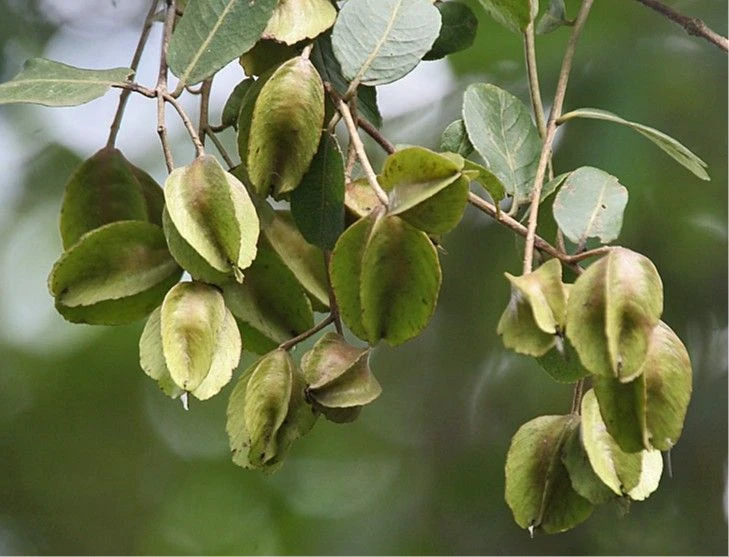

The Arjuna tree, scientifically known as Terminalia arjuna, holds great significance for the tribal communities residing in Bastar, Chhattisgarh, India. This majestic tree offers a wide array of benefits, ranging from edible and medicinal uses to agroforestry applications and beyond. The Arjuna tree's versatile nature and valuable properties have made it an integral part of the local culture and economy, providing sustenance and healing for generations.
Edible uses: A decoction of the bark with milk is used as a beverage. In terms of edibility, the bark of the Arjuna tree finds utility as a beverage when decocted with milk. The bark is rich in various medicinal compounds, including tannins, flavonoids, sterols, and triterpenoid saponins. As a potent cardiac tonic, it helps lower blood pressure and reduce blood cholesterol levels. Modern research has substantiated the traditional use of Arjuna in treating heart diseases, highlighting its efficacy and importance in herbal medicine. Additionally, the gum derived from the tree possesses medicinal properties, while the juice of the bark serves as a revitalizing tonic. Traditional remedies also utilize the juice from the leaves to alleviate earaches, further demonstrating the therapeutic potential of the Arjuna tree.
Medicinal uses: The bark of the tree contains a number of medically active ingredients, including tannins, flavonoids, sterols and triterpenoid saponins. The bark is a cardiac tonic, lowers blood pressure and reduces blood cholesterol levels. Arjuna is a herb where modern research has fully supported its traditional use for treating heart disease. The gum is used medicinally. The juice of the bark is used as a tonic. The juice from the leaves is used traditionally to treat earache.
Agroforestry uses: The tree is planted to provide shade, especially in coffee plantations.
Other uses: The bark contains 20 - 24% tannin. It is used commercially in India. When carefully removed from the tree, without damaging the cambium layer, a new layer of bark will grow. The fruits also contain tannin. A transparent gum is obtained from the tree. The heartwood is brown, variegated with darker coloured streaks; the sapwood is reddish-white. The wood is very hard. It is apt to split in seasoning and is not very easy to work. It is used for a number of purposes including the construction of carts and boats, for general construction, agricultural implements and mine props.


